



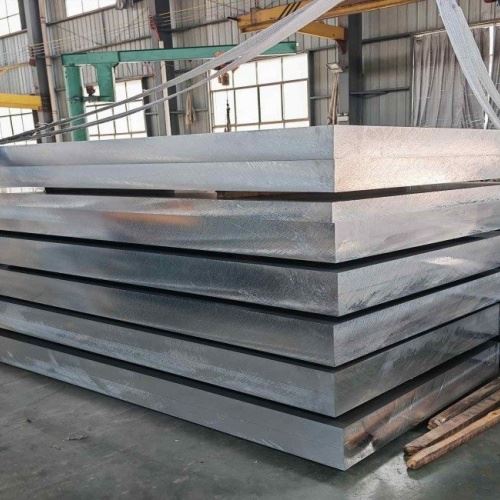

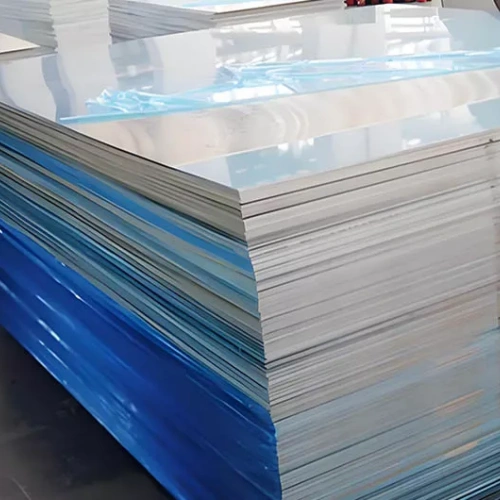
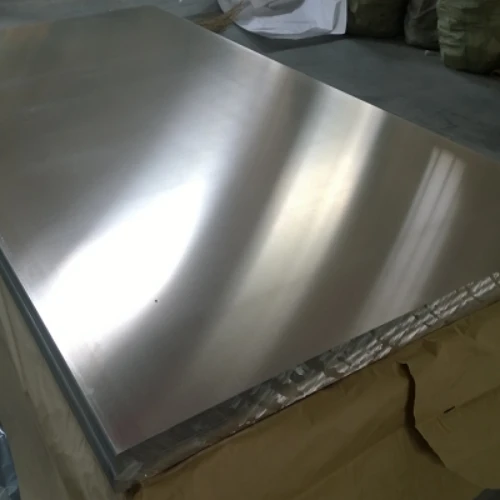
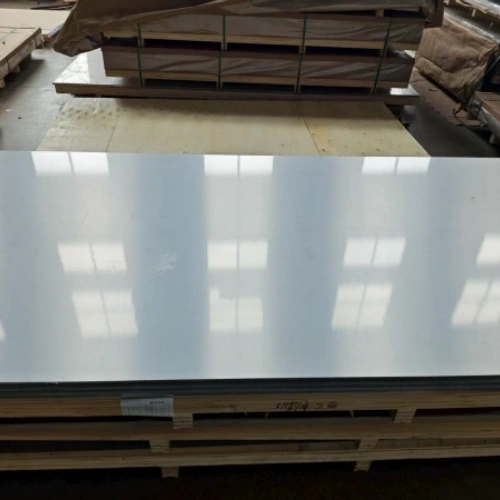
1100 Aluminium Plate
Customer service is online. Enter the chat to get the latest quotation.
 Spot stock
 Customize
 Factory direct sale
 7 days delivery
Overview of 1100 aluminum plate and sheet
1100 is the workhorse commercially pure grade: low strength, very high ductility, good corrosion resistance, good weldability and high conductivity. It is a non-heat-treatable 1xxx alloy, so it is supplied in strain-hardened tempers rather than heat-treated ones. It is selected whenever formability, conductivity or corrosion resistance matter more than load-bearing strength - deep drawing, spun parts, heat-transfer components, electrical busbars and decorative panels are typical.
Density: about 2.71 g/cm³
Non-heat-treatable; strength is built by cold work only
Excellent for bending, stamping, spinning and drawing in the O temper
Good atmospheric and many chemical-environment corrosion resistance
Key Advantages of GNEE 1100 Aluminum Sheet
Superior Deep Drawing & Formability
The 1100-O and 1100-H14 aluminum are exceptionally soft and ductile. They are perfect for deep-drawing processes used to create hollowware, such as aluminum cookware, chemical tank linings, and intricate lighting reflectors, without cracking.
Excellent Corrosion Resistance
Containing 99% pure aluminum, the 1100 alloy forms a natural, protective oxide layer. This makes it highly resistant to atmospheric corrosion and many chemical agents, making it ideal for the chemical and food processing industries.
High Thermal & Electrical Conductivity
When compared to alloyed aluminum, 1100 offers much higher conductivity. It is widely used in the production of heat exchangers, fins, and electrical busbars where high heat dissipation is required.
Perfect Anodizing & Finishing
The high purity of 1100 aluminum plate ensures a uniform and bright finish after anodizing, making it suitable for decorative architectural panels and high-end nameplates.
Available tempers of 1100 aluminum plate and sheet
O – fully annealed, softest and most ductile; used for deep drawing, spinning and severe forming.
H12 / H14 – quarter- and half-hard; a practical balance of stiffness and workability for panels, trim, sign blanks and general sheet metal.
H16 / H18 – three-quarter and full-hard; stiffer sheet for nameplates, reflectors and rigid formed parts.
H22 / H24 – stabilized half-hard tempers with better flatness/stability than the straight H tempers; common for bottle caps, heat sinks and enclosures.
H112 – lightly strain-hardened plate condition, normally supplied for thicker plates and general fabrication.
If your drawing or standard specifies a temper not listed here, send the requirement so it can be confirmed before quotation.
Specifications of 1100 Aluminium Plate
| Item | Typical range / option |
|---|---|
| Thickness | 0.2 – 200 mm (sheet and plate); coil and thicker plates available on request |
| Width | 100 – 2600 mm; common widths 1000 / 1220 / 1250 / 1500 / 2000 mm |
| Length | 500 – 12000 mm, or cut-to-length / coil as required |
| Temper | O, H12, H14, H16, H18, H22, H24, H112 |
| Surface finish | Mill finish, brushed, anodized, coated (PE/PVDF), stucco embossed, bright polished |
| Surface protection | PE / PVC film, paper interleaving to prevent scratches |
| Standards | ASTM B209, EN 485, EN 573-3, GB/T 3880 |
| Tolerance | Thickness and flatness per ASTM B209 / EN 485-2 |
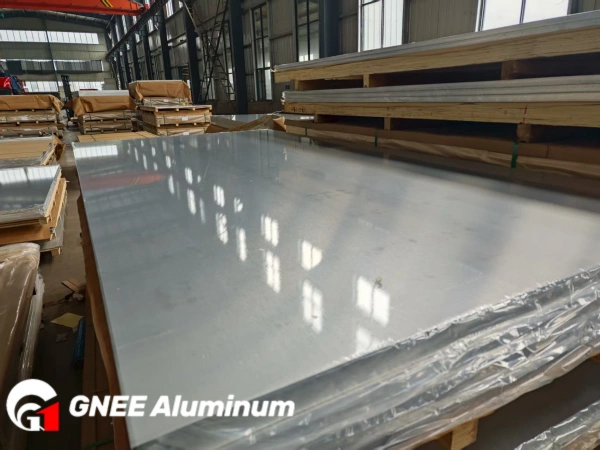
Chemical composition of 1100 aluminum
The composition below follows ASTM B209 and EN 573-3 (weight %). The small copper range (0.05–0.20%) is the main compositional feature that distinguishes 1100 from other low-alloy 1xxx grades such as 1050 and 1060.
| Element | Content (wt %) |
|---|---|
| Aluminum (Al) | 99.00 min |
| Silicon + Iron (Si+Fe) | 0.95 max |
| Copper (Cu) | 0.05 – 0.20 |
| Manganese (Mn) | 0.05 max |
| Zinc (Zn) | 0.10 max |
| Others (each) | 0.05 max |
| Others (total) | 0.15 max |
1100 is commercially pure at 99.0% minimum Al. Some other 1xxx grades (for example 1050 and 1060) specify a higher minimum aluminum content; 1100 remains the most common commercial-purity grade for forming and conductivity work because of its consistent, well-characterised behaviour.
Mechanical and physical properties of 1100 aluminum
Typical room-temperature mechanical values by temper are listed below. They follow ASTM B209 / Aluminum Association data; actual values depend on product thickness, test direction and specimen gauge length, and are confirmed on the mill test certificate.
| Temper | Tensile strength (UTS), MPa | Yield strength, min MPa | Elongation, % |
|---|---|---|---|
| O (annealed) | 75 – 110 | 25 | 20 – 35 |
| H12 | 95 – 130 | 75 | 10 – 20 |
| H14 | 110 – 150 | 95 | 6 – 14 |
| H16 | 130 – 170 | 115 | 4 – 8 |
| H18 | 150 min | 130 | 3 – 6 |
| H22 | 95 – 130 | 75 | 8 – 15 |
| H24 | 110 – 150 | 95 | 6 – 12 |
| H112 (plate) | 75 min | 25 | 12 min |
| Physical property | Typical value |
|---|---|
| Density | 2.71 g/cm³ |
| Melting range | 643–657°C |
| Thermal conductivity (20 °C) | ≈ 222 W/m·K |
| Electrical conductivity (20 °C) | 59 – 62 % IACS |
| Modulus of elasticity | ≈ 69 GPa |
| Coefficient of thermal expansion (20–100 °C) | ≈ 23.6 × 10⁻⁶ /K |
Request Your 1100 Aluminium Plate Quote Now
Contact GNEE's expert sales team for the latest LME-based pricing and a detailed technical consultation. We provide free samples to ensure our material meets your engineering standards.
Forming, welding and finishing of 1100 aluminum
Forming
1100 has excellent cold-formability, especially in O temper. Minimum bend radius is roughly equal to the sheet thickness in O, and about 1.5–2× thickness for H14 and harder tempers at a 90° bend. Deep drawing and spinning are carried out in O with a draw lubricant; intermediate annealing near 340 °C restores ductility between stages.
Welding
1100 is readily welded by TIG and MIG using 1100 or 4043 filler, and it can also be brazed, soldered and adhesive-bonded. Its low strength means welded joints should not be relied on for structural load paths.
Machining
In the soft O temper 1100 is gummy and tends to grab tools; machining is cleaner in H14 or H18 using sharp HSS or carbide tools with a light lubricant. Higher tempers give better chip formation.
Finishing
1100 anodizes to a clear, bright film that is valued for decorative architectural and nameplate work, and it also takes brushing, polishing, coating and embossing well.
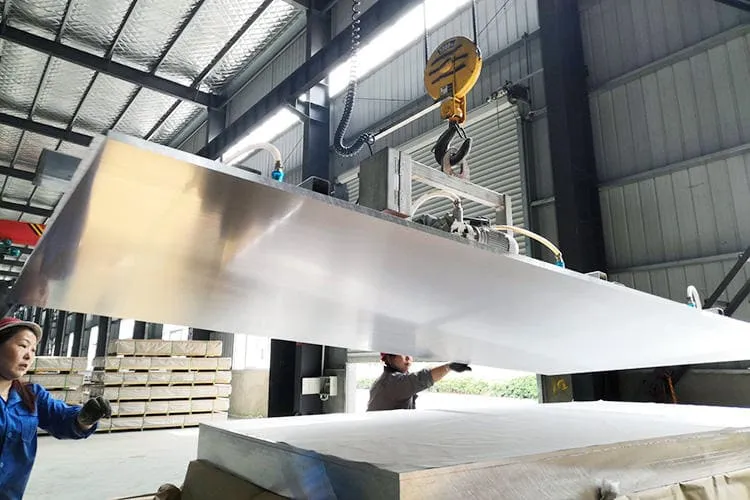
Applications of 1100 Aluminum
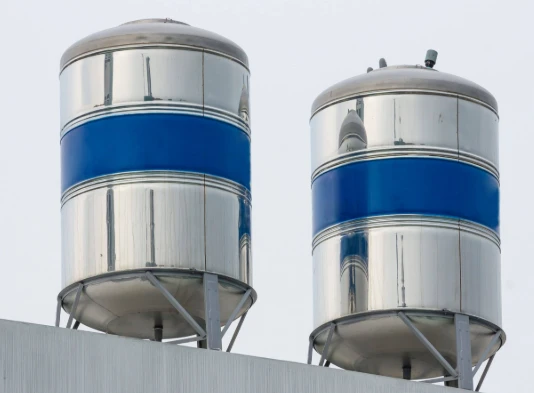
Chemical and food equipment – tank linings, vessel cladding, process equipment housings, and food-contact parts where a clean, corrosion-resistant surface is needed.
Heat transfer and electrical – heat-exchanger fins, evaporator plates, busbars, transformer and capacitor components, and lighting reflectors.
Architecture and signage – wall cladding, sign panels, nameplates, dial plates and decorative trim, including anodized architectural finishes.
General fabrication – cookware and hollowware, spun and stamped parts, bottle caps, packaging and miscellaneous sheet-metal work.
Packaging and shipping
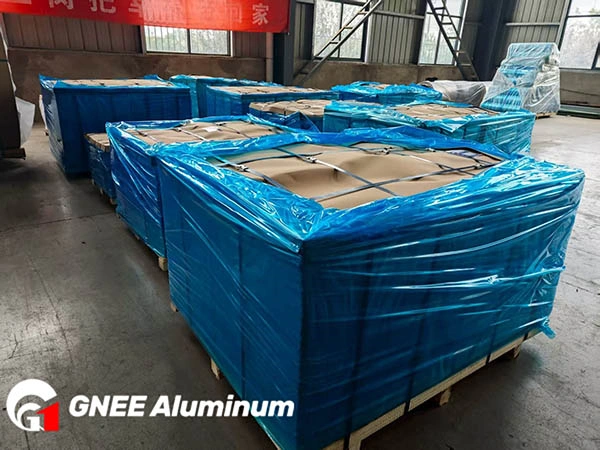
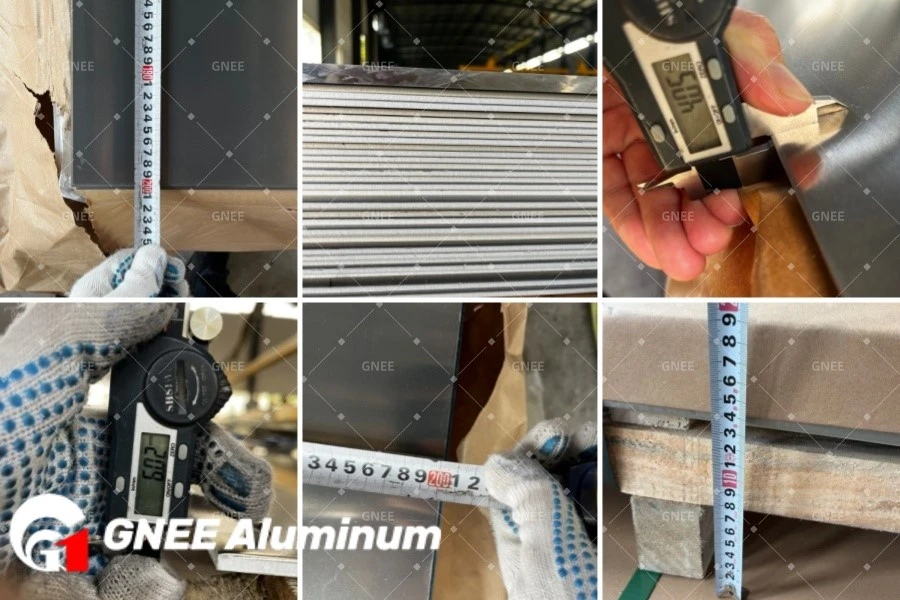
Since 1100 aluminum is relatively soft, GNEE employs a "Premium Protection" packaging strategy:
- Surface Shielding: Double-sided PE protective film or neutral paper interleaving to prevent surface scratches.
- Waterproof Barrier: Multi-layer waterproof kraft paper wrapping and high-strength plastic film.
- Reinforced Palletizing: ISPM-15 certified fumigated wooden pallets with reinforced corners to prevent forklift damage.
- Sea-Safe Desiccants: Moisture-absorbent packets inside every pallet to prevent "white rust" (oxidation) during long-distance sea freight.
Ordering 1100 aluminum plate and sheet
Minimum order quantity: flexible; both trial and volume orders are accepted. Confirm the MOQ for your specific gauge and width.
Lead time: normally 15 – 30 days, depending on temper, size and quantity.
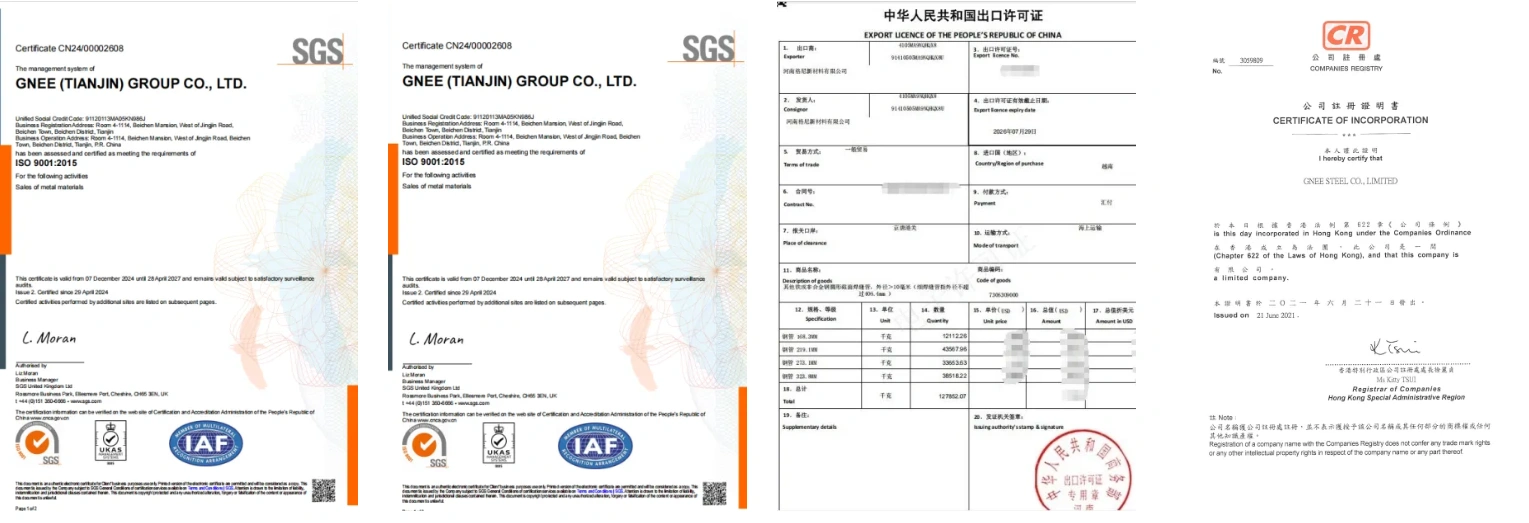
Mill test certificate: EN 10204 3.1 with every batch; EN 10204 3.2 and third-party inspection can be arranged on request.
Standards: supplied to ASTM B209, EN 485 / EN 573-3 or GB/T 3880 as specified.
Trade terms: FOB / CIF as required; payment by T/T or L/C.
Export note: 1100 is a non-controlled 1xxx alloy and is not listed under China's dual-use export controls, so no export-licence screening applies to this grade. GNEE does not supply sanctioned destinations.
About GNEE
GNEE has supplied aluminum products since 2008 and ships to more than 100 countries and regions.
Common 1xxx tempers and sizes are kept in stock, and small orders are accepted alongside volume contracts.
Each shipment is backed by an EN 10204 3.1 mill test certificate; 3.2 certification and third-party inspection are available when a project requires them.
Our technical team helps buyers select the right temper and finish for the forming, welding or conductivity demands of the part.
FAQ
What is 1100 aluminum plate and sheet used for?
1100 is used for chemical and food equipment, heat-exchanger fins, busbars and electrical parts, architectural cladding and signage, and general formed sheet metal such as cookware, spun parts and bottle caps. It is chosen where forming ease, conductivity and corrosion resistance matter more than strength.
Is 1100 aluminum pure aluminum?
1100 is commercially pure aluminum with a minimum aluminum content of 99.0%. A few other 1xxx grades specify higher minimum purity, but 1100 is the most common commercial-purity grade for drawing, spinning and conductivity work because its behaviour is consistent and well documented.
Which temper should I choose for deep drawing?
For maximum drawing depth and complex shapes, 1100-O (annealed) is the right choice because it is the softest and most ductile. For parts that need more stiffness after forming, H14 is a common compromise; H22/H24 give better flatness stability.
Can 1100 aluminum be welded?
Yes. 1100 welds readily by TIG and MIG with 1100 or 4043 filler, and it can also be brazed and soldered. Because the base alloy is low strength, do not use a welded 1100 joint where it must carry structural load.
What lead time and minimum order apply to 1100 aluminum?
Lead time is normally 15 – 30 days depending on temper, size and quantity, and the minimum order is flexible - both trial and volume orders are accepted. Confirm the exact MOQ and lead time for your gauge and width when you request a quote.
Do you provide a mill test certificate for 1100 aluminum?
Yes. Every batch ships with an EN 10204 3.1 mill test certificate covering chemical composition and mechanical properties. EN 10204 3.2 and third-party inspection can be arranged on request.
Can 1100 aluminum be anodized?
Yes. 1100 anodizes to a clear, bright film and is widely used for decorative architectural panels and nameplates. For critical colour matching, specify anodizing-quality material or agree a sample finish before production.
Does 1100 aluminum require an export licence?
No. 1100 is a non-controlled 1xxx alloy and is not on China's dual-use export-control list, so no export-licence screening applies to this grade. GNEE does not supply sanctioned destinations.
Hot Tags: 1100 aluminium plate, China 1100 aluminium plate manufacturers
You Might Also Like


Send Inquiry