



Aluminum Bar
GNEE Aluminum: Leading Aluminum Bar Supplier In China
Quality Assurance
With advanced production technology and equipment and a multi-functional laboratory, we provide customers with reliable product quality assurance.
Wide Range Of Applications
Our products are used in many fields, such as construction, automotive industry, industrial and manufacturing processes, and packaging.
Wide Product Range
Our exports aluminum to more than 100 countries, cooperates with over 600 companies in worldwide, among which are 15 shipyards, 143 project engineering companies, 23 boiler machinery manufacturers.
Professional Team
Our professional sales team provide customers with perfect first-class service; Our strict procurement quality control team carefully select high quality raw materials.
GNEE Aluminum Bar Manufacturing Capabilities & Specifications
Whether you need standard extruded bars for structural use or high-precision cold-drawn bars for CNC machining, GNEE provides a complete range of dimensions and alloys strictly conforming to international standards.
| Specification Parameter | Technical Details & Supply Range |
| Available Alloys (Grades) |
2000 Series (High Strength): 2011, 2014, 2017, 2024 5000 Series (Marine/Anti-Corrosion): 5052, 5083 6000 Series (Architectural/Machining): 6061, 6063, 6082 etc. |
| Temper (Conditions) | T4, T5, T6, T651, T6511, T7351 (T651/T7351 are heavily stress-relieved for stable CNC machining) |
| Bar Shapes | Round, Square, Flat/Rectangular, Hexagonal, T-Bar, Custom Profiles. |
| Manufacturing Process |
Extruded: For general structural & architectural use. Cold Drawn: For high-precision, tight-tolerance CNC applications. |
| Diameter / Thickness |
Round Bar: Φ 5mm – Φ 500mm Square/Hex: 5mm – 200mm |
| Length |
Standard: 1000mm, 2500mm, 3000mm, 5800mm, 6000mm. (Custom Cut-to-Length available down to 10mm pieces.) |
| Dimensional Tolerance |
Standard: ASTM/EN. Precision Cold Drawn: h9, h10, h11 (Diameter tolerance controlled within ±0.03mm) |
| International Standards | ASTM B221, ASTM B211, EN 755, EN 485, AMS-QQ-A-22 |




Types of Aluminum Bars
Aluminum Round Bars
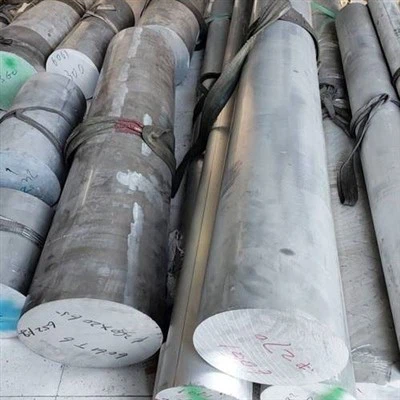
Round aluminum bars are cylindrical metal rods with a circular cross-section. Manufacturers typically extrude or cold-draw them, resulting in a uniform diameter throughout their length. People know these bars for their versatility and ease of machining, making them suitable for various applications.
Aluminum Flat Bars
Flat aluminum bars, or flat stock or rectangular bars, are flat and elongated metal profiles with a uniform thickness and width. Manufacturers produce these bars through extrusion or rolling processes, giving them flat surfaces and right-angled edges. People appreciate flat aluminum bars for their ease of fabrication, including cutting, drilling, bending, and welding, which makes them versatile components in various applications.
Aluminum Square Bars
Manufacturers produce square aluminum bars through various processes, such as extrusion and rolling. These bars have four-sided, solid metal profiles with equal width and thickness on each side, forming a square cross-section. People value them for their structural stability and versatility, making them suitable for various applications.
Aluminum Hexagonal Bars
Hexagonal aluminum bars, often called hex bars, are solid metal profiles with a six-sided polygonal cross-section. Manufacturers extrude or cold-draw these bars, resulting in uniform sides and angles. Due to their geometric shape, hexagonal bars offer a unique combination of strength and versatility, making them suitable for various applications that need structural integrity and easy gripping.
Aluminum T-Shaped Bars
T-shaped aluminum bars, also known as T-bars, possess a cross-sectional shape resembling the letter “T.” They consist of a vertical section, the stem, and a horizontal section, the flange. Manufacturers produce T-bars through extrusion processes, creating a shape that offers structural stability and versatility. The stem of the T-bar can vary in width and thickness depending on the specific application.


Properties of Aluminium Round Bars
Strength and Durability
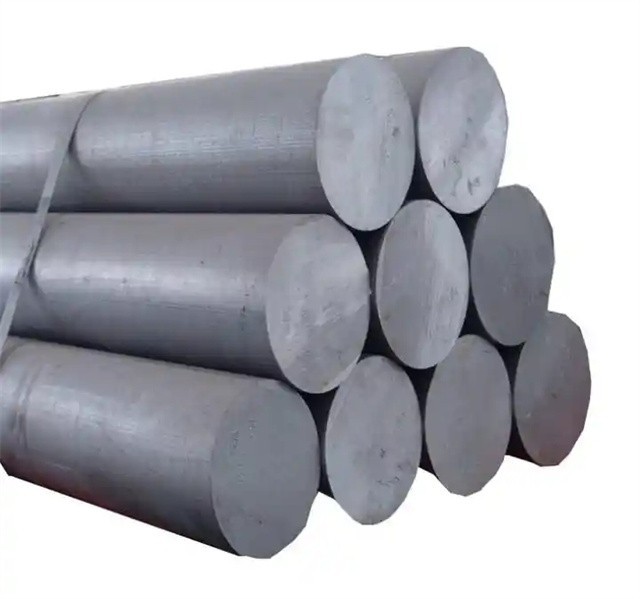
Aluminium round bars possess remarkable strength-to-weight ratios, making them robust while remaining lightweight. This property ensures durability and reliability in diverse operating conditions.

Corrosion Resistance
One of the standout features of aluminium round bars is their high resistance to corrosion, even in harsh environments. This attribute enhances their longevity and suitability for various industries.

Lightweight
Being significantly lighter than other metals, aluminium round bars offer ease of handling and transportation without compromising on structural integrity.
Construction: Aluminium bars are used in the construction industry for structural components like beams, columns, and supports due to their lightweight nature and high strength-to-weight ratio.
Transportation: Aluminium bar is employed in the automotive and aerospace industries to create lightweight components, such as chassis parts, body panels, and aircraft frames, which contribute to improved fuel efficiency and reduced overall weight.
Electrical Conductors: Aluminium bars are used in electrical transmission and distribution systems as conductors due to their high electrical conductivity. They are often utilized in power transmission lines and overhead conductors.
Marine Industry: Aluminium bars are resistant to corrosion, making them ideal for marine applications, such as boat frames, masts, and other structural components used in shipbuilding.
Industrial Machinery: Aluminium bars are used in various industrial machines and equipment as structural elements or as parts requiring lightweight yet robust properties.
Consumer Goods: Aluminium bars are used in the production of consumer goods like furniture, kitchen utensils, and sporting equipment due to their durability and aesthetic appeal.
Heat Sinks: Aluminium bars are utilized as heat sinks in electronic devices to dissipate excess heat and prevent overheating.
Architecture: Aluminium bars are used in architectural applications like curtain walls, window frames, and decorative elements due to their malleability and resistance to corrosion.
Automotive Accessories: Aluminium bars are used to manufacture various automotive accessories like roof racks, bull bars, and running boards due to their lightweight and corrosion-resistant properties.
Packaging: Aluminium bar are used in the production of packaging materials, such as cans and foils, due to their ability to protect against moisture, light, and other environmental factors.
Solar Industry: Aluminium bars are used in solar panel frames and mounting systems due to their lightweight and corrosion-resistant characteristics.
Our Processing Services for Aluminum Bars
1. Precision Sawing & Cut-to-Length
We offer bespoke cutting services for everything from single prototypes to high-volume production runs.
- High-Volume Automatic Circular Sawing: Ideal for mass production of short blanks. Offers incredibly clean, square cuts with ultra-tight length tolerances down to ±0.1mm to ±0.5mm.
- Heavy-Duty Band Sawing: Suitable for large-diameter round bars (up to Φ 500mm) and thick square/flat blocks. Standard length tolerance is controlled within ±1mm to ±2mm.
- Zero Scrap & Kerf Loss: You receive exact-length blanks ready for your CNC chuck.
2. Chamfering, Deburring & End Prep
- Bar Feeder Ready Chamfering: We provide precision end-chamfering (typically 30°, 45°, or 60°) on one or both ends. This allows smooth, jam-free insertion into your CNC automatic bar feeders.
- Deburring: All cut blanks are processed through brushing machines or vibratory tumblers (for small parts) to remove sharp edges and saw burrs, ensuring safe handling and perfect chuck gripping.
- Center Drilling: For long shafts or specific turning applications, we can pre-drill center holes on both ends, saving you a critical setup step on the lathe.
3. Centerless Grinding & Straightening
- Centerless Grinding & Peeling: We remove the outer extrusion oxide layer to provide a polished, perfectly round bar.
- Precision Straightening: Using multi-roll straightening machines, we correct any camber (bowing) in the bar.
4. Comprehensive Surface Finishing
- Anodizing:
Type II (Standard): Available in Clear, Black, Red, Blue, and custom colors for aesthetics and basic corrosion resistance.
Type III (Hard Coat Anodizing): Provides a thick, ceramic-like layer for extreme wear resistance (essential for automotive and aerospace components).
- Chemical Conversion Coating (Alodine / Chromate): Excellent corrosion protection that maintains the electrical conductivity of the aluminum (crucial for electronics and aerospace parts).
- Mechanical Finishing: Sandblasting (Bead blasting) to hide minor scratches and create a uniform matte finish, or Mechanical Polishing for a high-gloss, reflective surface.
Why Choose GNEE Aluminum?
1. Ultrasonic Testing (UT) for Large Diameter Bars
All of our high-strength and heavy-machining alloys (such as 2014, 2024, 5083, 6061, 7050, and 7075) with a diameter or thickness exceeding 50mm (2 inches) undergo mandatory, strict Ultrasonic Testing (UT) before they leave our facility.
Testing Standards: We strictly adhere to international testing protocols such as ASTM B594 and AMS-STD-2154.

2. MTC 3.1 & Full Material Traceability
We provide airtight, verifiable quality documentation. Every single batch of aluminum bars shipped by GNEE is accompanied by an EN 10204 3.1 Mill Test Certificate (MTC). We guarantee full traceability from the melting furnace to your factory floor.
- Chemical Composition: Verified by state-of-the-art OES (Optical Emission Spectrometers) to ensure exact alloying elements (Magnesium, Silicon, Zinc, Copper, etc.) match your requested standard.
- Mechanical Properties: Every lot is physically pulled and tested in our laboratory to guarantee the required Yield Strength, Ultimate Tensile Strength (UTS), and Elongation.
- Hardness Verification: We provide certified hardness readings (using Brinell, Rockwell, or Webster scales) so you know exactly how the material will behave during cutting.
- Heat Lot Traceability: Every bar is physically hard-stamped or laser-marked with its specific Heat Number, Alloy, and Temper, ensuring compliance for aerospace, automotive, and medical device contractors.


precision ground aluminum rod dimensional tolerance chart
Precision ground aluminum rod imperial size tolerance chart
Available in inch sizes, with tight tolerances equivalent to ISO H7–H8 fits.
| Product | OD(in) | OD (Fractional) | Tolerance(in) | Standard |
| Precision Ground Aluminum Rod Bar | 0.125 | 1/8" | -0.0008 | EN 754,ASTM B211 |
| Precision Ground Aluminum Rod Bar | 0.1875 | 3/16" | -0.0008 | EN 754,ASTM B211 |
| Precision Ground Aluminum Rod Bar | 0.25 | 1/4" | -0.0008 | EN 754,ASTM B211 |
| Precision Ground Aluminum Rod Bar | 0.3125 | 5/16" | -0.0008 | EN 754,ASTM B211 |
| Precision Ground Aluminum Rod Bar | 0.375 | 3/8" | -0.0008 | EN 754,ASTM B211 |
| Precision Ground Aluminum Rod Bar | 0.5 | 1/2" | -0.0008 | EN 754,ASTM B211 |
| Precision Ground Aluminum Rod Bar | 0.625 | 5/8" | -0.0008 | EN 754,ASTM B211 |
| Precision Ground Aluminum Rod Bar | 0.75 | 3/4" | -0.0008 | EN 754,ASTM B211 |
| Precision Ground Aluminum Rod Bar | 0.875 | 7/8" | -0.0008 | EN 754,ASTM B211 |
| Precision Ground Aluminum Rod Bar | 1 | 1" | -0.0008 | EN 754,ASTM B211 |
| Precision Ground Aluminum Rod Bar | 1.25 | 1-1/4" | -0.0008 | EN 754,ASTM B211 |
| Precision Ground Aluminum Rod Bar | 1.5 | 1-1/2" | -0.0008 | EN 754,ASTM B211 |
Precision ground aluminum rod metric size tolerance chart
Available in metric sizes, manufactured with a standard tolerance of ±0.02 mm, equivalent to ISO H7–H8.
| Product | OD (Metric) | Tolerance(mm) | Standard |
| Precision Ground Aluminum Rod Bar | 4MM | -0.02 | EN 754,ASTM B211 |
| Precision Ground Aluminum Rod Bar | 5MM | -0.02 | EN 754,ASTM B211 |
| Precision Ground Aluminum Rod Bar | 6MM | -0.02 | EN 754,ASTM B211 |
| Precision Ground Aluminum Rod Bar | 8MM | -0.02 | EN 754,ASTM B211 |
| Precision Ground Aluminum Rod Bar | 10MM | -0.02 | EN 754,ASTM B211 |
| Precision Ground Aluminum Rod Bar | 12MM | -0.02 | EN 754,ASTM B211 |
| Precision Ground Aluminum Rod Bar | 15MM | -0.02 | EN 754,ASTM B211 |
| Precision Ground Aluminum Rod Bar | 20MM | -0.02 | EN 754,ASTM B211 |
| Precision Ground Aluminum Rod Bar | 25MM | -0.02 | EN 754,ASTM B211 |
| Precision Ground Aluminum Rod Bar | 30MM | -0.02 | EN 754,ASTM B211 |
| Precision Ground Aluminum Rod Bar | 40MM | -0.02 | EN 754,ASTM B211 |
| Precision Ground Aluminum Rod Bar | 40MM | -0.02 | EN 754,ASTM B211 |

Export Packaging
- Layer 1 (Surface Protection): For cold-drawn or polished bars, each individual bar is wrapped in PE foam sleeves or interleaved with acid-free paper to prevent any metal-to-metal friction and scratching.
- Layer 2 (Moisture Barrier): The bundled bars are tightly sealed in VCI (Volatile Corrosion Inhibitor) plastic film and packed with abundant silica gel desiccants. This creates a vacuum-like dry environment, completely preventing oxidation and white rust even in highly humid marine climates.
- Layer 3 (Structural Support): The bundles are placed into Heavy-Duty Fumigated Wooden Crates (ISPM-15 Certified). Unlike cheap wooden pallets, our fully enclosed crates feature reinforced timber frames that prevent the bars from sagging, bending, or being crushed during forklift and crane operations.
- Layer 4 (Secure Strapping): We use high-strength PET or nylon strapping (never bare steel bands that can cut into the aluminum) to secure the load immovably within the crate.


Our Factory