

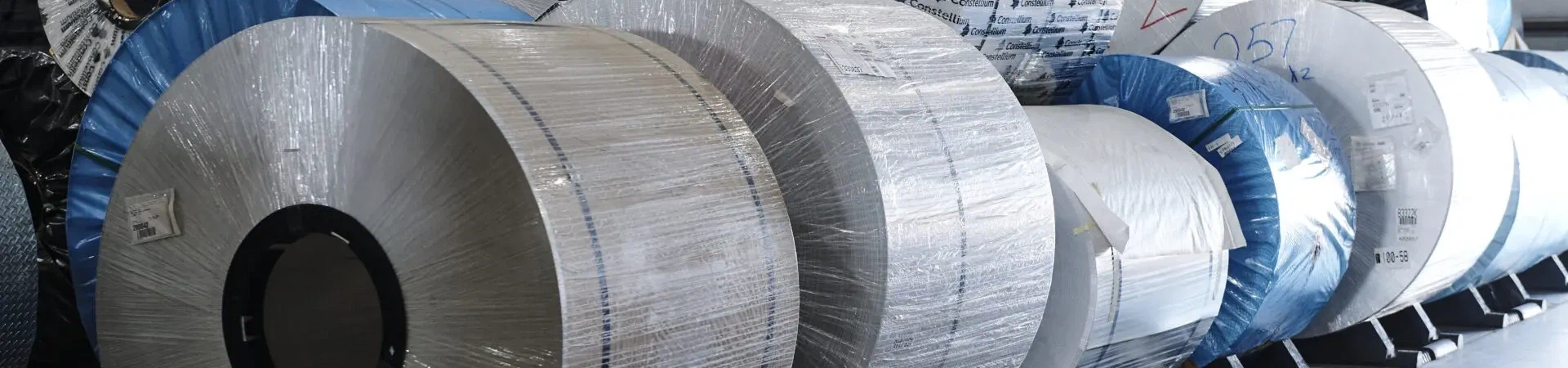


Aluminum Coil
GNEE Aluminum: Leading Aluminum Coil Supplier In China
Quality Assurance
With advanced production technology and equipment and a multi-functional laboratory, we provide customers with reliable product quality assurance.
Wide Range Of Applications
We use our products in various fields, including construction, the automotive industry, industrial and manufacturing processes, and packaging.
Wide Product Range
Our aluminum exports go to more than 100 countries, and we cooperate with over 600 companies worldwide, among which are 15 shipyards, 143 project engineering companies, and 23 boiler machinery manufacturers.
Professional Team
Our professional sales team provides customers with perfect first-class service; Our strict team for procurement and quality control carefully selects high-quality raw materials; Our advanced science and technology team improves production and reduces costs for customers.
Introduction of Aluminum Coil
Aluminum coil can be produced from aluminum ingots or other forms of raw aluminum (called "cold rolling" or "direct cast") or from a smelting process directly through rolling (called "continuous cast"). These sheets of rolled aluminum are then rolled up, or coiled, around a core. Coil is used to manufacture an almost unlimited range of components used in an extensive number of industries.


Specifications of GNEE Aluminum Coils
As a leading manufacturer, we provide a full range of aluminum coils with precision tolerances. Below is our standard supply capability. Custom sizes and special alloys are available upon request.
| Specification Parameter | Technical Details & Supply Range |
| Alloy Series |
1000 Series (Pure): 1050, 1060, 1070, 1100... 3000 Series (Al-Mn): 3003, 3004, 3005, 3104, 3105... 5000 Series (Al-Mg): 5005, 5052, 5083, 5086, 5454, 5754... 6000 Series (Al-Mg-Si): 6061, 6063, 6082... 8000 Series (Foil/Special): 8011, 8021, 8079... |
| Temper |
Annealed/Soft: O, F Strain-Hardened (H): H111, H112, H12, H14, H16, H18, H22, H24, H26, H32, H34, H38 Heat-Treated (T): T4, T6, T651 |
| Thickness | 0.10 mm – 8.0 mm (From ultra-thin gauge to heavy-duty thick coils.) Strict thickness tolerance controlled within ±3% |
| Width | 10 mm – 2650 mm (Includes precision slit narrow strips and ultra-wide aluminum coils) |
| Coil Inner Diameter (ID) |
Standard: 505 mm (508 mm) Customized: 150 mm, 300 mm, 405 mm, 610 mm |
| Coil Outer Diameter (OD) | Max up to 2500 mm (Customized based on customer's uncoiling equipment and shipping container limits) |
| Coil Weight | Standard 1.0 MT – 5.0 MT per coil. (Maximum up to 10 MT upon request) |
| Surface Treatment | Mill Finish (MF), Stucco Embossed (Orange Peel/Classic), Diamond Embossed, Brushed (Hairline), Anodized, Mirror/Polished |
| Coated Aluminum | PE (Polyester), PVDF (Fluorocarbon), SMP, and Epoxy. (Color customized according to RAL / PANTONE color charts) |
| Surface Protection | Paper Interleaved, Clear PE Film, Blue PVC Film, Black/White PVC Film (Thickness: 30μm - 100μm) |
| Edge Quality | Mill Edge, Slit Edge (Smooth, flat, and burr-free edge quality) |
| International Standards | ASTM B209, ASTM B928, EN 485, EN 573, EN 13523, GB/T 3880, GB/T 3198, JIS H4000, ISO 6361, ISO 7599 |
| Test & Certificates | ISO 9001, ISO 14001, MTC (Mill Test Certificate EN 10204 3.1), SGS/BV/TUV Third-Party Inspection Reports available |
Features of Aluminium Coils
light weight
Because the quality of the aluminum product itself is very light, and the thickness of the aluminum coil is not large, and it has a certain degree of reinforcement, the weight of the base is also not high. The characteristics of low density and light weight also make aluminum coils useful in various industries.
easy to handle
It is precisely because the material of the aluminum coil is very soft and the plasticity is very strong, which can also ensure the strengthening effect in the later stage, so the efficiency of its daily processing is also very high. Such a plastic material has good application effect and can be processed in different types.
Corrosion Resistance
In fact, aluminum alloy itself has very good corrosion resistance, and there will be an oxide film on its surface, which can naturally ensure a good service life. Long-term use of such a product can also ensure corrosion resistance and is not prone to problems.
long-lasting
The service life of aluminum coils is still very long, and the surface can also be reprocessed. In addition, it is widely used, and such aluminum coils are often seen in daily processing and production. And it has a longer service life and a good price/performance ratio.
Non-magnetic and non-sparking
Aluminum is non-magnetic because of its crystalline structure. An oxide layer is quickly formed after any scratch, making it non-sparking.
Good thermal and electrical conductor
Free electrons in the structure of aluminum coils make it a good electrical conductor. Since there is a steady flow of these electrons, the aluminum coil is therefore a good conductor of heat.
Soft
Since aluminum is more pliable than the majority of other metals, shaping the coils is simpler. Because of the increased flexibility, engineers may bend coils into effective designs.
Non-toxic
In the context of normal daily contact, aluminum is generally safe for the human body and does not cause significant harm.
Applications of Aluminum Coil


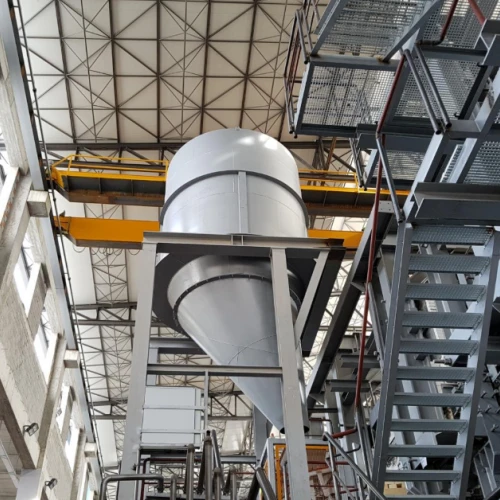
Building and Construction
Aluminium coil serves as a versatile material employed in diverse building and construction applications, ranging from interior design to exterior cladding. Its lightweight and strength offer great versatility, making it an ideal choice for roofing materials, window frames, facade panels, and more. Its superior durability also makes the aluminium coil perfect for many different outdoor and indoor projects. It is resistant to external weather conditions like sun exposure, rain, snow, and high temperatures, so it can be used confidently without worrying about wear or rust.
Transportation
Aluminium coils have become increasingly popular in transportation due to their lightweight nature and corrosion resistance. These properties make them well-suited for vehicular construction, adding minimal weight while offering superior structural integrity. They also greatly reduce noise levels and protect against outdoor elements like rain, snow, wind, and debris. Furthermore, the aluminium coil is often used in trailer body liners due to its durability and flexibility, thus making it the ideal material for transportation applications.
Electrical and Electronics
Aluminum Coil has a variety of applications in the field of electrical and electronics. Its malleability, lightweight, and corrosion-resistant properties make it ideal for household appliances, electronic components, switchgear housing, motor insulation, and transformers. It also enables the rapid transfer of heat for efficient cooling systems. Consumer electronics, such as mobile devices or televisions, widely employ it, necessitating notably smaller sizes than what traditional manufacturing techniques permit. The coil can also reduce electromagnetic interference by providing shielding from outside sources.
Consumer Goods
Aluminium coils are also used to manufacture consumer goods such as packaging materials, kitchen utensils, and toys. The corrosion-resistant nature of aluminium makes it a preferred material for packaging food products. Manufacturers utilize aluminium coils to produce cans, bottles, and foil packaging, with the material’s inherent shaping capability positioning it as a preferred choice for crafting kitchen utensils and various household items.
Industrial Applications
Aluminium coils have a wide range of industrial applications. They are used as sheet metal for various industrial equipment, such as air conditioning and ventilation systems, containers, and storage tanks. Its malleability makes it ideal for forming complex parts without welding or joining processes.
Medical
Aluminum is widely used in the medical and dental fields for many products ranging from disposables to surgical equipment and sophisticated electronic devices.
Aerospace
Because of aluminum’s light weight, corrosion resistance, and potential strength characteristics, some alloys and tempers are ideal for aerospace applications.
popular aluminum coil Types
Color-coated aluminum coil


Embossed aluminum coil


Mirror Finish Aluminum Coil
Anodized aluminum coil


Our Factory
Our Value-Added Processing & Customization Services
At GNEE Aluminum, we are more than just a material supplier. Equipped with state-of-the-art processing lines, we offer comprehensive in-house coil processing services. Whether you need ultra-narrow strips, specific coatings, or specialized surface protection, we deliver ready-to-use materials tailored to your exact manufacturing requirements.
1. Precision Slitting & Cut-to-Length
High-Speed Slitting : Utilizing advanced rotary slitters, we can process wide coils into ultra-narrow aluminum strips (as narrow as 10mm). We guarantee strict width tolerances, perfect winding alignment (no telescoping), and 100% burr-free edges to protect your stamping molds.
Cut-to-Length & Tension Leveling: We can flatten and cut coils into custom sheet lengths. Our tension leveling process eliminates internal stress, ensuring absolute flatness (no waves or edge buckling) for highly demanding applications like CNC machining or facade panels.
2. Advanced Coil Coating & Painting
We provide continuous coil coating services for both interior and exterior applications, ensuring uniform color and excellent adhesion.
Coating Types: PE (Polyester) for interior/decor, PVDF (Fluorocarbon) for exterior/extreme weather resistance (up to 20 years warranty), Epoxy, and SMP.
Color Matching: Precise color matching according to RAL, PANTONE color charts, or custom physical samples provided by clients.
Coating Structure: Single-sided or double-sided coating available. Topcoat thickness ranges from 15 μm to 30 μm, and backcoat from 5 μm to 15 μm.
3. Surface Treatment & Texturing
Embossing: We offer Classic Stucco (Orange Peel), Diamond, and Ribbed patterns. Embossing significantly increases the surface area for heat transfer (ideal for refrigeration/HVAC) and minimizes light reflectivity.
Anodizing: Continuous coil anodizing to enhance surface hardness, scratch resistance, and anti-corrosion properties.
Brushed/Mirror Finish: Providing hairline brushed finishes or highly reflective mirror finishes for premium consumer electronics, lighting reflectors, and architectural interiors.

4. Professional Surface Protection
To ensure the aluminum surface remains flawless during transportation, handling, and your deep-drawing/cutting processes, we offer multiple protection options:
- Lamination / PVC Films:
- Clear PE Film / Blue PE Film: Standard protection against scratches.
- Black & White PVC Film: Heavy-duty protection for deep drawing and bending.
- Laser PVC Film: Special film designed for fiber laser cutting (prevents melting and residue).
- Paper Interleaved: Acid-free kraft paper interleaved between coil layers to prevent friction scratches and moisture condensation (water stains).
- Electrostatic Oiling: Applying DOS or food-grade lubricants for customers in the automotive or can-making (packaging) industries, facilitating easier stamping.


Why Choose GNEE Aluminum
1. Global Quality Certifications & MTC 3.1
We don't just promise quality; we prove it with internationally recognized documentation and third-party verifications.
100% Traceability with MTC 3.1: Every single shipment from GNEE Aluminum is strictly accompanied by a Mill Test Certificate (MTC) in accordance with EN 10204 3.1 standards.
Third-Party Inspections: We welcome and regularly cooperate with globally recognized inspection agencies, including SGS, BV, and TUV. We can arrange pre-shipment inspections (PSI) based on your specific requests.
Comprehensive Management Systems:
- ISO 9001:2015 Quality Management System
- ISO 14001:2015 Environmental Management System
- GJB9001B-2009 National Military Standard (Demonstrating aerospace/military-grade manufacturing capabilities)
- RoHS & REACH Compliant (Crucial for electronics and food packaging applications)


2. Export-Grade Seaworthy Packaging & Loading
Our Standard Multi-Layer Protection System:
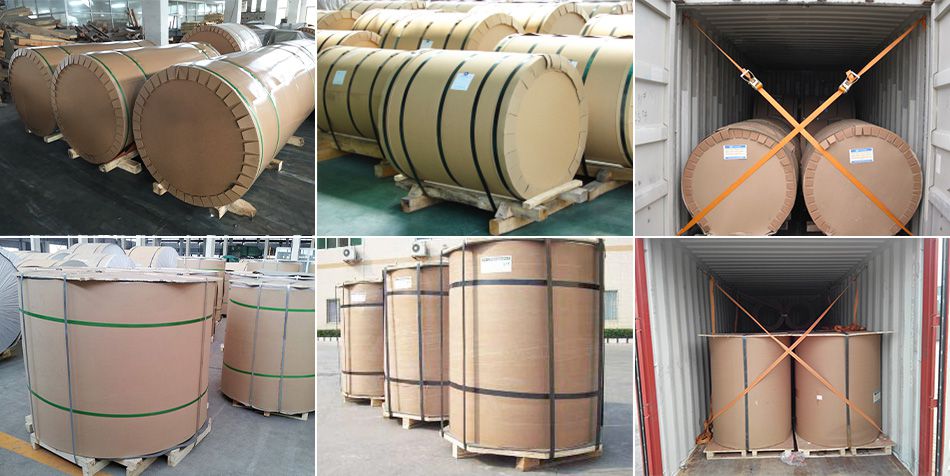
- Moisture Barrier: Coils are tightly wrapped with a layer of transparent PVC film, followed by heavy-duty waterproof kraft paper to block out oceanic humidity.
- Desiccant Protection: Ample silica gel desiccants are placed inside the packaging core and outer layers to absorb any internal condensation during cross-equator transit.
- Edge & Core Protection: Cardboard or galvanized steel edge protectors are applied to the inner and outer diameters to prevent edge denting and telescoping.
- Heavy-Duty Strapping: The coils are securely strapped with multiple high-strength galvanized steel bands (arranged in a grid/cross pattern) to maintain structural integrity.
- ISPM-15 Wooden Pallets: All coils are firmly bolted to fumigated, heavy-duty wooden pallets that comply with international ISPM-15 standards, ensuring they remain stationary during container sway.

Customizable Orientation to Fit Your Equipment:
Eye-to-Sky (Vertical Packaging): The coil's inner hole faces upwards. Ideal for customers using overhead cranes or specific automated uncoiling systems.
Eye-to-Wall (Horizontal Packaging): The coil's inner hole faces sideways. Highly recommended for standard forklift unloading and traditional decoiler machines.
Common Problems of Aluminum Coil