





5251 Aluminum Sheet
Customer service is online. Enter the chat to get the latest quotation.
 Spot stock
 Customize
 Factory direct sale
 7 days delivery
What is ASTM B209 5251 aluminum sheet
5251 aluminum sheet is a 5000-series, aluminium-magnesium alloy with magnesium at 1.7–2.4 %. In ASTM B209 the grade is written 5251; the same material is EN AW-5251 (also called AlMg2) in Europe and NS4 under the old British standard. It is non-heat-treatable - its strength comes from cold work, not heat treatment, so there are no T-tempers (any "5251-T6" listing is a misprint from another alloy).
We quote the range we actually roll and slit to tolerance: 0.20–6.00 mm thick, 20–2600 mm wide, supplied as cut-to-length sheet or as coil. 5251 is stronger than pure aluminium (1050/1100) yet keeps good ductility and welds cleanly, which is why it is a workhorse for marine, transport and architectural sheet. Tell us the end-use and finish and we will quote the temper and width that fit.
Specifications of 5251 aluminum sheet
ASTM B209/B209M covers flat sheet, coiled sheet and plate, and 5251 with its strain-hardened tempers is within the alloys it lists. Sheet supplied to this range is B209 material; coil and slit strip are the same alloy in coil form. Thicknesses above 6.00 mm are quoted as plate on a separate line. The table below is the range we quote against.
| Item | Specification |
|---|---|
| Alloy | 5251 (UNS A95251) · EN AW-5251 (AlMg2) · BS NS4 |
| Temper | O, H22, H24, H26, H32, H34, H36, H38 (H28, H112 on request) |
| Thickness | 0.20–6.00 mm (sheet) · 6.00–200 mm available as plate |
| Width | 20–2600 mm |
| Length | Coil, or cut-to-length sheet to order |
| Surface | Mill finish (anodized, coated, embossed, brushed, polished by agreement) |
| Form | Aluminum sheet (coil and slit strip available) |
| Standard | ASTM B209 / B209M |
| Equivalent grades | UNS A95251, EN AW-5251 (3.3525), BS NS4, ISO 6361 5251 |
| Custom size | Available |

Chemical composition of 5251 aluminum sheet
The composition follows EN 573-3 for EN AW-5251 / AA 5251: magnesium is the principal addition, with manganese to refine grain and a small chromium and titanium content. It is a non-heat-treatable alloy, so composition is held to protect formability and corrosion resistance rather than to respond to heat treatment. For GB/T 3190 the closest national grade is 5A02; the two are not composition-identical, so confirm the grade against your drawing rather than treating them as interchangeable.
| Element | Content (wt %) |
|---|---|
| Aluminium (Al) | Balance |
| Magnesium (Mg) | 1.70 – 2.40 |
| Manganese (Mn) | 0.10 – 0.50 |
| Silicon (Si) | ≤ 0.40 |
| Iron (Fe) | ≤ 0.50 |
| Copper (Cu) | ≤ 0.15 |
| Chromium (Cr) | ≤ 0.15 |
| Zinc (Zn) | ≤ 0.15 |
| Titanium (Ti) | ≤ 0.15 |
| Other elements (each) | ≤ 0.05 |
| Other elements (total) | ≤ 0.15 |
Limits per EN 573-3 / AA 5251. Magnesium gives the corrosion resistance and moderate strength; the low copper keeps weldability and seawater performance intact.
Mechanical properties of 5251 aluminum sheet by temper
5251 is non-heat-treatable: strength rises only with cold work (the H-tempers), and annealing returns it to the soft O condition. The table gives representative ranges for sheet; exact acceptance values depend on thickness and are confirmed on the mill certificate. Values below are indicative of ASTM B209 / EN 573 practice and should be verified against the ordered thickness and the supplied MTC.
| Temper | Tensile strength (MPa) | Yield strength (MPa) | Elongation (%) |
|---|---|---|---|
| O (annealed) | 170 – 215 | ≥ 65 | 15 – 20 |
| H22 / H32 (quarter / ¼ hard) | 200 – 255 | ≥ 130 | 5 – 12 |
| H24 / H34 (half / ½ hard) | 230 – 275 | ≥ 180 | 5 – 8 |
| H26 / H36 (three-quarter hard) | 250 – 295 | ≥ 210 | 4 – 6 |
| H28 / H38 (full hard) | 260 – 285 | ≥ 225 | 3 – 5 |
Typical ranges for sheet up to about 6 mm; H28, H112 and other tempers are available on request. Certified figures come from the EN 10204 3.1 MTC. 5251 has no T-temper - heat treatment does not strengthen it.
Physical properties of 5251 aluminum sheet
These physical constants are essentially independent of temper - cold work changes strength and hardness, not the underlying material behaviour. They explain why 5251 is picked for marine and structural sheet rather than for electrical parts: it is a balanced, non-conductive, corrosion-resisting alloy.
| Property | Value |
|---|---|
| Density | 2.70 g/cm³ |
| Melting range | ~ 605 – 650 °C |
| Thermal conductivity | ~ 134 – 150 W/(m·K) |
| Electrical conductivity | ~ 34 – 36 % IACS |
| Young's modulus | ~ 69 GPa |
| Coefficient of thermal expansion | ~ 23.8 µm/(m·K) |
Choosing a temper for 5251 aluminum sheet
Temper choice on 5251 is a strength-versus-formability trade. Because the alloy work-hardens quickly, the softer you start the easier the forming - and the more it will stiffen in the press. Start from the forming step, then take the hardest temper your process can still accept.
| If you need… | Pick | Why |
|---|---|---|
| Deep drawing, spinning, complex bends | O | Softest condition; highest elongation and the largest bend radius before cracking. |
| Light forming plus more stiffness | H32 (or H22) | Quarter-hard; the most common 5251 temper for marine and panel work - forms well and holds shape. |
| Flatter, stiffer panels | H34 (or H24) | Half-hard; good for cladding and vehicle panels that must stay flat. |
| Rigid, fully work-hardened stock | H38 (or H28) | Full-hard, highest commercial strength; essentially not bent after supply. |
H3x tempers (H32/H34/H36/H38) are stabilized variants of the H2x tempers with slightly more stable properties and flatter stock - preferred for painted and precision work.
Dimensions and tolerances of 5251 aluminum sheet
Thickness, width and flatness follow EN 485-2. 5251 is a Group II alloy (5xxx family), so it sits in a slightly wider tolerance band than pure aluminium (Group I) but tighter than the 7xxx high-strength grades. Representative thickness tolerance for cold-rolled sheet is about ± 0.05 mm at 0.5 mm, ± 0.07 mm at 1.0 mm and ± 0.13 mm at 3.0 mm; confirm the exact class against your thickness at quotation. The 10 mm at each edge is excluded from thickness measurement.
| Parameter | GNEE supply range |
|---|---|
| Thickness | 0.20 – 6.00 mm (sheet); 6.00 – 200 mm (plate, separate line) |
| Width | 20 – 2600 mm |
| Length | Coil, or cut-to-length sheet to order |
| Coil ID / OD | 300 / 505 mm ID; OD and coil weight quoted per order |
| Edges | Slit edge or mill edge |
Tolerances per EN 485-2 Group II. Width above 1500 mm is wide architectural stock and is planned against the rolling schedule. Narrower widths are slit from wide coil.

5251 vs 5052 and 5083 aluminum sheet
5251, 5052 and 5083 are all marine-grade Al-Mg alloys, but they sit at different magnesium levels and therefore different strength. The table uses real property figures so the choice is grounded, not a list of adjectives.
| Alloy | Mg content (%) | Tensile (H32 / typical, MPa) | Density (g/cm³) | Where it fits |
|---|---|---|---|---|
| 5251 | 1.7 – 2.4 | 200 – 255 | 2.70 | Medium-strength marine, vehicle panels, cladding, containers - good formability at moderate load. |
| 5052 | 2.2 – 2.8 | 210 – 265 | 2.68 | Slightly stronger; sheet metal, fuel tanks, light marine where 5251 is unavailable. |
| 5083 | 4.0 – 4.9 | 275 – 350 | 2.66 | High-strength marine plate, hulls and pressure vessels where 5251 is not strong enough. |
Tensile figures are indicative H32/typical values; certified values come from the applicable standard or the mill certificate. 5251 is often functionally close to 5052 but is a different grade - confirm fit-for-purpose with the purchaser.
Applications of 5251 aluminum sheet
5251 is chosen where a sheet needs good corrosion resistance and formability at moderate strength - not where it must carry high structural load. Its seawater resistance and weldability put it in boats and coastal work, while its formability suits panels and pressings.
Marine: boat hulls and small craft ("tinnies"), decks, railings, hatch covers, floats and marine componentry exposed to seawater.
Architecture and signage: cladding, panelling, road signs and decorative facades that need weather resistance without high load.
Transport and vehicles: vehicle body panels, truck and trailer skins, and general transport sheet.
Storage and process equipment: containers, silos, fuel tanks, and food-processing equipment where corrosion resistance and cleanability matter.
General sheet metal: stamped parts, enclosures, covers, electrical panels and furniture tubing.
Non-structural aircraft parts: decorative or lightly loaded aircraft interior panels and fittings (not primary structure).


Forming, welding and finishing 5251 aluminum sheet
5251 is a fabrication-friendly alloy: it bends, presses and welds well, and it work-hardens so parts stiffen as they are formed. A few points keep the result clean.
Forming and bending
In O and H32 the sheet bends to a tight radius without cracking; harder tempers (H34, H38) need a larger radius and are prone to springback. Because 5251 work-hardens rapidly, plan the bend count - each hit adds strength locally and can make further forming harder.
Welding
5251 is readily welded by MIG (GMAW) and TIG (GTAW) with minimal cracking. Common fillers are 4043 for general joints and 5356 where the welded assembly stays in a marine or corrosive environment (the higher magnesium in 5356 better matches the parent metal). Normal sheet thicknesses need no special pre- or post-heat.
Machining and finishing
Machinability is fair; magnesium makes the chips gummy, so use sharp tools, high cutting speed, ample lubrication and positive rakes, cutting continuously. Anodizing is possible but the finish is less uniform than on low-magnesium alloys such as 5005, so 5251 is usually anodized for protection rather than for a bright decorative look.
Machining and fabrication services for 5251 aluminum sheet
Beyond supplying 5251 aluminum sheet in standard or custom sizes, GNEE runs an in-house processing line so you can order material that is closer to the finished part and needs less work on your floor. The services below are offered on 5251 sheet and coil; send the drawing, quantities and tolerances and we will quote the combination that fits.
Cutting
Slitting and edge trimming - coil slit to your width (down to about 20 mm) with slit or mill edge, the standard route for strip and narrow coil.
Cut-to-length shearing - sheet sheared to a specified length on a levelling line, with square edges and controlled burr.
Laser and waterjet cutting - for profiles, notches and low-volume shapes where shearing is not practical; waterjet avoids the heat-affected zone that laser leaves on aluminium.
CNC machining
Multi-axis CNC routing, milling and drilling for holes, countersinks, pockets and profiles in 5251 sheet up to the thickness we stock. Suitable for marine fittings, enclosures, brackets and panels that need features cut before forming.
Perforating and punching
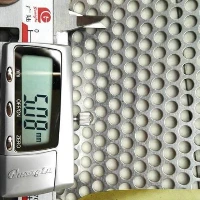
Mechanical punching and perforated patterns (round, slotted, decorative) for cladding, ceilings, filters and acoustic panels. Tooling is quoted per pattern; standard round-hole pitch sets are the lowest-cost option.
Chamfering and deburring
Edge chamfering and deburring on cut parts so edges are safe to handle and ready for welding, bending or coating. Supplied as a standard pass after cutting where requested.
Bending and brake-press forming
Press-brake bending to a specified radius and angle. Softer tempers (O, H32) take tighter bends than H38; we advise a starting radius from the temper and thickness so the part forms without cracking.
Welding
MIG (GMAW) and TIG (GTAW) welding of 5251 assemblies with 4043 or 5356 filler, typically for welded marine parts, frames, tanks and enclosures. Weld procedure and filler are chosen for the joint and the intended environment.
Surface treatments
Coil and sheet coating (pre-paint / PVDF / PE) - continuous or batch coating in standard RAL colours for architectural cladding and signage.
Embossing (stucco) and brushing - textured or brushed finishes for decorative and non-slip applications.
Anodizing - possible for corrosion protection, but the appearance is less uniform than on low-magnesium alloys, so it is quoted case by case against a sample rather than assumed decorative.
Protective film lamination - PVC or PE protective film for transport and forming protection.
Processing tolerances, minimum feature sizes and achievable radii depend on thickness, temper and quantity - confirm against your drawing at quotation.


Ordering 5251 aluminum sheet
5251 is a non-controlled grade, so it is quoted and shipped as a normal commercial aluminium product with no export-screening step. We handle both trial quantities and full production runs on the same terms.
| Item | GNEE practice |
|---|---|
| MOQ | Flexible - small trial coils, sample lengths and full runs all quoted; tell us the quantity you actually need. |
| Lead time | 15 – 30 days from order confirmation, planned against the rolling and slitting schedule and confirmed before you commit. |
| Packing | Surface-protective film or paper, then moisture-proof wrapping; wooden pallets with steel strapping for flatness and safe transport. |
| Certification | EN 10204 3.1 mill certificate with every shipment, traceable to the heat. 3.2 and third-party inspection arranged where the job requires. |
| Payment / Incoterms | By agreement (T/T, LC); FOB, CFR, CIF and other Incoterms available per order. |
About GNEE
GNEE has supplied aluminium flat-rolled products since 2008 and now ships to more than 100 countries, running its own rolling and slitting schedule rather than brokering spare mill stock. For a medium-strength, weldable grade like 5251 that means we can hold the tempers and widths marine and transport buyers actually use, and we can cut and process them in-house before they leave the plant.
We quote the range we can hold. The 0.20–6.00 mm by 20–2600 mm band on this page is our sellable sheet range, not a theoretical mill capability.
Small quantities are normal. Trial coils, sample lengths and full production runs are quoted on the same terms.
Delivery you can plan around. 15–30 days from confirmation, checked against the actual rolling schedule before you commit.
Paperwork that clears inspection. EN 10204 3.1 mill certificate with every shipment, traceable to the heat; 3.2 and third-party inspection arranged where required.

FAQ
What is 5251 aluminum sheet used for?
5251 is a medium-strength, marine-grade Al-Mg sheet used for boat hulls and small craft, vehicle panels, architectural cladding and signage, containers, silos, fuel tanks and general sheet-metal pressings. It is chosen for good corrosion resistance and formability at moderate strength, not for high structural load.
Is 5251 aluminum the same as 5052?
No. Both are marine-grade Al-Mg alloys and are sometimes used interchangeably, but they are different grades: 5251 has magnesium at 1.7–2.4 % (tensile ~200–255 MPa in H32) and 5052 at 2.2–2.8 % (tensile ~210–265 MPa in H32). 5052 is slightly stronger and more widely stocked; confirm fit-for-purpose rather than assuming the two are identical.
Can 5251 aluminum sheet be welded?
Yes. It welds readily by MIG (GMAW) and TIG (GTAW) with minimal cracking. 4043 filler is used for general joints; 5356 is preferred where the weld stays in a marine or corrosive environment because its higher magnesium better matches the parent metal. Normal thicknesses need no special pre- or post-heat.
Which temper should I choose for bending?
Use O or H32 for tight bends and complex forming - they have the highest elongation and the smallest bend radius before cracking. H34 suits flatter, stiffer panels, and H38 is essentially not bent after supply. Because 5251 work-hardens quickly, allow for springback and added local strength on harder tempers.
Is 5251 heat-treatable?
No. 5251 is non-heat-treatable: it gains strength only from cold work (the H-tempers), and annealing returns it to the soft O condition. Any "5251-T6" listing is a misprint from another alloy - there is no T-temper for 5251.
What standard dimensions do you supply?
We quote 0.20–6.00 mm thick by 20–2600 mm wide as sheet, plus coil and slit strip with 300 / 505 mm coil ID. Thicknesses above 6.00 mm are quoted as plate. Custom cut-to-length and non-standard sizes are available - send the drawing.
Can 5251 be anodized?
It can be anodized for corrosion protection, but the finish is less uniform and slightly greyer than on low-magnesium alloys such as 5005, so it is not the first choice for bright decorative anodizing. Where appearance matters, we quote the anodizing against a sample first.
What is the lead time and minimum order?
Lead time is 15–30 days from order confirmation, planned against the rolling schedule and confirmed before you commit. MOQ is flexible - trial coils, sample lengths and full production runs are all quoted; tell us the quantity you need.
Hot Tags: 5251 aluminum sheet, China 5251 aluminum sheet manufacturers
You Might Also Like


Send Inquiry