

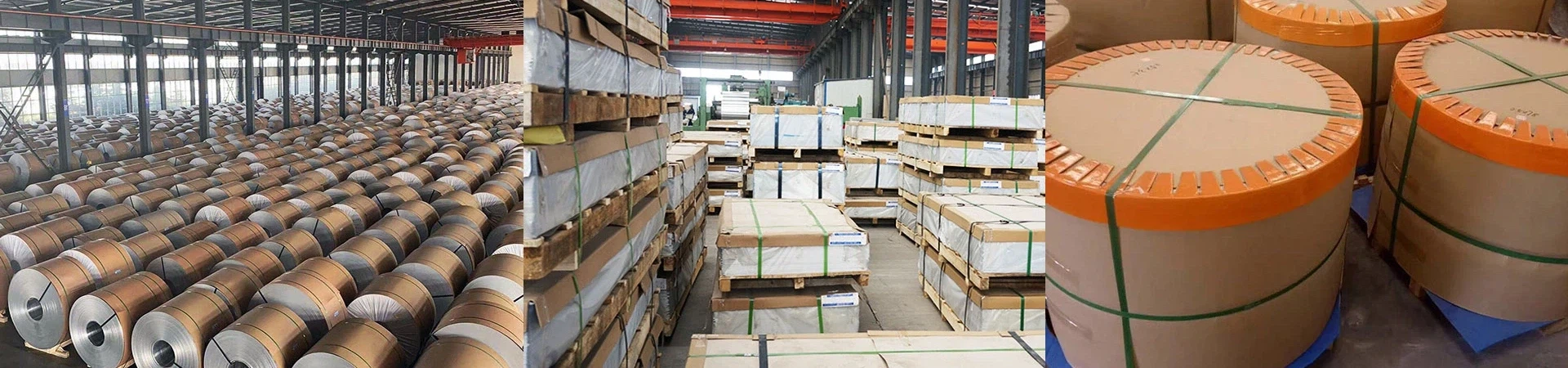
Aluminum is a versatile material used extensively in industries such as construction, automotive, marine, and packaging. Choosing the right aluminum grade is crucial, considering factors such as strength, corrosion resistance, machinability, and cost. Two commonly used grades are 1050 aluminum sheet and 5005 aluminum sheet. Understanding their differences can help you select the right material for your project.
Composition Differences of 1050 VS.5005 aluminum sheet
1050 aluminum sheet: A commercially pure aluminum alloy containing 99.5% aluminum and trace amounts of iron and silicon. Known for its excellent corrosion resistance and high machinability, 1050 aluminum is ideal for general fabrication, marine fittings, and decorative panels.
5005 aluminum sheet: An aluminum-magnesium alloy containing 97.5% aluminum and 2.5% magnesium. This composition improves formability and surface finish, making it suitable for applications such as roofing, cladding, and architectural panels.
Strength and Processability of 1050 VS.5005 aluminum sheet
1050 aluminum sheet: Compared to 5005 aluminum sheet, it offers higher strength and is suitable for projects requiring durable, corrosion-resistant components. However, this higher strength may require more effort during forming and shaping.
5005 aluminum sheet: Due to the addition of magnesium alloy, it is easier to form and shape, resulting in improved bending properties and surface finish. Although slightly lower in strength, it is often used in decorative or architectural applications.
Corrosion Resistance of 1050 VS.5005 aluminum sheet
1050 aluminum sheet: Demonstrates excellent corrosion resistance even in saltwater environments, making it an ideal choice for marine structures, chemical equipment, and food-grade applications.
5005 aluminum sheet: Offers moderate corrosion resistance. It is best suited for non-marine environments where moderate atmospheric corrosion protection is sufficient.
Weldability of of 1050 VS.5005 aluminum alloy sheet
1050 aluminum sheet: Can be welded using standard processes such as MIG, TIG, and spot welding without specialized equipment.
5005 aluminum sheet: Welding may require specialized techniques to maintain joint integrity, especially in thin sheets or architectural panels.
Cost Considerations of of 1050 VS.5005 aluminum plate
Typically, 1050 aluminum sheet is more expensive than 5005 aluminum sheet due to its higher purity, corrosion resistance, and strength. The choice depends on project requirements, whether durability or cost-effectiveness is prioritized.
Applications
1050 aluminum sheet:
Marine panels, decks, and bulkheads
Electrical components and heat exchangers
Decorative panels and sheet metal
5005 aluminum sheet:
Architectural cladding and roofing
Decorative facades and panels
Furniture and interior design elements
Conclusion
Choosing between 1050 and 5005 aluminum sheet requires understanding project requirements. 1050 aluminum sheet is the preferred choice for high-strength and high-corrosion-resistance applications, especially in marine and industrial environments. 5005 aluminum is ideal for projects where formability, surface finish, and cost-effectiveness are key.
Working with a reliable supplier like GNEE ensures high-quality aluminum that meets international standards for marine, industrial, and architectural applications.


