

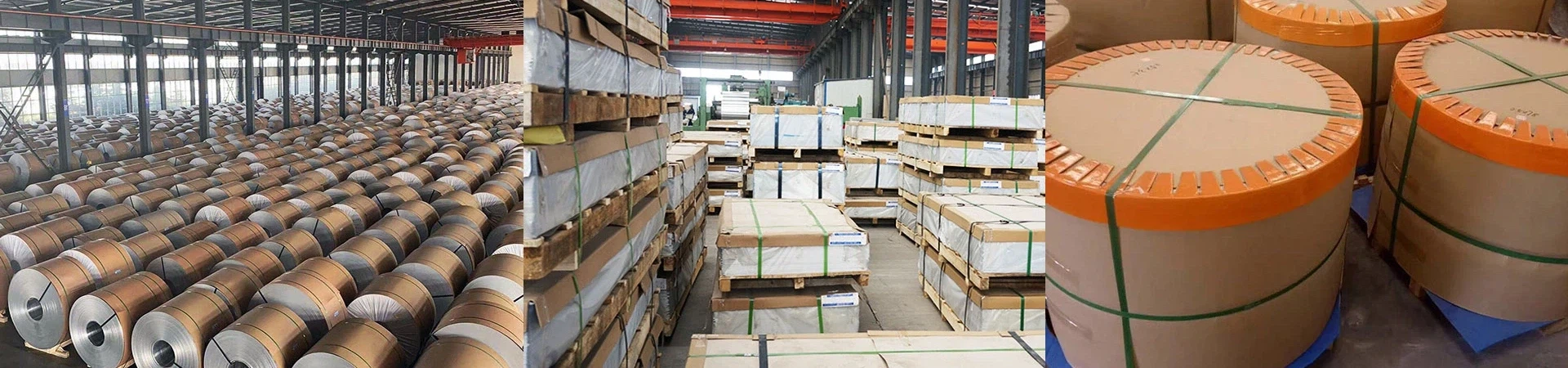
Aluminum Checkered plates or tread aluminum sheet with distinct design and strong slip resistance can be easily configured into a range of designs and patterns to meet the client's specifications. Aluminum checkered plates can be delivered in a variety of final products, including diamond plates, aluminum checkered plates, tread plates, and stair tread.
Aluminum checkered plate is also known as embossed aluminum plate. It is genuinely used in settings requiring anti-skid in the life sector. Typically, it is utilized as an anti-skid plate. There are various types of patterns. It can be split into compass aluminum alloy patterned plate, a rib, three ribs, or five ribs aluminum alloy checkered plate. Orange peel aluminum alloy checkered plate.
Aluminum checkered plate is a plate made of aluminum that has different patterns and designs on the surface thanks to specific processing methods. It has the benefits of aluminum, such as light weight, corrosion resistance, recyclability, and so on, but it also has the appearance of beauty and strength.
The pattern and pattern of the aluminum checkered plate can be adjusted to meet your needs. Corrugated, textured, and concave-convex patterns are among the most common. It is commonly used in architectural decorating, automobile production, electronic product casing, furniture manufacture, and other applications. In terms of architectural decoration, aluminum checkered panels are frequently used in interior ceilings, walls, stair handrails, and other decorations to enhance the aesthetics and creative sense of the area.
Aluminum pattern plate manufacture primarily consists of embossing, knurling, wire drawing, and so on. Embossing is the process of placing an aluminum plate in a special mold and applying pressure to form patterns on the surface of the aluminum plate; knurling is the process of rolling the aluminum plate through rollers to form patterns; and wire drawing is the process of pulling out the texture on the surface of an aluminum plate using a wire drawing machine.
In general, an aluminum pattern plate is both ornamental and functional, and it is extensively utilized in a variety of areas to bring beauty and unique character to a product.

|
Product name |
EN AM-90500 90502 90504 90400 98300 92000 92700 aluminum checkered plate |
|||
|
Standard |
1100/1050/1060/1070/1200/1350 |
|||
|
5005/5049/5052/5083/8083/5182/5251/5454/5754 |
||||
|
3003/3004/3104/3005/3105 |
||||
|
Standard: 1100/1050/1060/1070/1200/1350 |
||||
|
Shape |
Flat Sheet |
|||
|
Surface |
Mill finish, no stains, without rough selvedge,Anodizing |
|||
|
Production technology |
Precision cutting → Surface grinding → cutting → molding |
|||
|
Typical uses |
Aerospace industry, blow molding (bottle) mold, ultrasonic plastic welding mold, golf ball head, shoe mold, paper plastic mold, foam molding mold, dewaxing mold, template, fixture, mechanical equipment, mold processing, for the production of high-end aluminum alloy bicycle frame. |
|||
|
Specification |
Thickness: 0.5mm-200mm Width: 3mm-2000mm Length: Max :11000mmor as customer's requirement |
|||
|
Export Packing |
Standard Seaworthy Package, Export wooden pallents, craft paper, anti-blushing agent. |
|||
5052 aluminum sheet, also known as aluminum tread plate (or checker plate or chequered plate), is a smooth sheet with a regular diamond pattern or three or five bars pattern on one side. It is used for flooring, cladding, tool boxes, ramps, and other applications that demand extreme durability.
5052 aluminum is widely used since it is one of the most adaptable aluminum alloys. It's sturdy enough for fuel tanks but flexible enough for cutlery.
Aluminum 5052 tread plate offers a smoother finish than 6061 aluminum, but it is not heat-treatable. Aluminum 5052 tread plate has a higher fatigue strength and modulus of elasticity than aluminum 6061, making it an ideal forming alloy.
Aluminum sheet 5052 is utilized in a variety of industrial applications, including fuel tanks.
Compared to alloy 3003, In general, 3003 is relatively soft, with decent corrosion resistance, drawing, workability, moderate strength, and weldability, whereas 5052 is stronger, with superior corrosion resistance, drawing, formability, greater strength, and weldability.
When annealed, aluminum alloy 5052 is stronger than alloys 1100 and 3003. It is a high strength, non-heat-treatable alloy with good workability. It also has excellent corrosion resistance, particularly against sea water.


