Where 5059 Sits in the Marine Alloy Family
Alloy 5059, registered as UNS A95059 and EN AW-5059, is a high-magnesium aluminium alloy developed for marine structure. Its magnesium content of 5.0-6.0 percent is at the top of the practical range for a weldable alloy, and additions of zinc, manganese and zirconium are used to control the microstructure: manganese and chromium form dispersoids that pin grain growth, while zirconium refines the recrystallised structure. The result is a plate with higher strength and better fatigue resistance than the more familiar marine grades at a similar density.
Marine plate in this alloy is specified to ASTM B928, which covers high-magnesium plate with supplementary corrosion requirements, and the alloy designation follows the international registration system set out in EN 573-3. Sheet and plate dimensions and tolerances come from ASTM B209 or EN 485-2 depending on the market being supplied.
Chemistry and Mechanical Properties
| Element, percent | 5059 limits |
|---|---|
| Magnesium | 5.0-6.0 |
| Manganese | 0.6-1.2 |
| Zinc | 0.40-0.9 |
| Zirconium | 0.05-0.25 |
| Iron | 0.50 max |
| Silicon | 0.45 max |
| Temper | Tensile strength | 0.2% proof strength | Elongation |
|---|---|---|---|
| 5059-O | 330 MPa min | 160 MPa min | 22% min |
| 5059-H111 | 330 MPa min | 200 MPa min | 16% min |
| 5059-H116 | 330 MPa min | 250 MPa min | 10% min |
| 5059-H321 | 330 MPa min | 250 MPa min | 10% min |
Compared with 5083 in the same stabilised tempers, the alloy offers a higher proof strength and a longer fatigue life at the same stress range, which matters for hulls that see a large number of wave cycles. The welded joint properties are also higher, so the designer can reduce section thickness in the heat-affected zone.
Advantages in Hull and Deck Construction
Seawater corrosion resistance: the alloy resists attack in immersed and splash-zone conditions and is qualified under the intergranular corrosion tests of ASTM B928.
Higher strength: about 250 MPa minimum proof strength in H116, so thinner plate can carry the same load.
Good weldability: welded with 5183 or 5356 filler to AWS A5.10 without a large loss of joint strength.
Weight saving: at 2.66 g/cm3 the alloy is around one third the weight of steel, and the higher strength allows a further reduction in plate thickness.
Fatigue performance: important for high-speed craft, catamarans and ferries that accumulate many load cycles.
Impact toughness: retains ductility at low ambient and seawater temperatures.
Formability: suitable for rolling, pressing and CNC cutting, so curved hull panels can be produced without excessive springback problems.
Typical Marine Applications
Hulls, decks and superstructures of fast ferries, patrol boats and pilot vessels.
Luxury yachts and workboats where weight reduction improves speed and range.
Bulkheads, stringers, frames and stiffeners in aluminium hulls.
Deckhouses, helidecks and crane pedestals on offshore units.
Liquefied gas tankage and cryogenic equipment, where toughness at low temperature is required.
Road tankers and pressure vessels that need a light, corrosion-resistant shell.
Fabrication and Quality Control
5059 is fabricated in the same way as other 5000 series marine plate. Plate is plasma-cut or waterjet-cut, edges are dressed, and the oxide film is removed with a stainless brush immediately before welding. MIG welding with 5183 filler is the normal production process for butt and fillet joints, using backing bars on thin sections and a balanced weld sequence to control distortion. Heat input is kept within the range set by the classification societies so that the heat-affected zone does not over-age.
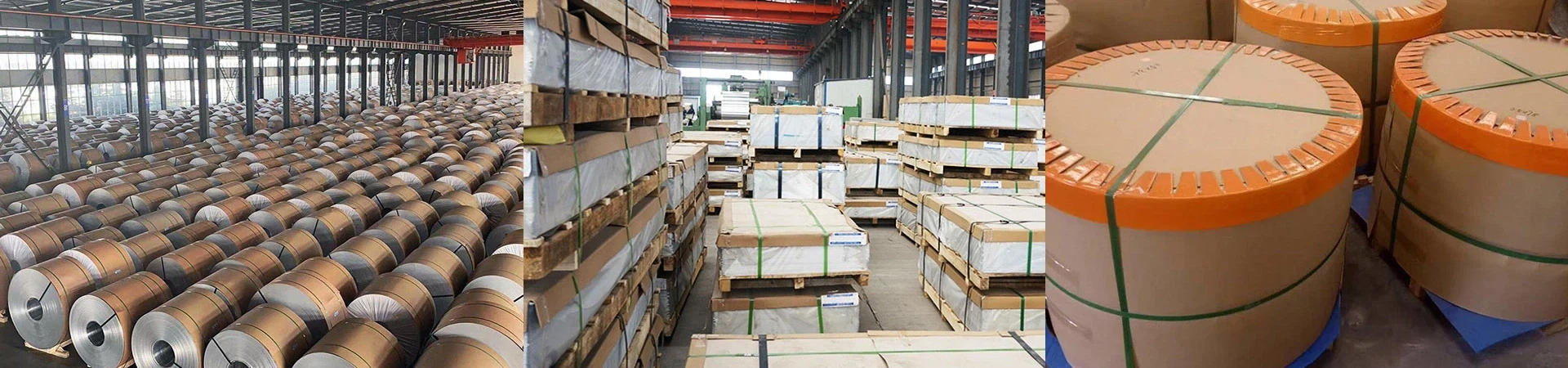
Inspection of a delivered plate covers chemistry against ASTM B928 limits, tensile and yield testing, elongation measurement, bend testing and, for the stabilised tempers, the intergranular corrosion test. Thickness is checked on a grid and flatness against a straight edge, and the surface is examined for inclusions and roll marks. Plates are marked with alloy, temper, heat number and dimensions, and shipped on wooden pallets with edge protection. Certificates covering the chemical and mechanical results of the actual heat are provided with every consignment, and the material can be supplied against classification society approval for hull and deck use.
Frequently Asked Questions
Q: How does 5059 compare with 5083 for hull construction?
A: 5059 has a higher magnesium content with zinc, manganese and zirconium additions, giving around 250 MPa minimum proof strength in H116 against 215 MPa for 5083, together with better fatigue resistance. It is chosen where weight saving and long fatigue life justify the cost.
Q: Which tempers are available?
A: Plate is supplied in O, H111, H116 and H321. H116 and H321 are the stabilised tempers for seawater service; O and H111 are used where forming and welding dominate and strength is not critical.
Q: What filler is used for welding?
A: 5183 filler is preferred for the highest joint strength and 5356 for general work, both to AWS A5.10. The joint area must be cleaned of oxide immediately before welding.
Q: Is the alloy covered by classification society rules?
A: Yes. Plate can be tested and certified for hull and deck use under the approval schemes of the major classification societies, which specify the alloy, temper, thickness range and supplementary tests.
Q: What thickness range is produced?
A: Plate is normally available from about 6 mm to 60 mm in this alloy, with cut-to-size plate and CNC-profiled parts available on request to reduce shop scrap.