

5083-Aluminum-Sheet-ASM-Material-Data-Sheet.pdf
Alloy 5083 Aluminum Plate Sheet China
Alloy 5083 aluminum plate sheet has higher strength than 5052 aluminum plate and provides outstanding thermal conductivity. Even in tempered conditions, it maintains excellent ductility and good formability. It is highly suitable for welding and can be strengthened through cold working. Because of its excellent resistance to general corrosion, Alloy 5083 is widely used in marine applications. Moreover, it can withstand extremely low temperatures without becoming brittle or losing its mechanical properties, making it ideal for cryogenic applications.
Aluminum Sheet 5083 H111 vs 5083 H116 | H111 vs H112 vs H116
5083 H116 Aluminum Sheet:
Used for 5xxx series alloys containing 4% or more magnesium. These products offer excellent mechanical strength and strong resistance to exfoliation and corrosion, making them well-suited for marine environments.
5083 H111 Aluminum Sheet:
Fully annealed products that have undergone a small degree of work hardening but do not reach the hardness of the H11 temper.
5083 H112 Aluminum Sheet:
Applicable to products that have been hot-rolled. The mechanical properties of materials in this condition are specified by standards and regulations.
5083 H321 Aluminum Sheet:
Suitable for aluminum materials containing more than 4% magnesium. The level of work hardening in both hot and cold working is slightly lower than that of H32. Compared to H116, H321 offers stable performance, though H116 has stricter requirements for anti-corrosion capability and magnesium content.
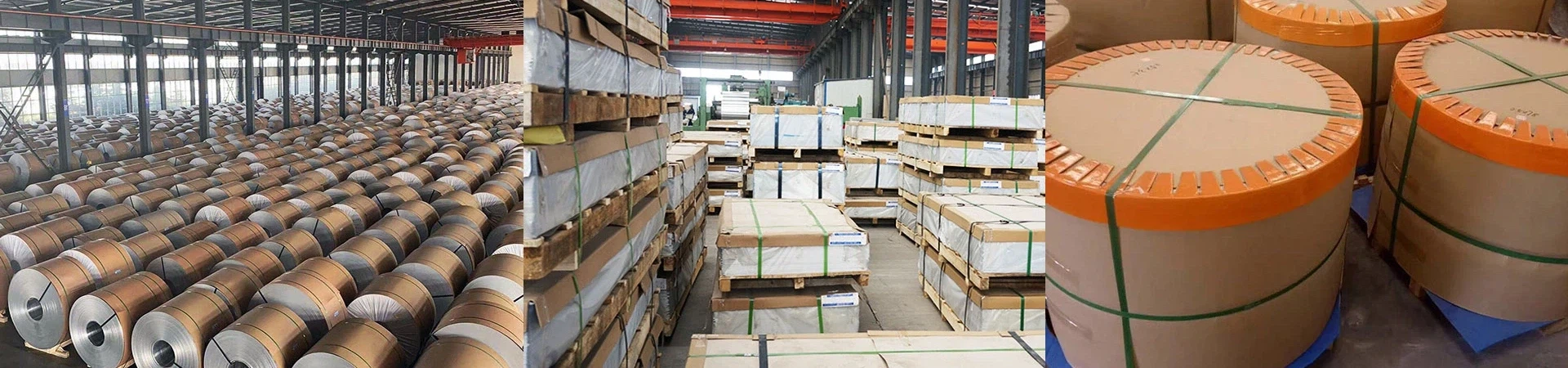
Strength of GNEE Aluminum 5083 Production
High Output Capacity: Monthly production reaches 15,000 tons, ensuring short lead times.
Standardized Workshops: Large-scale industrial plants operate under the 6S management system.
Advanced Equipment: Equipped with an SMS six-roll cold rolling mill, capable of producing ultra-wide plates up to 2600 mm.
Comprehensive Production Lines: 6 semi-continuous casting lines, 10 continuous casting and rolling lines, and 44 additional large-scale processing machines.
Factory Direct Sales: All products are sold directly from the factory, reducing intermediate costs and offering competitive market prices.
Technical Parameters of GNEE 5083 Aluminum Sheet
| Alloy | Temper | Thickness (mm) | Width (mm) | Length (mm) |
|---|---|---|---|---|
| 5083 | F, O, H12, H14, H16, H18, H19, H22, H24, H26, H28, H111, H112, H114 | 0.5 – 500 | 100–2650 | 500 – 16000 |
5083 Aluminum Plate Sheet Classification
Product: 5083 Aluminum Plate Sheet
Types: Standard aluminum plate, bright plate, brushed plate, film-coated plate, super-flat plate, imported plate, patterned plate
Standards: GB, ASTM, EN
Delivery Conditions: O, H111, H112, H116, H131, H32, H321, etc.
Thickness Range: 0.5–450 mm
Temper Explanations:
O: Fully annealed condition for the lowest strength and maximum ductility.
H: Work-hardened (non-heat-treatable) aluminum alloy.
The first digit after H indicates the work-hardening method.
The second digit indicates the degree of hardening.
H1x: Work-hardened only (no heat treatment).
H3x: Work-hardened and stabilized, providing improved ductility through low-temperature stabilization or natural aging.
Hxx1: Indicates minor variations in hardening levels from the standard Hx1 condition.
H112: Refers to products with specific mechanical properties obtained during hot processing.
Applications of 5083 Aluminum Alloy
5083 aluminum is used not only in shipbuilding and transportation but also in everyday applications as foil, strip, and profiles. Examples include:
5083 Patterned Aluminum Plate: Anti-slip flooring for refrigerated trucks, cold storage rooms, refrigerators, and subway platforms.
5083 Aluminum Coil: Used in auto parts, high-voltage switches, ship panels, and tank vehicles.
5083 Aluminum Plate for Tank Bodies: Suitable for tankers, buses, ships, and automotive applications.
5083 Mold Aluminum Plate: Used in molds, ship components, automotive parts, and electronics.
5083 Aluminum Sign Blanks: Ideal for traffic and industrial signage.

Corrosion Resistance of 5083 Aluminum Plate
5083 offers excellent corrosion resistance in a wide variety of environments, including marine, food processing, and architectural applications.
Due to its high magnesium content (over 3.5% Mg), it may be susceptible to stress corrosion cracking, limiting its application temperature to below 65°C and the degree of cold work to ¼ Hard.
To certify 5083 for marine use, it undergoes special intergranular and exfoliation corrosion testing.
5083 aluminum is a non-heat-treatable alloy containing approximately 4.5% magnesium, 0.15% chromium, and 0.7% manganese. It achieves high strength through cold working, resulting in various H-tempers.
Heat Treatment
Alloy 5083 cannot be strengthened by heat treatment but can be significantly hardened through cold working (e.g., cold rolling). Common tempers include H32 (¼ Hard), H116, and H321, along with the soft O condition.
The alloy naturally age-softens after cold work but eventually stabilizes. This is typically achieved by a stabilization treatment during production, resulting in consistent mechanical properties.
To anneal 5083, heat it to 345°C, hold until evenly heated, then allow to cool (cooling rate is not critical).
Welding
5083 aluminum offers excellent weldability with all standard electric and resistance welding methods (gas welding is not recommended).
GMAW (MIG) and GTAW (TIG) are preferred for producing strong structural welds.
When welding 5083 to itself or other 5xxx-series alloys, filler metal 5183 is recommended.
While welding strain-hardened tempers may reduce strength in the heat-affected zone, the alloy maintains excellent overall weld performance-a key advantage for shipbuilding and structural fabrication.
GNEE Aluminum supplies high-quality 5083 aluminum plates and sheets for marine, transportation, and industrial applications.
If you're interested in our products, please leave your message below-we'll respond to your inquiry as soon as possible.
The difference between 5083 aluminum plate H116 and H321
GNEE Aluminum's 5083 aluminum plates are widely used as marine-grade aluminum materials. The most commonly used temper is H116, while in certain cases, customers may also choose H321. Below, GNEE Aluminum explains the main differences between 5083 aluminum plates in H116 and H321 tempers.
H116: Aluminum alloy with a magnesium content of not less than 3.0%, supplied in a corrosion-resistant condition after anti-corrosion treatment.
H321: Aluminum alloy with a magnesium content of not less than 3.0%, supplied in a stabilized condition after strain hardening.
Specifically, H116 (with magnesium content ≥4%) provides excellent mechanical properties and strong resistance to exfoliation corrosion. It exhibits outstanding corrosion resistance, while H321 offers equally good corrosion resistance with enhanced stability. Compared with H116, H321 has slightly higher hardness, greater structural stability, and maintains superior anti-corrosion performance even after surface painting. Both tempers are suitable for use in marine environments.
When welding 5083 aluminum plates using fiber laser technology, applying higher power levels (5 kW–6 kW) under penetration conditions and a welding speed of 6 m/min–9 m/min can achieve optimal welding results.
The above summarizes the key differences between 5083 aluminum plate H116 and H321. Customers can choose the appropriate temper according to their specific application requirements.
If you need to purchase 5083 marine-grade aluminum plates, please contact GNEE Aluminum-our team will provide professional solutions tailored to your needs.


