

What H112 Means in Alloy 5083
5083 is an aluminium-magnesium alloy with 4.0-4.9 percent magnesium, and H112 is the temper applied to products that are hot worked and then given a controlled amount of strain or thermal treatment to meet specified mechanical properties without any further cold reduction. ASTM B209 treats H112 as the temper for plate and rolled bar where the material carries guaranteed mechanical properties but is not strain-hardened in the way that H116 or H321 are.
The practical consequence is a plate with moderate-to-good strength, high elongation and a structure that is very tolerant of welding. Because there is no heavy cold work, residual stress is lower than in a heavily rolled product, so a large plate stays flatter during cutting and fit-up.
An ultra-wide plate is one rolled beyond the usual mill widths. This mill supplies 5083-H112 plate up to 2600 mm wide, which is wide enough to span a full hull panel or a deck bay without a longitudinal seam.
Chemical and Mechanical Data to ASTM B209
| Element, percent | Limit for 5083 |
|---|---|
| Magnesium | 4.0-4.9 |
| Manganese | 0.40-1.0 |
| Chromium | 0.05-0.25 |
| Iron | 0.40 max |
| Silicon | 0.40 max |
| Aluminium | Remainder |
| Property at room temperature | 5083-H112 |
|---|---|
| Tensile strength | 275 MPa minimum (275-350 MPa typical) |
| 0.2% proof strength | 125 MPa minimum |
| Elongation in 50 mm | 12% minimum on 12.5-40 mm plate |
| Density | 2.66 g/cm3 |
| Modulus of elasticity | about 71 GPa |
The standard sets thickness-dependent minima, and the values above apply to the plate thickness range normally used for marine structure. Plate is also used successfully at cryogenic temperatures, where 5083 retains toughness and does not show a ductile-to-brittle transition.
Why Ultra-Wide Plate Is Chosen
Fewer longitudinal seams: a 2600 mm plate replaces two or three standard-width plates, so weld length falls sharply and fabrication hours drop with it.
Better hull integrity: fewer welds mean fewer heat-affected zones, fewer inspection points and less chance of a stress raiser in a stressed panel.
Improved appearance: a deck or superstructure with fewer weld lines needs less fairing and less paint preparation.
Lower weight by design: a continuous panel allows the designer to use the section more efficiently than a lap-jointed one.
Faster build: shops spend less time on fit-up, alignment and post-weld straightening.
Better flatness: wide plate rolled on a controlled mill arrives flat, which reduces distortion during cutting and welding.
Welding and Fabrication Notes
5083 is welded by MIG and TIG with 5183 or 5356 filler to AWS A5.10. Surface preparation is critical: the oxide film melts far above the metal, so the joint area is stainless-brushed and degreased immediately before welding. A slightly higher travel speed and lower heat input than would be used on steel keep the heat-affected zone narrow.
For a wide plate, the sequence should be planned so that heat is balanced about the neutral axis. Tack welds are short and evenly spaced, and a backing bar is used on butt joints in thin plate to control penetration. Where the plate is to be formed, the minimum bend radius depends on the temper and thickness and should be tested on a sample before production rolling. Cut edges are dressed to remove the sheared burr, which is a common source of cracking under fatigue loading.
For service in seawater the finished structure is protected by a coating system and by sacrificial anodes, and steel fittings are isolated from the aluminium with an insulating barrier.
Inspection, Certification and Delivery
Plate is inspected for thickness across a grid of points, flatness against a straight edge, and surface condition including inclusions, laps and roll marks. Ultrasonic testing is used where specified for the application, and tensile and bend tests are taken from the plate or from a sample of the same heat. Certification is provided against ASTM B209 and, where required, against the classification societies, so that the plate can be accepted for hull and deck structure.
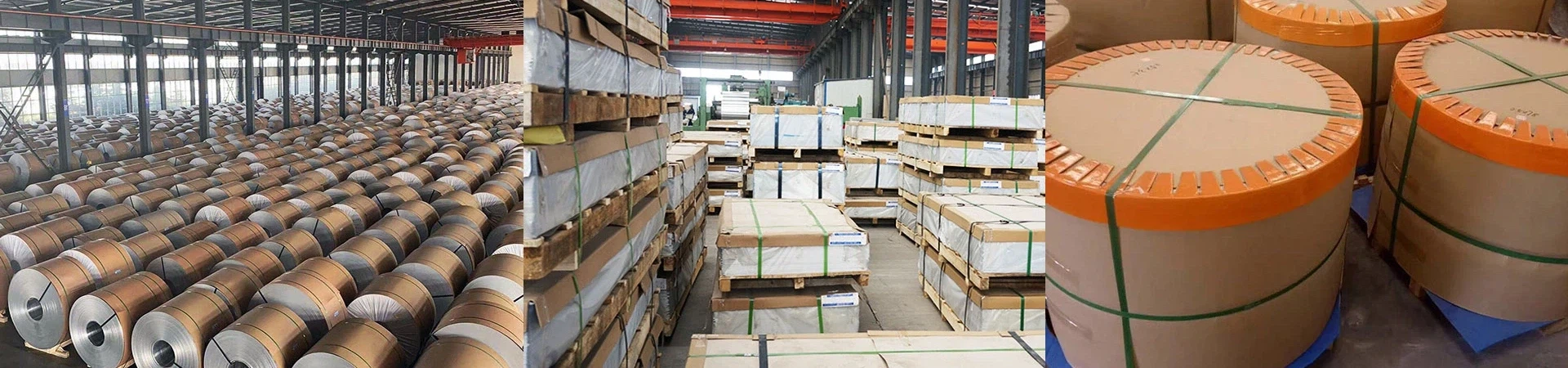
Standard supply covers thickness from 6 mm to 120 mm, width up to 2600 mm and length up to 12000 mm, with cut-to-size plate, CNC-profiled parts and edge-milled plate available. Plates are shipped on wooden pallets with interleaving, edge protection and steel strapping, and each plate is marked with alloy, temper, heat number, dimensions and plate number. A mill test certificate for chemistry and mechanical properties accompanies every consignment.
Frequently Asked Questions
Q: Is 5083-H112 suitable for hull plating?
A: It is suitable for superstructures, decks and non-immersed structure, and is frequently used where wide flat panels are an advantage. Hull plating in continuous seawater service is normally specified in H116 or H321, which carry additional corrosion resistance requirements.
Q: How does H112 differ from H116?
A: H116 is a stabilised temper with higher minimum tensile and proof strength and mandatory intergranular corrosion testing for seawater service. H112 carries lower guaranteed properties but better elongation and is used where forming and welding dominate.
Q: What is the largest width available?
A: Plate is supplied up to 2600 mm wide, with thickness from 6 mm to 120 mm and length up to 12000 mm. Widths beyond that are not rolled in this alloy.
Q: How is flatness controlled on wide plate?
A: Wide plate is rolled and levelled on a controlled mill and checked against a straight edge across the plate. Low residual stress, resulting from the H112 route, keeps the plate flat after cutting and during fit-up.
Q: Does the alloy perform at low temperature?
A: Yes. 5083 keeps its toughness down to cryogenic temperatures without a ductile-to-brittle transition, which is one reason it is used for liquefied gas tankage and for vessels operating in polar waters.


