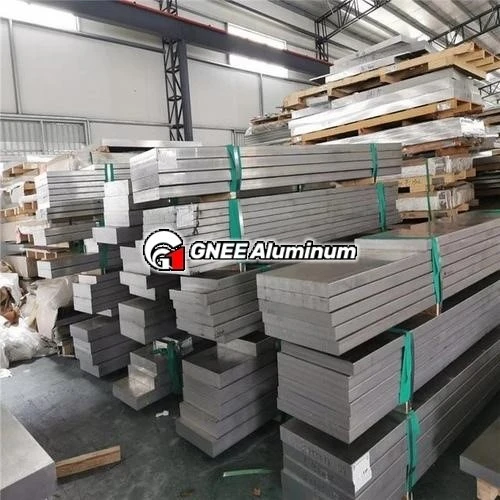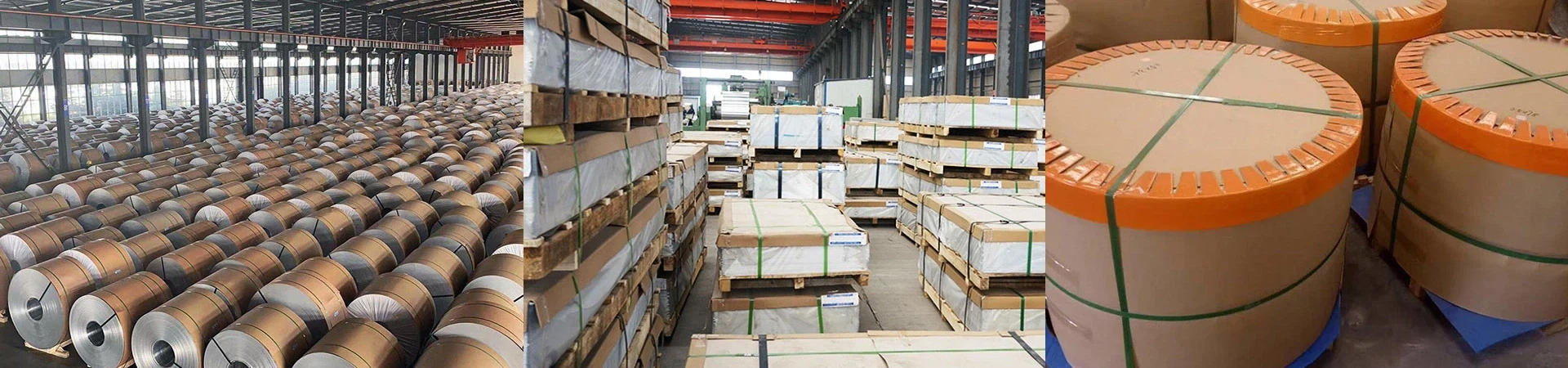
6061 is the most versatile of the 6xxx aluminum alloys, and its T6 and T651 tempers are the two most commonly specified forms for plate. The two tempers share the same chemistry and nearly identical strength, but they differ in one critical respect: residual stress. This article explains the difference, the mechanical comparison, and how to choose between them.
1. Heat Treatment Difference between 6061 t6 and t651
Both 6061-T6 and 6061-T651 aluminum plates are processed by solution heat treatment followed by artificial aging to achieve high strength. The key difference is the stress-relief procedure.
- 6061-T6: solution heat-treated and artificially aged to maximum strength. Residual internal stress from quenching remains in the plate. This temper performs well in common structural applications.
- 6061-T651: processed exactly like T6 and then stress-relieved by stretching - the plate is mechanically stretched by a controlled permanent set (typically 1.5-3%) after quenching and before aging. In the temper designation, "5" denotes stress relief by stretching and "1" the stretched condition. The stretching reduces internal tension and improves the dimensional stability of the plate during machining.
2. Mechanical Properties Compared
In terms of tensile and yield strength, 6061-T6 and 6061-T651 aluminum plates are essentially comparable-both meet the same minimum requirements, for example, minimum yield strength of about 276 MPa (40 ksi) and minimum tensile strength of about 310 MPa (45 ksi) per ASTM B209 for common plate thicknesses, with elongation typically 10-12%. Both provide medium-to-high strength while exhibiting outstanding corrosion resistance and weldability.
The measurable difference lies not in strength but in residual stress: 6061-T651 has significantly lower residual stress, which reduces the possibility of distortion or deformation when the plate is cut, milled, or sawed. For machined parts that must hold tight tolerances, this difference is decisive.
3. Which Temper Is better for Machining?
6061-T6 performs well in common structural applications. However, when precise machining is required-for example, mold bases, jigs, precision tooling, or aerospace tooling-6061-T651 is favored because its stress-relieved state ensures greater dimensional stability and flatness. Machining removes material and releases locked-in stress; in T6 plate, this release causes warping and movement, while T651 plate stays stable.
4. Typical Applications
| Temper | Typical Applications |
|---|---|
| 6061-T6 | Aerospace fittings, truck frames, pipelines, shipbuilding components, automotive parts - structural and welded applications |
| 6061-T651 | Mold bases, jigs, precision tools and applications needing tight dimensional stability after machining |
5. How to Decide Between 6061-T6 and 6061-T651
- Choose 6061-T6 for welding applications, corrosion-resistance requirements, and structural strength where the plate is used as-supplied or with light processing.
- Choose 6061-T651 for components that require superior flatness, tight dimensional stability, and little processing deformation-especially where the plate is extensively machined.
Note that T651 carries a small cost premium because of the additional stretching operation; in machining-intensive projects, the dimensional-stability benefit usually justifies it. Confirm the thickness class and governing standard (ASTM B209, EN 485, or equivalent) when ordering.
6. FAQ
6.1 Is 6061-T651 the same strength as 6061-T6?
Yes-for practical purposes the tensile and yield strengths are comparable, since both tempers meet the 6061-T6 minimums. The difference is residual stress and machinability stability, not strength.
6.2 Why does T651 cost more than T6?
The additional stretching operation adds a processing step. The cost difference is small relative to the benefit in machining-intensive applications.
6.3 Can 6061-T651 be welded like T6?
Yes-the two tempers share identical chemistry, so weldability is the same. Note that welding locally re-solutionizes the weld zone, so strength near the weld returns to the as-welded condition regardless of temper.