

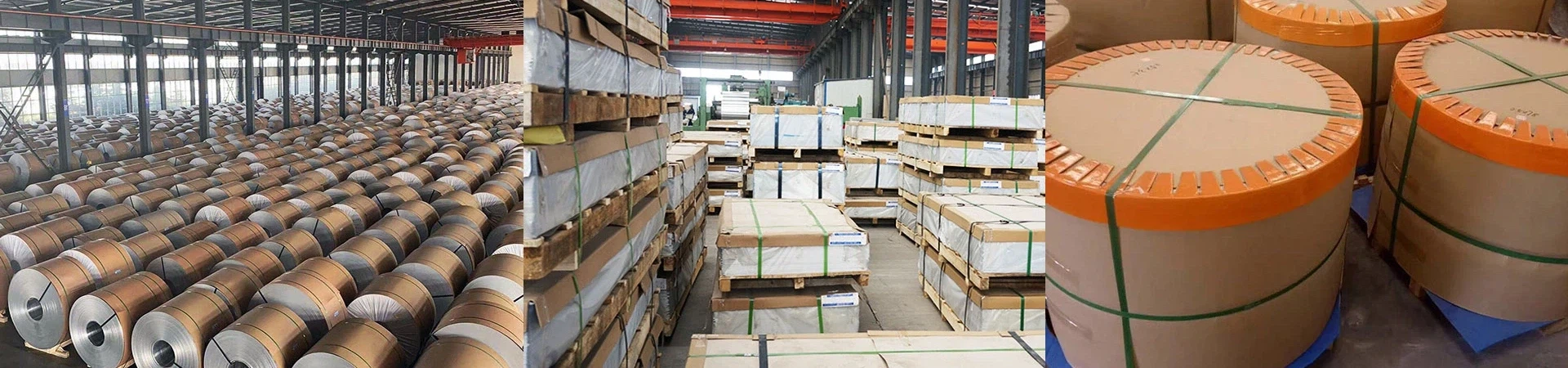
The 6000 series aluminum alloys, primarily alloyed with magnesium and silicon, are among the most widely used aluminum grades worldwide. Within this series, 6061 aluminum alloy and 6063 aluminum alloy are two of the most common materials supplied by GNEE, each designed for different performance priorities such as strength, extrusion quality, surface finish, and application environment.
Although they share similar density and base alloy systems, 6061 and 6063 differ significantly in mechanical strength, extrusion behavior, alloy composition, and end-use focus.
6063 vs 6061 Aluminum Alloy – General Comparison
6063 aluminum alloy is mainly developed for high-quality extrusion applications. It offers excellent surface finish, good weldability, moderate strength, and outstanding corrosion resistance. Its superior plasticity in the naturally aged condition makes it ideal for complex cross-sectional profiles.
6061 aluminum alloy, by contrast, is one of the most widely used structural aluminum alloys. It provides higher mechanical strength, better machinability, and broader structural applicability, although its extrusion performance and surface smoothness are slightly inferior to 6063.
Both alloys share a similar density of approximately 2.70 g/cm³, but their performance characteristics and typical applications differ substantially.
6061 Aluminum Alloy Applications and Advantages
6061 aluminum is best suited for:
Structural and load-bearing components
High-stress mechanical applications
CNC machining and precision parts
After heat treatment, especially in the T6 temper, 6061 achieves significantly higher strength but sacrifices some plasticity compared with 6063.
6063 Aluminum Alloy Applications and Advantages
6063 aluminum is particularly suitable for:
Architectural and decorative profiles
Corrosion-resistant outdoor applications
Cost-efficient extrusion of complex shapes
Its excellent extrudability and superior anodizing quality make it the preferred choice for visible architectural components.
Main Differences Between 6061 and 6063 Aluminum
Strength: 6061 aluminum is stronger than 6063
Extrusion performance & surface finish: 6063 aluminum outperforms 6061
Alloy complexity:
6061: Mg-Si-Cu-Cr system
6063: Mg-Si system only
Density & elastic modulus: Nearly identical
Typical applications:
6063: Anodized architectural profiles
6061: Structural, load-bearing, and general-purpose components

6061 vs 6063 Aluminum – Chemical Composition Comparison
Although both alloys belong to the 6000 series, their elemental proportions differ, resulting in different performance characteristics.
6061 Aluminum Chemical Composition
| Element | Content |
|---|---|
| Magnesium (Mg) | 0.8–1.2% |
| Silicon (Si) | 0.4–0.8% |
| Copper (Cu) | 0.15–0.40% |
| Chromium (Cr) | 0.04–0.35% |
6063 Aluminum Chemical Composition
| Element | Content |
|---|---|
| Magnesium (Mg) | 0.45–0.9% |
| Silicon (Si) | 0.2–0.6% |
| Copper (Cu) | ≤ 0.10% |
| Chromium (Cr) | ≤ 0.10% |
The higher Mg-Si content combined with copper and chromium in 6061 improves strength, while 6063 focuses on purity, extrusion performance, and surface quality.
6061 vs 6063 Mechanical Properties (T6 Temper)
| Property | 6061-T6 | 6063-T6 |
|---|---|---|
| Tensile Strength | 290–310 MPa | 215–240 MPa |
| Yield Strength | 240–276 MPa | 160–214 MPa |
| Elongation | 12–17% | 8–18% |
| Brinell Hardness | ~95 HB | ~73 HB |
| Fatigue Strength | ~97 MPa | ~69 MPa |
6061 aluminum delivers higher strength and hardness, making it ideal for structural loads, while 6063 provides moderate strength with better ductility.
6061 vs 6063 Physical and Thermal Properties
| Property | 6061 | 6063 |
|---|---|---|
| Density | ~2.7 g/cm³ | ~2.7 g/cm³ |
| Thermal Conductivity | 154–167 W/m·K | 200–209 W/m·K |
| Electrical Resistivity | 3.99 × 10⁻⁸ Ω·m | 3.30 × 10⁻⁸ Ω·m |
Thanks to its higher thermal conductivity and lower electrical resistivity, 6063 aluminum is better suited for heat dissipation and electrical-related applications.
6061 vs 6063 Heat Treatment and Available Tempers
6063 Aluminum Tempers
O (annealed)
T1, T4, T5
T6 (maximum strength)
T832 (enhanced strength and surface quality)
6061 Aluminum Tempers
O, T4
T6 (peak strength)
T651 (stress-relieved)
T8 / T9 (improved crack resistance)

Corrosion Resistance: 6061 vs 6063 Aluminum
Both alloys exhibit good corrosion resistance. However:
6063 aluminum forms a denser and more uniform oxide layer due to its lower impurity content and smoother surface, making it ideal for architectural and marine environments.
6061 aluminum, containing copper, may require anodizing or protective coatings for long-term outdoor exposure, despite performing well in many corrosive conditions.
Extrusion Performance: 6063 vs 6061 Aluminum
6063 aluminum is recognized as the most widely used extrusion alloy due to its exceptional surface finish and ability to form complex, thin-walled profiles such as window and door frames.
6061 aluminum also extrudes effectively but is better suited for thicker cross-sections, where higher strength is required.
Machinability and Weldability: 6061 vs 6063
Machinability
Both alloys machine well, but 6061 aluminum provides better chip control and tool life, making it the preferred choice for CNC machining and precision components.
Weldability
Both 6061 and 6063 aluminum can be welded using TIG or MIG processes with low cracking risk.
6063 weld zones may soften to O-temper but can be re-aged.
6061 welds generally retain 60–70% of base material strength, though the heat-affected zone may lose strength unless post-heat-treated.
Surface Finish and Appearance: 6063 vs 6061 Aluminum
6063 aluminum offers a smoother extrusion surface and more uniform anodizing results, making it the preferred material for decorative and architectural applications.
6061 aluminum usually requires additional polishing or finishing to achieve comparable visual quality.
Typical Applications of 6061 vs 6063 Aluminum
| 6061 Aluminum Applications | 6063 Aluminum Applications |
|---|---|
| Aircraft components | Window and door frames |
| Truck chassis | Electrical conduits |
| Bicycle frames | Furniture and railings |
| Marine hardware | Irrigation tubing |
| Structural machinery | Sign frames |
6061 dominates high-strength and load-bearing uses, while 6063 excels in aesthetic, corrosion-resistant, and extrusion-focused applications.
GNEE Selection Recommendation: 6063 vs 6061 Aluminum
High strength and structural requirements → Choose 6061-T6
Complex profiles and architectural aesthetics → Choose 6063-T5 or 6063-T6
Cost efficiency and extrusion productivity: 6063 is generally more economical during extrusion, while raw material pricing remains similar.
At GNEE, we supply both 6061 and 6063 aluminum alloys in multiple tempers and product forms, helping customers select the most suitable material for structural, architectural, and industrial applications worldwide.


