Underfloor heating spreads heat across a whole floor area at a low water temperature, and that only works efficiently when the heat is pushed upwards into the room instead of leaking downwards into the slab. 8011-O aluminium foil is the reflective layer that does that job, and it also acts as a moisture and vapour barrier inside the floor build-up. It is one of the most widely used insulation materials in modern floor heating systems.
The 8011 alloy is a wrought 8xxx aluminium alloy with iron and silicon as its main additions. In the O temper it is fully annealed, so the foil stays soft and can be laid around pipes, clips and floor irregularities without cracking at the folds.
Why Reflective Foil Is Used in Floor Heating
Radiant heat travels in straight lines and is absorbed or reflected by the first surface it meets. A clean aluminium surface reflects about 88% of the radiant energy that reaches it, and its emissivity is correspondingly low. Facing that surface towards the heated floor means most of the radiant energy is sent back up into the room rather than being absorbed by the structure below, so the system reaches the set room temperature with less energy input.
The same foil layer blocks water vapour and water, protects the insulation board underneath from damp and shields the assembly from light. Because aluminium is dimensionally stable and does not rot or absorb water, the layer keeps its function for the life of the floor.
Typical Specification of 8011-O Foil for Floor Heating
| Parameter | Value |
|---|---|
| Alloy | 8011 |
| Temper | O, fully annealed |
| Thickness | 0.02 mm - 0.2 mm |
| Surface reflectivity | about 88 % |
| Barrier function | moisture and vapour barrier, light blocking |
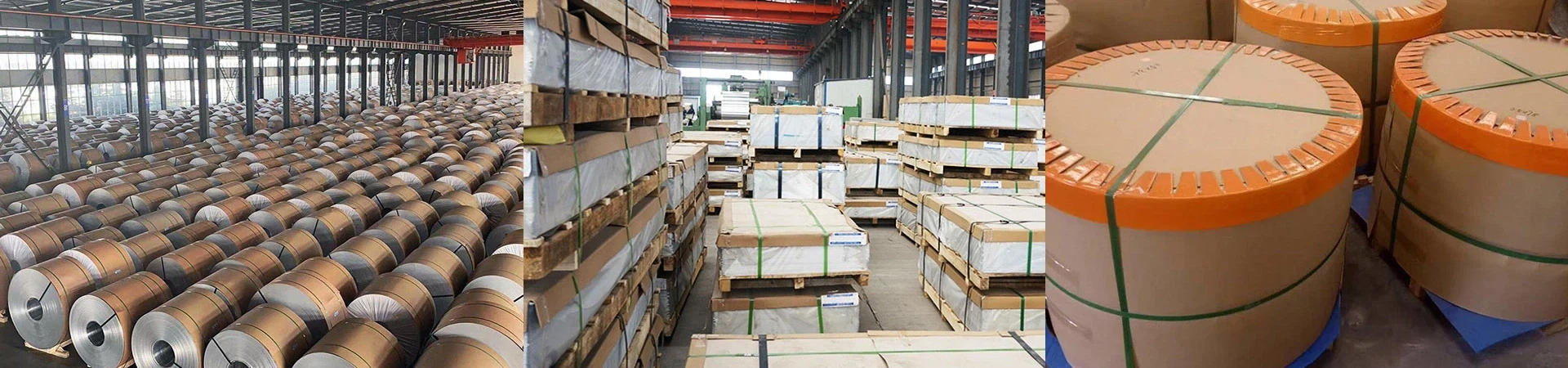
| Delivery form | rolls or coils, laminated to foam, bubble film or woven backing on request |
The exact thickness is chosen with the load the foil has to survive during installation. A thin 0.02 - 0.05 mm foil is used where it is laminated to a backing board, while the heavier gauges up to 0.2 mm are used where the foil itself has to resist handling abuse.
How the Foil Works in the Floor Build-Up
Radiant barrier: the reflective face sends radiant heat back towards the room, reducing downwards heat loss
Vapour barrier: the continuous metallic layer blocks moisture migration and protects the insulation board
Heat distribution: the high thermal conductivity of aluminium spreads heat laterally, which reduces hot spots above the pipes and evens out the floor surface temperature
Acoustic benefit: combined with a foam or non-woven backing, the assembly damps impact noise and reduces noise transmission to the floor below
Moisture protection for the pipe: keeps condensate and spills away from the pipe and from the slab
Installation is straightforward: the foil-faced layer is laid over the insulation boards, joints are lapped and taped, and the heating pipes or mats are then fixed on top. Laps should be taped with a foil tape so that the vapour barrier stays continuous across the whole floor area.
Properties That Matter During Installation and Service
Low weight: the foil adds almost nothing to the floor build-up height or mass, which keeps installation and later maintenance simple
Flexibility: the annealed O temper folds and wraps around pipes without tearing
Mechanical strength: 8011 has higher strength than unalloyed foil and tolerates the pressure and bending that site handling produces
Corrosion resistance: the natural oxide film protects the surface in the damp, slightly alkaline environment of a screed or slab
Recyclability: aluminium foil is fully recyclable, which supports the environmental case for the system
One point worth stating clearly: aluminium is a good conductor of heat, with a thermal conductivity of roughly 200 W/(m.K) in this alloy. Its value in a heated floor comes from its reflective surface and its role as a barrier, not from insulating by conduction, which is why the foil is always combined with an insulating board or foam layer rather than used on its own.
Frequently Asked Questions
Q: Which side of the foil should face up?
The bright reflective face should point towards the heated floor and the room, so that radiant energy is reflected back into the space rather than absorbed by the structure below.
Q: What thickness of 8011-O foil is used for floor heating?
The common range is 0.02 mm to 0.2 mm. Thin gauges are laminated to a backing board, while heavier gauges are used where the foil must survive handling on site without a backing.
Q: Does the foil really save energy?
By reflecting radiant heat back into the room instead of losing it downwards, the foil reduces the heat that has to be supplied to reach a given room temperature, and the lateral spreading effect also removes hot spots above the pipes.
Q: Can it be used in wet rooms and over concrete slabs?
Yes. The metallic layer forms a continuous vapour barrier and the alloy resists corrosion in the damp, mildly alkaline conditions found in screeds, provided laps are lapped and taped correctly.
Q: Why 8011-O rather than a harder temper?
Floor heating foil has to fold and conform around pipes and fixings. The fully annealed O temper gives the softness and elongation needed for that, while the 8011 alloy still provides more strength than unalloyed foil.
Q: Is the foil recyclable?
Yes. Aluminium foil is fully recyclable, and where the foil is laminated to a backing the assembly can be processed according to the applicable local recycling route.