

Aluminium Foil in Jumbo Roll for Cap: Product Overview
Cap stock foil is a thin, tightly toleranced aluminium strip wound into a jumbo roll for high-speed cap production lines. The foil becomes the sealing membrane and, in tamper-evident closures, the body of the bottle cap as well. A complete cap carries a tamper ring and an anti-counterfeit mark; once the package is opened the ring breaks and cannot be restored, so the closure cannot be refitted to its original form. The metallurgy behind that simple action is demanding, because the foil must be stiff enough to hold the ring through handling and stacking, yet ductile enough to form a clean tear line without cracking.
Alloys and Tempers Used for Cap Stock
| Alloy | Typical tempers | Role in the cap |
|---|---|---|
| 1060 | H14, H16, H18, H19 | Pure aluminium foil for cap bodies and sealing discs |
| 1235 | O, H18 | Low-cost foil for conversion and lamination |
| 8011 | H22, H24, O | Mainstream closure foil with good strength and formability |
| 3003 | H14, H24 | Higher-strength foil where greater rigidity is needed |
| 3105 | H14, H24 | Light-gauge plate for stiffer cap shells |
Cap materials are supplied in the hard range, typically H14 to H24, with tensile strength between 110 and 320 MPa and elongation generally not less than 4 percent. That combination gives the cap the rigidity to survive capping torque while allowing the ring to fracture cleanly at the score line.
Typical Specifications of Jumbo Roll Foil
| Parameter | 8011 H22 cap foil | 1060 foil for twist-off caps |
|---|---|---|
| Thickness | 0.06 - 0.2 mm | 0.012 - 0.5 mm |
| Width | 800 - 1300 mm | 100 - 1600 mm |
| Temper | H22 | H14, H16, H18, H19 |
| Tensile strength | 110 - 320 MPa | 110 - 320 MPa |
| Elongation | 4 percent minimum | 4 percent minimum |
| Standards | GB, ISO, JIS, ASTM series | GB, ISO, JIS, ASTM series |
Thickness tolerance is the single most important dimensional requirement for cap stock, because a variation of a few microns changes the capping torque and the opening force felt by the consumer. Width tolerance, camber and flatness are also controlled so that the foil tracks correctly through high-speed blanking and forming presses.
Why Aluminium Foil Performs in Cap Sealing
High plasticity combined with good corrosion resistance, so the cap deforms without cracking and resists attack by the packaged product.
Safe and hygienic contact surface, free from harmful substances, which suits food, beverage and pharmaceutical packaging.
Withstands the high temperatures used in sterilisation and pasteurisation without losing sealing integrity.
Delivers consistent seal performance while still opening easily for the consumer.
Fully recyclable, so the closure stream can be recovered rather than landfilled.
Jumbo Roll Winding, Packaging and Handling
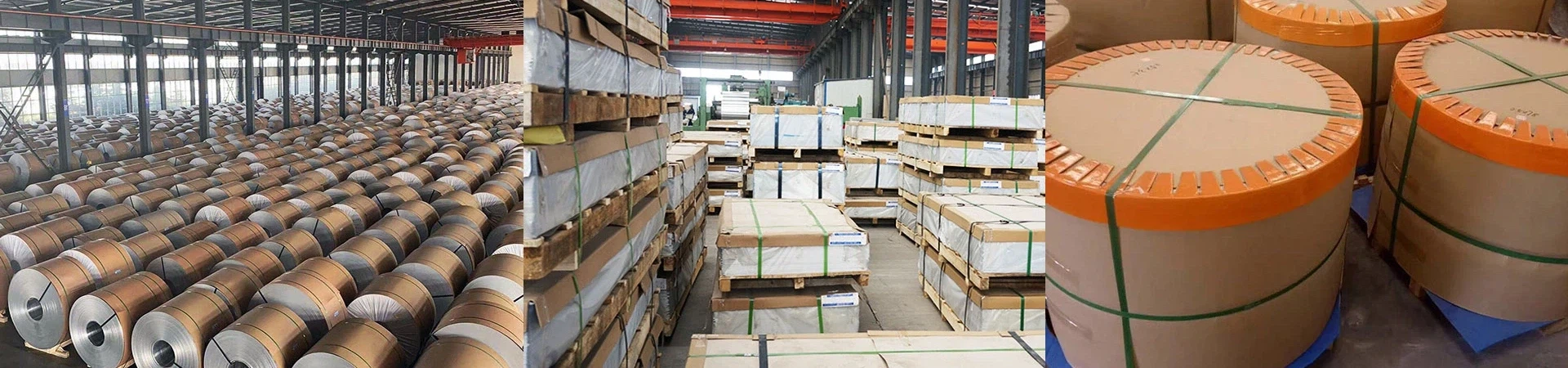
Cap stock is wound into jumbo rolls with an inner core of 76 mm or 152 mm, and single roll weights are commonly between 1 and 6 tonnes depending on width and gauge. Rolls are supplied eye-to-sky or eye-to-wall with edge protection, moisture barrier wrapping and wooden or steel pallets for sea freight. Because the foil is thin, roll handling practice matters as much as the metal itself: the roll should be stored in a dry, ventilated area, unwound with steady tension, and protected from impact to avoid edge damage that would later cause strip breaks on the customer line.
Quality Control and Applications
Cap stock foil is checked for thickness profile, width, camber, surface defects, pinhole count and mechanical properties before shipment, with coil certificates and third-party inspection available on request. Beyond bottle caps the same jumbo roll material is used for pharmaceutical blister lidding, containers and closures, cable wrapping and lamination, where the same mix of strength, hygiene and barrier performance is required. Matching the alloy and temper to the closing system is what determines whether a cap runs reliably at line speed, so the specification should be agreed between the closure converter and the foil supplier before production begins.
Frequently Asked Questions
Q: Which alloy is most used for bottle cap foil?
Alloy 8011 in H22 temper is the mainstream grade for closures, with 1060 used where a purer, softer foil is preferred for the cap body and sealing disc.
Q: Why must the foil be supplied hard rather than soft?
The cap needs enough stiffness to hold the tamper ring and survive capping torque. Hard tempers from H14 to H24 give that rigidity while still allowing a clean tear at the score line.
Q: What thickness range is normal for cap stock?
Closure foil is generally produced between 0.012 mm and 0.5 mm, and the most common cap body gauges fall between 0.06 mm and 0.2 mm depending on the closure design.
Q: Can the foil withstand sterilisation?
Yes. Aluminium foil tolerates the temperatures used in sterilisation and pasteurisation and keeps its seal, which is why it is widely used for food, beverage and pharmaceutical closures.
Q: What core size should be specified?
Standard cores are 76 mm and 152 mm inside diameter. The choice follows the mandrel of the customer unwinding or converting line.
Q: Is the material recyclable?
Yes, aluminium foil can be remelted repeatedly without loss of properties, and remelting uses a small fraction of the energy needed to produce primary metal.


