

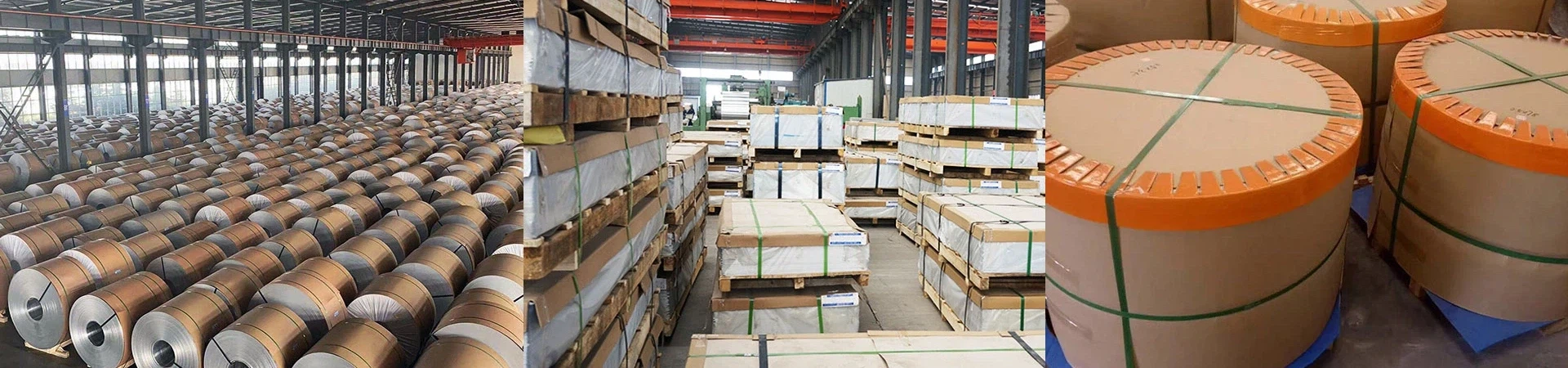
When a shipyard bill of materials lists 5083 aluminum plate for a hull, a fast ferry, or an offshore structure, the temper line usually reads either H116 or H321. Both are legitimate answers to the same question: which strain-hardened 5083 temper is approved for continuous seawater service? Much of the confusion in the market comes from treating the two tempers as different materials when they are, in practice, two mill routes to the same ASTM B928 performance envelope.
This guide is written for procurement engineers and QC teams who need to compare quotes, check certificates, and defend a material choice in front of a classification surveyor. It covers what the temper codes mean, the minimum properties stated in the standard, the corrosion tests behind every certificate, and the documents you should request with the plates.
What the Temper Codes H116 and H321 Mean
5083 is a non-heat-treatable aluminum-magnesium alloy: strength comes from cold working, not from solution heat treatment. Its nominal composition range, per ISO 209 and EN 573-3, is:
| Element | Range (weight %) | Element | Range (weight %) |
|---|---|---|---|
| Mg | 4.0 – 4.9 | Cu | ≤ 0.10 |
| Mn | 0.40 – 1.0 | Zn | ≤ 0.25 |
| Cr | 0.05 – 0.25 | Ti | ≤ 0.15 |
| Fe | ≤ 0.40 | Al | remainder |
| Si | ≤ 0.40 | Others, each / total | ≤ 0.05 / ≤ 0.15 |
The H temper family
The "H" prefix covers strain-hardened products. The first digit after H names the route: H1 = strain-hardened only; H2 = strain-hardened then partially annealed; H3 = strain-hardened then stabilized; H4 = strain-hardened then lacquered or painted. The second digit indicates the degree of hardening (1 = eighth-hard through 8 = full-hard).
For marine service, H116 and H321 are reserved for 5xxx alloys with 3 % or more nominal magnesium - ASTM B209/B209M-21a, Note 3, points to ASTM B928 for exactly these two tempers. ASTM B928 adds mandatory corrosion testing on top of the mechanical requirements, which is why these tempers are trusted for hull construction.
5083-H116: controlled strain hardening
The "16" is a special marine designation, not a standard hardening digit. H116 plate is strain-hardened (cold rolled) under controlled mill processing - rolling temperature, degree of cold work, and cooling sequence are managed so that the final microstructure resists exfoliation and intergranular attack in seawater. No stabilizing heat treatment is applied, and the temper is produced without any subsequent annealing.
5083-H321: strain hardened and stabilized
H321 is strain-hardened to a controlled level and then given a low-temperature stabilizing treatment. Stabilizing limits the gradual age-softening that heavily cold-worked high-magnesium alloys can show over long service periods, locking the mechanical properties in place. The corrosion acceptance tests required by ASTM B928 are identical to those applied to H116.
Read More:5083 H116/H321 Marine Aluminum Plate
Mechanical Properties: Same Minimums, Slightly Different Windows
Under ASTM B928/B928M-15(2023)e1, the minimum mechanical requirements for 5083 plate in both tempers are the same within the covered thickness range:
| Property (5083, per ASTM B928/B928M) | 5083-H116 | 5083-H321 |
|---|---|---|
| Ultimate tensile strength, min | 305 MPa | 305 MPa (specified range up to 358 MPa) |
| Yield strength (0.2 % proof), min | 215 MPa | 215 MPa |
| Elongation, min (50 mm gauge) | 10 % | 10 % |
The standard's tables vary slightly with thickness, so confirm the values for your exact gauge in the current edition of B928/B928M before finalizing the specification. Typical mill results sit above the minimums - published typical UTS for 5083-H116 is about 317 MPa - and the actual tested values for each lot are stated on the mill test certificate, not estimated from a datasheet.

Corrosion Resistance: The Same Tests, the Same Limits
ASTM B928 subjects both tempers to the same lot-release corrosion testing:
- ASTM G66-23 (ASSET test): continuous-immersion exfoliation test for 5xxx alloys; acceptable material shows no significant exfoliation.
- ASTM G67-24a (NAMLT test): nitric acid mass-loss test for susceptibility to intergranular corrosion; mass loss must fall within the B928 acceptance limit.
- Microstructural check: the microstructure of a sample from each production lot is compared with a producer-established reference photomicrograph, as required by B928.
In short, an H116 plate and an H321 plate that both carry a B928 certificate have met identical acceptance criteria. Neither temper is inherently better in seawater; the choice between them is a procurement decision, not a metallurgical one.

A caution that applies to both tempers
High-magnesium 5xxx alloys can become sensitized if held at elevated temperature for long periods, which reduces resistance to intergranular corrosion. Design rules commonly cap continuous service temperature for 5083 around 65 °C - confirm the limit in the class rule applicable to your vessel before finalizing the design. Sensitization risk is identical for H116 and H321 because it depends on composition and thermal history, not on the temper route.

Weldability and Fabrication
Both tempers are welded with the same filler metals: ER5183 or ER5356 per AWS A5.10. The heat-affected zone retains adequate strength for hull service when welding procedures are qualified for 5083, and both tempers are routinely MIG-welded in fast-ferry and patrol-craft construction. Plates are cut by plasma or waterjet, formed cold, and need no post-weld heat treatment. Heat input should be controlled per the approved welding procedure specification (WPS) to keep heat-affected-zone softening inside design margins.
H116 or H321: What Drives the Decision?
When both tempers meet the same standard, the decision comes down to four practical factors:
- Design approval: class-approved drawings usually name one temper. Substituting the other requires written approval from the designer and the classification society.
- Availability and lead time: mills carry different stock profiles for H116 and H321; delivery schedule often decides.
- Price: market pricing between the two tempers fluctuates; compare landed cost on the same thickness and width.
- Certification: both tempers are certified through the same route (below); there is no difference in document effort.
In GNEE's marine program both tempers are stocked and certified. Tell us which temper your approved drawings require, and we supply exactly that, with the corresponding documents.
Certification and Documents to Request
For marine hull plate, the paperwork matters as much as the chemistry. Request from your supplier:
- An ASTM B928 compliance statement, with the ASTM G66 and G67 test results for the lot.
- An EN 10204 Type 3.1 mill test certificate (or Type 3.2 with an independent surveyor) listing composition, mechanical results, and heat numbers.
- A classification material certificate (DNV, ABS, LR, BV, or CCS) where the contract requires class-approved material.
- Heat and lot marking on every plate, so each certificate can be traced to the delivered item.
GNEE supplies 5083-H116 and 5083-H321 plate with this document set, including class-certified material for high-speed craft, patrol vessels, and commercial marine structures.


RFQ Checklist for 5083 Marine Plate
- Alloy and temper: e.g., 5083-H116 or 5083-H321.
- Standard: ASTM B928 (state the edition if your contract fixes one).
- Dimensions: thickness × width × length, with the tolerance class (ASTM B209 tolerances).
- Classification society and approval type, if required.
- Test documents: EN 10204 Type 3.1/3.2, ASTM G66/G67 reports.
- Quantity, delivery port (Incoterm), and target delivery date.
Send these six items to info@gneealu.com and you will receive a written quotation within 24 hours, with available stock sizes and rolling lead times for custom dimensions.


