

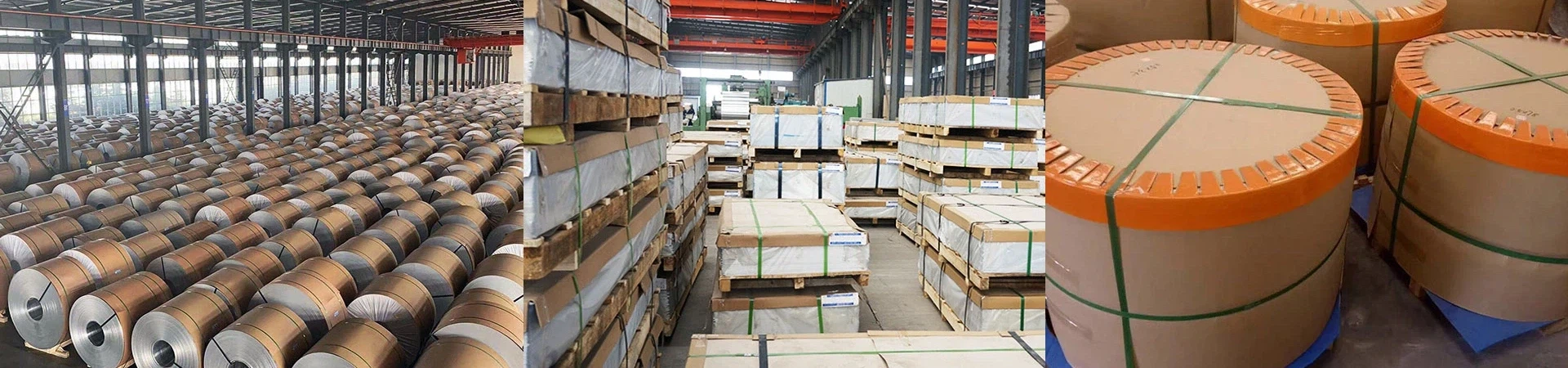
Aluminum Foil as an Industrial Packaging Material
Aluminum foil appears in automotive manufacturing, textiles, electronics, electromechanical equipment, aerospace, packaging, construction and shipbuilding, and it is one of the most widely consumed non-ferrous industrial raw materials. Its value in packaging rests on a combination that no single plastic film reproduces: a total barrier to light, near-total barrier to moisture and gas at very low gauge, dead-fold so a wrap holds the shape it is given, high thermal conductivity, and recyclability without loss of quality.
Consumption Structure of the Chinese Foil Market
China consumes on the order of 161,300 t of aluminum foil a year, and four varieties account for more than 70% of that total. Air-conditioning foil is the largest single product, followed by cigarette foil. China is both the largest cigarette producer and the largest cigarette consumer, and packaging for that industry consumes about 35,000 t of foil a year, close to 60% of all double-zero foil consumption. Decorative foil for thermal insulation, moisture protection and interior finishes is the third variety and continues to grow with the construction and home appliance sectors, while cable foil uses the sealing and shielding behaviour of the metal as a wire and cable screen. Pharmaceutical foil, electronic foil, automotive foil and flexible packaging foil are the fastest-growing additions to the mix.
| Variety | Typical alloy | Typical temper | Gauge range | Main use |
|---|---|---|---|---|
| Air-conditioning foil | 1100, 1200, 8011 | O | 0.09–0.20 mm | Fins and coils in heat exchangers |
| Cigarette foil | 1235, 8079 | O | 0.006–0.007 mm | Inner liner and outer wrap |
| Decorative foil | 1100, 8011 | O or H18 | 0.006–0.05 mm | Thermal insulation, moisture barrier, finishes |
| Cable foil | 1145, 1235 | O | 0.05–0.10 mm | Shielding and screening of wire and cable |
| Pharmaceutical and flexible packaging foil | 8011, 8021, 1235, 8079 | O or H18 | 0.006–0.03 mm | Blister lidding, laminates, pouches |
Pharmaceutical Blister Lidding
In the packaging industry, foil serves cigarette packing, aluminum-plastic composite bags, pharmaceutical blister packs and chocolate wrapping, and some premium beers even wrap the bottle mouth in foil. Medical blister packaging is the most demanding of these uses. The pack combines medicinal aluminum foil, a rigid PVC sheet and a heat-seal lacquer: the foil is heat-sealed to the plastic cavity to close the pack. The material must be non-toxic, corrosion resistant, impermeable, heat resistant, moisture proof, light blocking and able to withstand steam sterilisation.
Blister lidding foil is normally about 0.02 mm thick and is built as a laminate with four functional layers: a protective layer on the outside, an ink printing layer for batch and dosage information, the foil base material that provides the barrier, and a heat-seal adhesive layer on the product side. Because that construction is more costly than simple flexible packaging, all-aluminum blister packs are reserved for high-value medicines, while foil-to-PVC blister packs cover the bulk of solid-dose products.
Aluminum-Plastic Composite Bags and Flexible Packaging
Beyond soft cans, aluminum-plastic composite bags are used for snacks, fried foods, tablets and powdered products, and the same barrier makes them suitable for military and ordnance supplies where long storage life is essential. In these structures the foil is the barrier core and the plastic layers supply mechanical strength, printability and the seal. Foil also protects against migration of volatile aroma compounds out of the pack and against light-induced degradation of the contents, which is why it is often selected when shelf life rather than cost governs the specification.
Alloys, Tempers and Quality Control for Packaging Foil
1235 is the classic fine-gauge barrier alloy, refined to a minimum of 99.35% aluminum so that the residual iron and silicon content stays low and the foil rolls down to 0.006 mm without excessive pinholes.
8079 delivers higher strength at very low gauge and is widely used for cigarette foil and flexible laminates.
8011 and 8021 are the workhorse alloys for blister lidding, closures and containers because they combine formability with heat-seal compatibility.
Temper choice follows function: O temper for lamination and wrapping, H18 where a stiffer lidding foil is needed for machine handling.
Rolling oil residue, pinhole count, wettability for lacquer adhesion, thickness tolerance and tensile properties are the routine release tests, controlled against GB/T 3198 for aluminum foil and, for pharmaceutical lidding, against the relevant medicinal foil standard.
Thickness and alloy are not independent variables. Specifying a thinner gauge than the print, lamination and blister-forming processes can tolerate raises the pinhole count and the risk of barrier failure, so a packer should set the gauge from the barrier requirement and the machine capability together rather than from material cost alone.
Frequently Asked Questions
Q: What alloys are used for packaging aluminum foil?
1235 and 8079 dominate fine-gauge barrier foil, while 8011 and 8021 are common for blister lidding, closures and containers.
Q: How thick is pharmaceutical blister foil?
Medical blister lidding foil is typically about 0.02 mm thick and is supplied as a laminate with a protective layer, a printed ink layer, the foil base and a heat-seal layer.
Q: Which aluminum foil product is consumed most in China?
Air-conditioning foil is the largest single variety, followed by cigarette foil, decorative foil and cable foil; together these four exceed 70% of national foil consumption.
Q: Why is foil used in aluminum-plastic composite bags?
The foil core gives a total barrier to light, moisture and oxygen, so snacks, fried foods, tablets, powders and long-life military supplies keep their quality over extended storage.
Q: What is double-zero foil?
Double-zero foil is foil rolled thinner than 0.01 mm, the gauge class used for cigarette packaging and other high-barrier, light-gauge applications.
Q: Which standard covers aluminum foil quality?
GB/T 3198 specifies aluminum and aluminum alloy foil, defining alloy, temper, thickness tolerance and properties; pharmaceutical lidding adds the applicable medicinal foil standard.


