

The manufacturing process of aluminum foil typically involves the following steps:
Preparation of the raw material: The raw material for aluminum foil manufacturing is aluminum ingots or billets. These are first heated in a furnace to remove any impurities and then rolled into thin sheets.
Rolling: The aluminum sheets are passed through a series of rolling mills, where they are continuously compressed and elongated to reduce their thickness. This process is called hot rolling and is typically done at high temperatures to make the aluminum more malleable.
Cold rolling: After hot rolling, the aluminum sheets undergo cold rolling, which further reduces their thickness and improves their surface finish. Cold rolling involves passing the sheets through a series of rolling mills at room temperature to achieve the desired thickness and mechanical properties.
Annealing: The cold-rolled aluminum sheets are then annealed by heating them to a specific temperature and then slowly cooling them. Annealing helps to relieve internal stresses and increase the ductility and formability of the aluminum sheets.
Finishing: The annealed aluminum sheets are subjected to various finishing processes to enhance their surface properties and appearance. These processes may include cleaning, degreasing, lubricating, and surface treatments such as brushing or coating.
Slitting and cutting: The finished aluminum sheets are slit and cut into desired widths and lengths using slitting and cutting machines. This step allows the aluminum foil to be produced in different sizes and dimensions to meet specific customer requirements.
Annealing (again): The slit aluminum sheets, now in the form of foil, are annealed once again to further improve their ductility and flexibility. This annealing process is often done in a controlled atmosphere to ensure uniform heat distribution.
Quality control: Throughout the manufacturing process, quality control measures are implemented to ensure the foil meets the required standards. This may involve inspections for thickness, surface defects, mechanical properties, and other quality parameters.
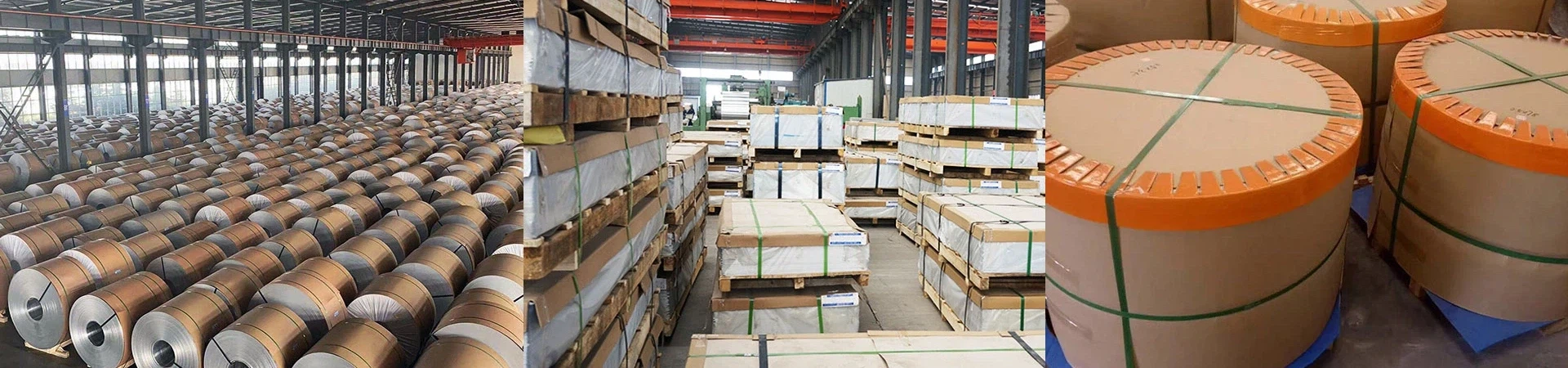
Packaging and shipping: The final aluminum foil rolls are packaged and prepared for shipment to customers. They may be packaged in boxes, wrapped in protective materials, or placed on pallets for transportation.
It's important to note that the specific manufacturing process can vary depending on the desired properties, thickness, and application of the aluminum foil. Manufacturers may also incorporate additional steps or treatments to meet specific customer requirements.


