

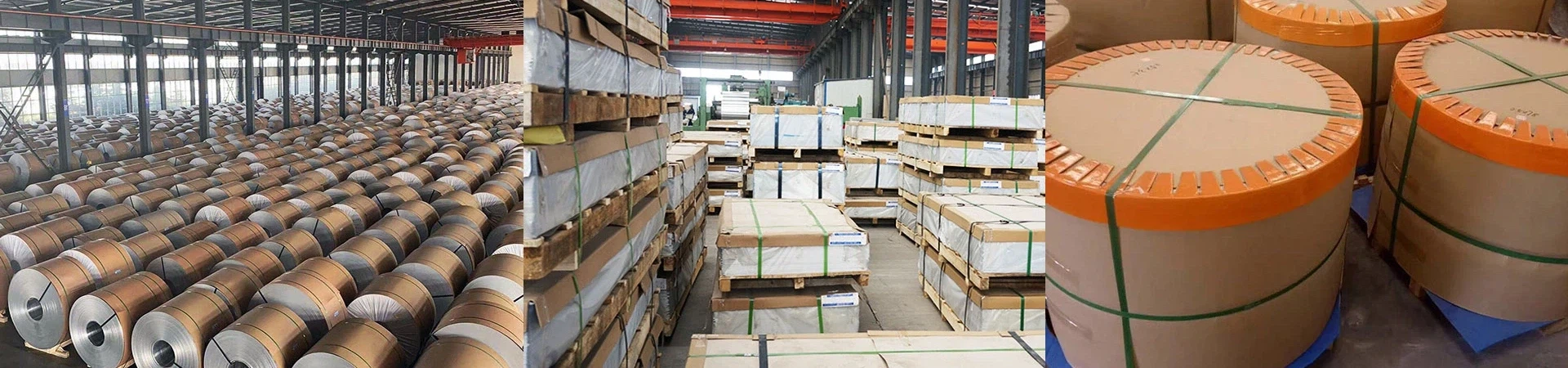
Aluminum foil is used across packaging, HVAC, battery, electronics and other industrial applications. Although all aluminum foil products are made by rolling aluminum into thin gauges, the required alloy, thickness, surface quality, mechanical properties and production controls can vary significantly according to the final application.
Understanding these differences is important for buyers because a foil suitable for food packaging may not meet the requirements of a lithium-ion battery or electrolytic capacitor. The following classification provides an overview of the major aluminum foil applications and the development of key segments in China.
Aluminum Foil by Application
According to its end use, aluminum foil can generally be divided into packaging and container foil, air-conditioning foil, battery foil, electronic foil and other specialized foil products.
1. Packaging and Container Foil
Packaging and container foil represents the largest application segment. It is widely used for household foil, flexible packaging, food containers, pharmaceutical packaging and blister packs.
Typical alloys include 8011, 1235 and 8079. These alloys are selected for their combination of formability, strength, corrosion resistance and suitability for converting processes.
Household foil requires good flexibility and folding performance, while pharmaceutical and food packaging applications place additional emphasis on surface cleanliness, pinhole control and consistent thickness.
2. Air-Conditioning Foil
Air-conditioning foil is primarily used as fin stock for heat exchangers, condensers and evaporators. The foil is formed into fins and assembled with tubes to increase the heat-transfer area.
Common alloys include 8011, 1100 and 3003. Depending on the application, the foil may require specific mechanical properties, surface treatments or hydrophilic coatings.
As global demand for air conditioners and refrigeration equipment changes with construction activity, climate conditions and appliance production, AC foil remains one of the major aluminum foil consumption segments.
3. Battery Foil
Battery foil is an increasingly important high-growth application. In lithium-ion batteries, aluminum foil is commonly used as the positive-electrode current collector, providing an electrically conductive substrate for the cathode material.
Commonly referenced alloys include 1060, 1070, 1235 and 3003, depending on battery design and manufacturer requirements.
Battery foil requires much tighter process control than many conventional foil products. Important characteristics may include thickness uniformity, surface cleanliness, tensile properties, flatness and resistance to defects that could affect coating or battery assembly.
The rapid expansion of electric vehicles and energy-storage systems has made battery foil one of the most closely watched areas of the aluminum foil industry.
4. Electronic Foil
Electronic foil is a specialized, high-value product used in electrolytic capacitors. Unlike ordinary packaging foil, capacitor foil requires extremely high material purity and carefully controlled surface characteristics.
Commonly referenced alloys include 1080, 1090 and 1N30. The foil is typically subjected to electrochemical etching to increase its effective surface area before further processing.
Although electronic foil represents a relatively small proportion of total aluminum foil tonnage, its technical requirements and processing complexity make it a higher-value segment.
Production Structure in China, 2022
The following figures summarize the production structure of the major application categories listed:
| Category | Output (million tons) | Share of Listed Categories | YoY Change |
|---|---|---|---|
| Packaging and container foil | 2.45 | 48.80% | +4.3% |
| Air-conditioning foil | 1.02 | 20.32% | +2.0% |
| Battery foil | 0.28 | 5.58% | +100% |
| Electronic foil | 0.11 | 2.19% | - |
Data note: The shares above refer only to the categories listed in the table. Other aluminum foil products, including cable foil, decorative foil and other industrial foil, account for the remaining production. The figures represent annual domestic production statistics for 2022.
What the Production Structure Tells Us
Packaging Foil Remains the Industry Foundation
Packaging and container foil accounted for nearly half of the output represented in the table. Food, beverage, pharmaceutical and household packaging provide relatively broad and recurring demand.
Its large production base also means that competition among suppliers can be strong. Buyers therefore commonly compare not only price but also alloy consistency, thickness tolerance, surface quality, rolling quality and delivery capability.
Air-Conditioning Foil Is a Mature Large Segment
AC foil represented more than 20% of the listed production. Its demand is closely connected with air-conditioner, refrigeration and heat-exchanger manufacturing.
The segment is relatively mature compared with battery foil, but improvements in energy efficiency and heat-exchanger design continue to influence foil specifications and surface-treatment requirements.
Battery Foil Is the Fastest-Growing Segment
Battery foil recorded approximately 100% year-on-year growth in 2022, making it the fastest-growing category among those listed.
The rapid expansion was closely associated with the growth of electric vehicles, lithium-ion batteries and energy-storage systems. As battery manufacturers expanded production, demand increased for high-quality aluminum current-collector foil.
This trend has encouraged investment in precision rolling, quality control, surface treatment and production capacity specifically designed for battery-grade foil.
Electronic Foil Is Small but High-Value
Electronic foil accounted for only a small proportion of production by weight. However, its high purity, specialized processing and strict performance requirements give it significantly greater technical value than ordinary commodity foil.
Capacitor foil requires controlled alloy composition, surface quality and electrochemical performance. As a result, production involves more demanding process and quality-control requirements.
Conclusion
China's aluminum foil industry serves a wide range of downstream applications, from everyday food packaging to highly specialized batteries and electronic components.
Packaging and container foil remains the largest volume segment, AC foil provides stable industrial demand, battery foil represents the strongest growth opportunity, and electronic foil occupies a smaller but higher-value niche.
For aluminum foil buyers, selecting the correct product should therefore begin with the end application. Alloy, temper, thickness, surface condition, mechanical properties and dimensional tolerances should all be specified according to the manufacturing process and final product requirements. As demand from electric vehicles, energy storage, advanced electronics and sustainable packaging continues to develop, application-specific aluminum foil is likely to become increasingly important in the global market.


