

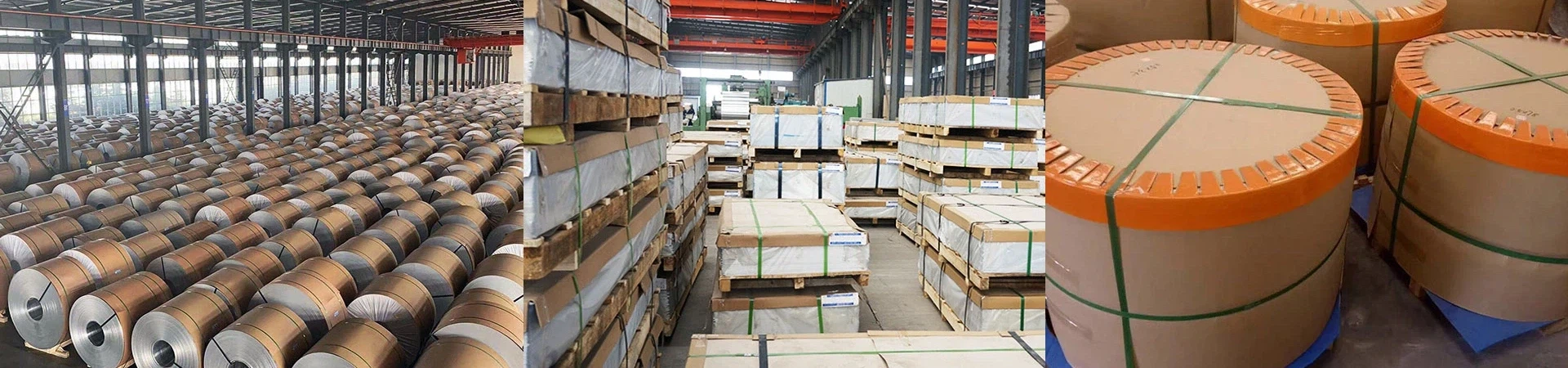
Aluminum is unique in the metal fabrication industry due to its corrosion resistance, durability, and light weight.
5052 is one of the most widely used aluminum alloys for everyday, automotive, marine, and industrial applications.
However, a frequently asked question is: Is it possible to weld 5052 aluminum plate?
For engineers, welders, hobbyists, and manufacturers who want dependable results, it is essential to comprehend the characteristics of 5052 aluminum plate and how to weld it efficiently.
This thorough guide examines the properties of 5052 aluminum plate, looks at welding methods that work well with it, talks about possible problems, and offers helpful advice to guarantee strong, long-lasting welds.
An Overview of 5052 Aluminum
Understanding 5052 aluminum's characteristics, alloy makeup, and typical uses is crucial before discussing its welding potential.
Why Is 5052 Aluminum Plate Unique?
The 5000 series of aluminum alloys, which are mostly alloyed with magnesium, includes 5052 aluminum. It is well known for:
Outstanding resistance to corrosion
superior strength in contrast to other non-hard alloys
Good formability
moderate strength at fatigue
Excellent weldability
5052 Composition and Mechanical Properties
| Element | Approximate Percentage | Function/Effect |
|---|---|---|
| Magnesium (Mg) | 2.2 – 2.8% | Provides strength and corrosion resistance |
| Chromium (Cr) | 0.15 – 0.35% | Enhances corrosion resistance |
| Silicon (Si) | ≤ 0.4% | Improves machinability |
| Iron (Fe) | ≤ 0.4% | Increases strength and fatigue life |
| Residuals (Cu, Mn, Ti, etc.) | Trace amounts | Minor effects; generally negligible |
Mechanical Properties:
Tensile strength: 280 – 350 MPa (around 40,000 – 50,000 psi)
Yield strength: Approximately 195 MPa (28,000 psi)
Elongation: 12-20% depending on thickness and temper
Typical Applications
Marine structures and boat hulls
Fuel tanks and pressure vessels
Automotive body panels
Architectural panels
Storage tanks and farm equipment
Is it easy or difficult to weld 5052 aluminum Sheet ?
Some alloys are easier to weld than others when it comes to aluminum. Knowing the advantages and disadvantages of 5052 aluminum in welding situations is essential to determining if it can be successfully welded.
Compatibility of General Welding
In general, 5052 sheet is thought to be weldable with the right methods. Because of its magnesium content, it reacts favorably to a variety of welding techniques, including TIG (GTAW), MIG (GMAW), and even some arc welding procedures.
Benefits of 5052 Aluminum Plate Welding
Because it contains comparatively less magnesium than more complex alloys, it has excellent weldability.
Minimal propensity for hot cracking
When used correctly, it creates smooth, visually appealing welds.
Ideal for thick and thin-gauge materials
Obstacles and Restrictions
Welding 5052 alloy plate, however, is not without its challenges:
Distortion: Aluminum's strong heat conductivity can induce warping
Porosity: Excess moisture or contaminants might result in weld porosity.
Welding can lower strength locally, unless post-weld heat treatments are provided.
Aluminum's oxide deposit can impair weld quality; appropriate surface preparation is necessary.
Summary Table of Welding Techniques
| Technique | Suitable for | Advantages | Limitations |
|---|---|---|---|
| TIG (GTAW) | Thin sheets, precise welds | High quality, aesthetics, control | Slower, requires skill |
| MIG (GMAW) | Thick sections, production speed | Faster, versatile | Less precise, possible porosity |
| Stick (SMAW) | Less common, simple repairs | Simplicity | Poor control, high defect risk |
| FSW | Industrial, large structures | Strong joints, minimal distortion | Equipment cost, specialized process |


