When procuring materials for marine or offshore projects, specifying the correct corrosion protection is a major driver of cost and long-term maintenance schedules. For decades, engineers have faced a critical question: Do we need to invest in expensive coating systems for our aluminum pipelines, or is there a material that can survive raw seawater exposure on its own?
The constant battle against saltwater corrosion is real. However, for many applications, the industry has a proven, cost-effective solution.
Marine-grade 5086 aluminum pipe offers superior, long-term resistance to seawater corrosion without the need for additional protective coatings. This article explains the science behind its self-protecting nature, clarifies the rare exceptions where a coating might be needed, and shows why it is the go-to choice for durable marine construction.
1. 5086 Aluminum Pipe vs. Coating Needs
For engineers and procurement managers who need a fast, data-driven answer, this summary explains it all.
| Material / Condition | Corrosion Resistance in Seawater | General Need for Protective Coating | Key Takeaway for Your Project |
| 5086 Aluminum Pipe | Excellent | No (for corrosion protection) | A self-healing oxide layer naturally prevents rust and pitting in salt spray and seawater environments. |
| Long-Term Submersion | Excellent | Yes (for anti-fouling only) | An anti-fouling paint may be needed to prevent marine life growth, not to stop corrosion. |
| Other Aluminum Alloys | Moderate to Good | Yes (often required) | Alloys like 6061 are not true marine-grade and require coating to prevent severe pitting in saltwater. |
Get a quote for GNEE's certified 5086 marine-grade pipes today
2. Why 5086 Aluminum Pipe Doesn't Need Coating for Seawater Exposure
The exceptional performance of 5086 aluminum pipe corrosion resistance is not a marketing claim; it's based on its specific metallurgical properties. 5086 is a true "marine-grade" material because of its high magnesium (Mg) content, typically around 4.0%.
This high magnesium concentration allows the alloy to form a dense, stable, and incredibly resilient layer of aluminum oxide on its surface the moment it is exposed to air. This oxide layer is the key to its survival.
- It's a Natural Barrier: This passive oxide film is nonreactive and chemically stable, acting as a perfect shield that prevents chloride ions from the seawater from reaching and attacking the base metal.
- It's Self-Healing: If the pipe surface is scratched or abraded, a new layer of protective oxide forms almost instantly over the damaged area. This self-repairing mechanism ensures that protection is never compromised, unlike a paint coating, which, once breached, allows corrosion to creep underneath.
In our experience supplying offshore platforms that have been in service for over 20 years, we've seen uncoated 5086 pipes show only minor surface discoloration with no structural degradation, proving their long-term viability. This makes it ideal for:
- Shipboard piping systems (fuel, water, and hydraulics)
- Offshore platform railings, stairs, and structural supports
- Seawater cooling system pipelines
- Marine vessel construction

3. When is Coating Necessary for 5086 Aluminum Pipes in Seawater?
While 5086 aluminum does not require a coating for corrosion protection, there is one specific scenario where a coating is recommended: long-term, static immersion in seawater.
In this situation, the threat is not corrosion, but biofouling.
Marine organisms like barnacles, algae, and mussels can attach to any submerged surface, including aluminum pipes. This growth can:
- Increase drag on a ship's hull.
- Clog intake pipes for cooling systems.
- Add significant weight to a structure.
To prevent this, an anti-fouling paint is applied. It is crucial to understand that the necessity of 5086 anti-fouling paint is purely for preventing marine life attachment, not for preventing the aluminum from corroding. The underlying material remains perfectly protected by its own oxide layer.
Engineering Note: The application of anti-fouling paint must be done correctly, often requiring a specific primer to ensure adhesion to the aluminum oxide surface without causing galvanic issues.

4. 5086 Aluminum Pipe vs Other Aluminum Alloys in Marine Environments
Not all aluminum is created equal, especially in saltwater. Choosing the wrong alloy can lead to premature failure. Here's a direct comparison for marine applications.
| Alloy Grade | Corrosion Resistance in Seawater | Protective Coating Requirement | Ideal Use Case & Rationale |
| 5086 Aluminum | Excellent | No (unless submerged for anti-fouling) | The industry standard for any structural marine or offshore application requiring long life with zero coating maintenance. |
| 5052 Aluminum | Good | Recommended for long-term exposure | Good for boat hulls and non-structural parts but can be more susceptible to pitting than 5086 over many years. |
| 6061 Aluminum | Moderate | Yes, always required in seawater | A great structural alloy for general use, but its copper content makes it highly susceptible to pitting corrosion in saltwater. It must be fully coated or anodized. |
5. Reduce Costs and Maintenance with GNEE's 5086 Aluminum Pipes
Looking for a high-performance, corrosion-resistant aluminum pipe that eliminates the need for expensive and time-consuming coating procedures?
As a specialist supplier of marine-grade materials, GNEE provides:
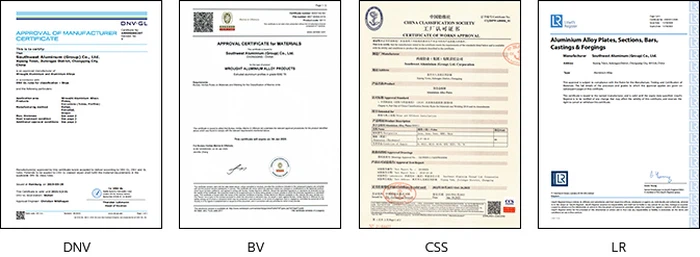
- Certified 5086 Aluminum Pipes: Fully compliant with ASTM B928 and major marine classification society standards (DNV, ABS, etc.).
- No Coating Needed: Save on initial application costs and future maintenance expenses.
- Custom Sizes & Thicknesses: We supply pipes tailored to your project's specific pressure and structural requirements.
- Expert Advice: We help you determine if anti-fouling is necessary for your specific application.