

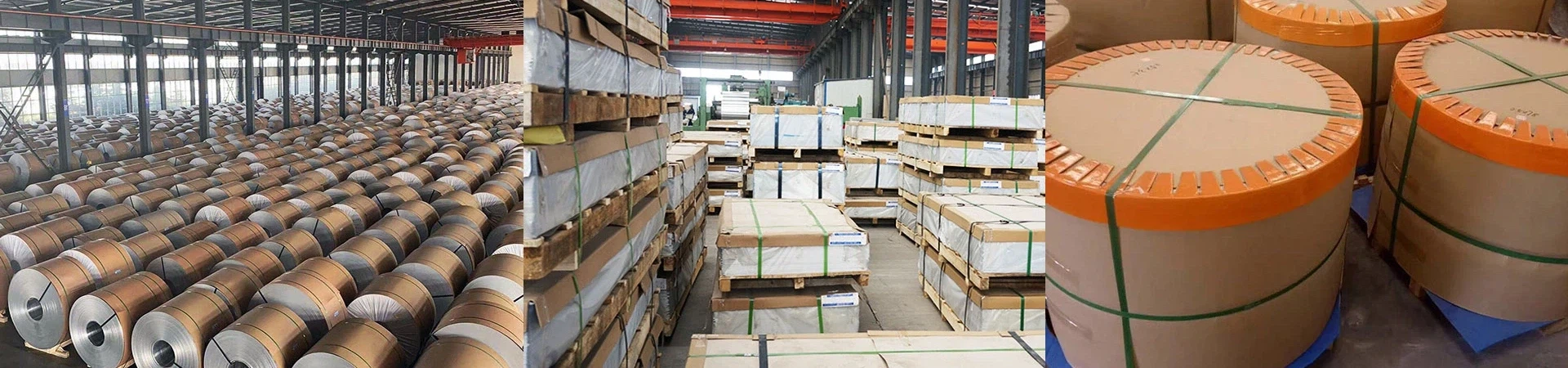
No, GNEE 6061-T6 aluminum does not rust; instead, it develops a protective oxide layer that prevents corrosion. Unlike steel, it won't form rust, although under certain specific conditions, such as exposure to strong alkaline environments, it can experience corrosion, and other types of corrosion may occur in different settings.
Why GNEE 6061-T6 Doesn't Rust
Protective oxide layer: Aluminum naturally forms a thin, hard, and transparent oxide layer on its surface when exposed to air, which acts as a barrier to further corrosion.
Alloy composition: The magnesium and silicon in 6061-T6 enhance its corrosion resistance, making it more durable in both natural and industrial environments compared to many other aluminum alloys.
Situations Where It Can Corrode
Alkaline environments: GNEE 6061-T6 has limited resistance to corrosion in highly alkaline conditions, such as certain types of concrete.
Contact with dissimilar metals: When paired with other metals, galvanic corrosion may occur, though the alloy generally maintains good resistance to stress corrosion cracking.

6000 series aluminum alloy is a type of aluminum alloy made up of aluminum, magnesium, and silicon. It contains typical grades like 6061 and 6063. The 6 series aluminum alloy has good mechanical qualities, corrosion resistance, and processability, and it is one of the most commonly used aluminum alloys today.
6063 aluminum alloy profiles are often used for portholes in ship superstructures, while masts and gangways are commonly made of 6063 and 6061 aluminum alloys.
6061 aluminum alloy is a high-strength alloy including magnesium, silicon, and copper. As a result, 6061-t6 exhibits high corrosion resistance and strength. It is frequently employed in high-strength structural, aeronautical, and automotive applications.
The production process of GNEE marine-grade 6061 aluminum plates is highly advanced. During quality inspection, GNEE ensures precise evaluation of three key aspects of 6061 aluminum plates. First, the microstructure is fine and performance is uniform. For ultra-thick plates, uniformity through the thickness is especially critical, with no significant fluctuations in mechanical properties. Consistency across length and width is also strictly controlled.
Second, GNEE guarantees high dimensional accuracy, focusing on precise thickness and width. Third, the plate shape is carefully inspected, including flatness and sheet convexity, to ensure optimal quality.
6063 aluminum alloy, often called a construction alloy, is valued for its high strength, excellent finish, and outstanding corrosion resistance. It is commonly used in interior and exterior architectural applications.
The magnesium content in 6063 aluminum sheets ranges from 0.45% to 0.9%, while silicon content is 0.2–0.6%. Even with these small alloying amounts, the properties of aluminum are significantly enhanced-silicon increases hardness, and magnesium improves corrosion resistance.
The corrosion resistance of 6063 aluminum is excellent. When surface-treated, its oxidation resistance is maximized, enabling it to withstand harsh outdoor environments for more than 25 years. For aluminum alloy pontoons, 6063-T6 is usually chosen, with scientifically treated surfaces to enhance both anti-oxidation and corrosion resistance of the frame.


