What 3000 Series Aluminium Round Bar Is
The 3000 series is the aluminium-manganese family. Manganese is the main alloying addition, at roughly 1.0-1.5 percent in 3003, and it raises strength above that of commercially pure aluminium while leaving formability and corrosion resistance almost untouched. Round bar is produced by hot extrusion and then straightened and cut, which gives a fine surface and consistent dimensions along the length.
The governing specifications are ASTM B221 for extruded aluminium bars, rods and wire, EN 755-2 for the mechanical properties of extruded rod and bar, and GB/T 3191 for domestic supply. Chemistry follows the registered limits of the alloy, for example ASTM B221 for 3003 and 3004, with tolerances for diameter, straightness and length taken from the same standard or from EN 755-3 for extruded bar dimensions.
Because the family is not heat-treatable, strength is developed by strain hardening rather than by quenching and ageing. That makes the material predictable: properties are set by the temper, and there is no risk of a soft zone appearing next to a weld.
Chemical Composition and Mechanical Properties
The three grades normally stocked as round bar are 3003, 3004 and 3103. All are manganese-bearing, and the aluminium content is the remainder in each case.
| Element, percent | 3003 | 3004 | 3103 |
|---|---|---|---|
| Manganese | 1.0-1.5 | 1.0-1.5 | 0.90-1.50 |
| Magnesium | 0.05 max | 0.8-1.3 | 0.30 max |
| Copper | 0.05-0.20 | 0.25 max | 0.10 max |
| Iron | 0.7 max | 0.7 max | 0.7 max |
| Silicon | 0.6 max | 0.30 max | 0.50 max |
| Alloy and temper | Tensile strength | 0.2% proof strength | Elongation |
|---|---|---|---|
| 3003-O | 95-130 MPa | 35 MPa min | 25% min |
| 3003-H14 | 140-200 MPa | 115 MPa min | 8% min |
| 3004-H34 | 215-265 MPa | 170 MPa min | 6% min |
| 3103-H14 | 140-190 MPa | 110 MPa min | 8% min |
Where a project needs more strength than the H14 tempers can give, designers normally move to the 5000 series or to a heat-treatable 6000 series grade rather than to a harder 3000 series temper, because the higher tempers lose ductility quickly.
Machining, Forming and Welding
Machining: the manganese content gives clean, short chips, so the alloy turns, drills, mills and threads more freely than pure aluminium. Standard high-speed tooling and water-based coolant are adequate for most operations.
Forming: bar can be bent, swaged and rolled, and the annealed O temper takes tight radii without cracking. The worked tempers need a larger bend radius.
Welding: readily welded by TIG and MIG using a 4043 or 5356 filler to AWS A5.10. Filler selection should match the service environment, with 5356 preferred for anodised or higher-strength joints.
Surface treatment: bar can be anodised, bright-dipped or painted. The alloy anodises to a slightly grey tone rather than a clear film, which matters for decorative applications.
Corrosion: the natural oxide film resists fresh water, mild chemical atmospheres and many food environments. It is not recommended for strong alkaline service.
Typical Applications
Round bar in this family appears wherever a moderate-strength, corrosion-resistant, easily machined component is needed:
Marine and boat fittings: cleats, stanchions, handrail uprights and deck hardware.
Heat exchangers and cooling equipment, where thermal conductivity and corrosion resistance both matter.
Transport hardware: trim rails, brackets, bus and trailer bodywork fittings.
Fabricated engineering parts: shafts, couplings, spacers, fasteners, connectors and bushings.
Kitchenware frames, refrigerated display frames, chemical storage frames and non-critical pressure vessels.
Decorative and architectural trim, sign frames and light structural members in sheltered conditions.
Ordering, Tolerances and Inspection
Round bar is ordered by alloy, temper, diameter and length. Diameters from 6 mm to 300 mm are available as standard extrusions, and lengths up to 6000 mm can be supplied in random, fixed or cut-to-size form, with tolerances on diameter, ovality and straightness taken from ASTM B221 or EN 755-3. Smaller sizes are often supplied in coil or in straight cut bars, and larger diameters can be peeled and polished to close tolerance for use as machining stock.
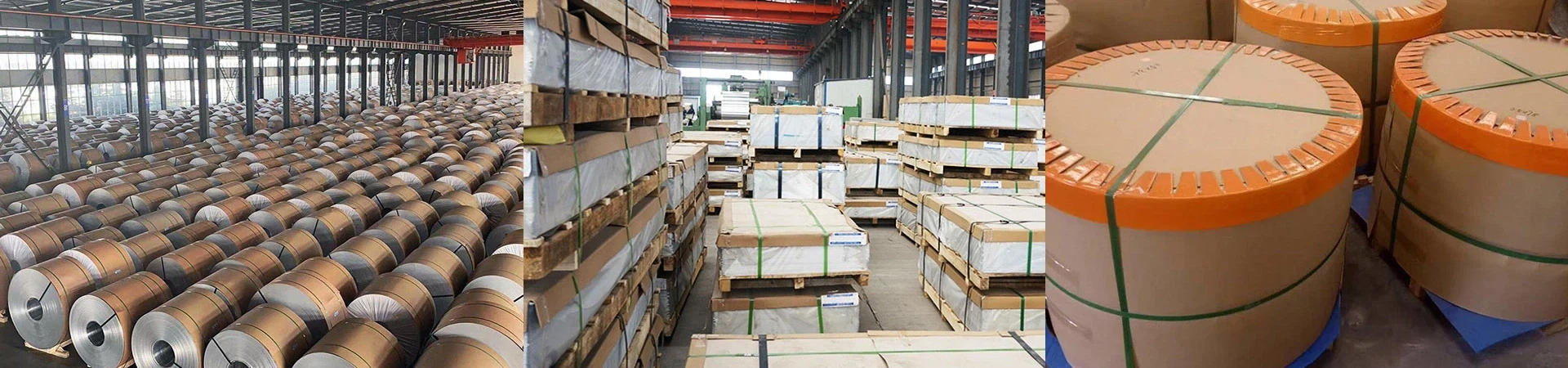
Inspection covers diameter and ovality measurement at both ends and the middle of each bar, straightness check on a surface plate, visual examination for extrusion laps, blisters and die lines, and mechanical testing of samples from the same heat. Each shipment is accompanied by a certificate showing chemical composition and tensile results for the actual heat, together with heat number marking on the bundles. Bars are bundled with plastic or paper interleaving, strapped and shipped on wooden pallets, with end caps fitted to the larger diameters to protect the machined ends.
Frequently Asked Questions
Q: What is the difference between 3003 and 3004 round bar?
A: 3004 contains about 1.0 percent magnesium on top of the manganese, so it is roughly 40 to 50 percent stronger than 3003 in comparable tempers while keeping good corrosion resistance. 3003 is chosen where formability and economy matter more than strength.
Q: Can 3000 series bar be heat treated?
A: No. The family is not heat-treatable, so strength is controlled by strain hardening. Any attempt to solution-treat and age the alloy will not increase hardness; only cold work will.
Q: Is the bar suitable for anodising?
A: Yes, but the manganese content gives a slightly grey, less transparent anodic film than pure aluminium. Where a bright clear finish is required, a 1000 series or 5000 series grade is the better choice.
Q: What tolerances can be held on diameter?
A: Standard extruded bar is supplied to the diameter tolerances of ASTM B221 or EN 755-3, typically ranging from about plus or minus 0.15 mm on small diameters to around 1 percent of diameter on large ones. Tighter limits are available on peeled and polished stock.
Q: How is the material supplied and documented?
A: Bars are supplied in random lengths, fixed lengths or cut to size, bundled and palletised for sea freight. Documentation includes the heat number and a test certificate covering chemistry and mechanical properties of that heat.