

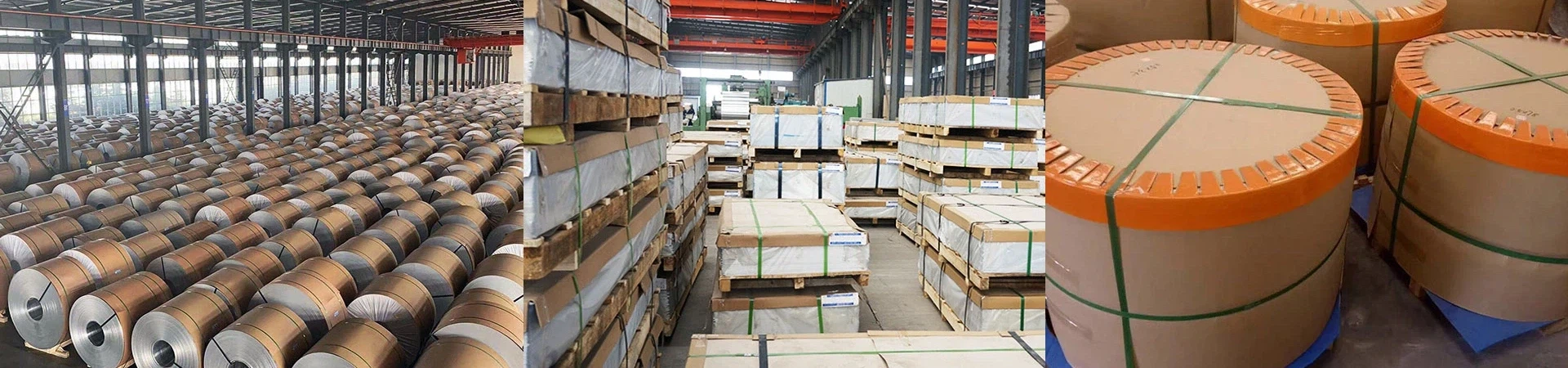
7075-T6 aluminum alloy is the reference high-strength aluminum material in manufacturing and metalworking. It is a cold-worked forging alloy whose strength exceeds that of common mild steel, and its dense internal structure and good general corrosion resistance make it a standard choice for demanding aerospace, military and industrial components.
What 7075-T6 Aluminum Alloy Is
The base alloy is a zinc-magnesium-copper precipitation-hardening grade. Zinc provides most of the age hardening response, magnesium forms the strengthening precipitates together with zinc, and copper raises strength further while slightly reducing corrosion resistance. Chromium additions control grain structure. The nominal composition is zinc 5.1-6.1%, magnesium 2.1-2.9%, copper 1.2-2.0% and chromium 0.18-0.28%, with aluminum as the balance.
Because the alloy responds strongly to heat treatment, it can be supplied in several tempers, and the selected temper has a larger effect on performance than the base chemistry alone. Wrought product is normally supplied to ASTM B209 / B209M, AMS 4045 or AMS-QQ-A-250/12 for aerospace routes, EN 485-2 in Europe and GB/T 3880.2 in China.
The T6 Temper and How It Is Produced
T6 designates a product that has been solution heat treated and then artificially aged, with no cold work applied after aging. Solution treatment dissolves the alloying elements at elevated temperature and a rapid quench retains them in supersaturated solid solution, leaving the material comparatively soft and formable. The subsequent artificial aging step precipitates fine particles throughout the grains and produces the highest strength level commonly supplied for this grade.
The temper also sets the limits of the material. 7075-T6 retains high strength at temperatures below about 150 °C (302 °F) and performs well in low temperature service, but weldability is poor and the alloy is sensitive to stress corrosion cracking in the short transverse direction. Two-stage aging treatments, which produce the T73 and T76 tempers, reduce that sensitivity at the cost of a moderate strength reduction, and these tempers are preferred for parts that will be loaded across the short transverse direction in a corrosive environment.
Oversized and extra-thick plate is normally verified by ultrasonic inspection following ASTM B594 so that internal defects such as porosity and inclusions are excluded before the material is released.
Physical and Mechanical Properties
| Property | Typical value |
|---|---|
| Density | 2.8 g/cm3 |
| Tensile strength (T6) | 572 MPa |
| Yield strength, 0.2% offset (T6) | 503 MPa |
| Elongation at break (T6) | 11% |
| Modulus of elasticity | 71.7 GPa |
| Hardness (T6) | 150 HB |
| Specific heat capacity | 796 J/(kg·°C) |
| Electrical resistivity at room temperature | 57.4 nΩ·m |
| Electrical conductivity (T6) | 17.7-20.6 MS/m |
| Thermal conductivity | 130 W/(m·K) |
| Melting range | 477-635 °C |
Good thermal conductivity shortens forming cycles and improves processing efficiency, which is one reason the alloy is used for molds and tooling as well as for structural parts.
Corrosion Behaviour and Weldability
General corrosion resistance, excluding stress corrosion, is comparable to that of 2024 aluminum alloy, and the natural oxide film gives good oxidation resistance in normal atmospheres. In the T6 condition the alloy is sensitive to stress corrosion cracking in the short transverse direction, so designers keep continuous grain flow aligned with the principal tensile stress, avoid exposing machined end grain to aggressive media, and specify T73, T76 or T7351 where the stress pattern cannot be changed.
Fusion welding is not recommended. The heat affected zone loses a large part of its strength and is prone to cracking, so joints are normally made with mechanical fasteners or structural adhesives; friction stir welding is used in some aerospace programmes where a welded joint is unavoidable. Where dissimilar metal contact occurs, insulating washers or coatings prevent galvanic attack.
Typical Applications
Aerospace and shipbuilding: upper and lower wing skins, fuselage elements and structural trusses where the strength-to-weight ratio matters most.
Precision machining and mold manufacturing: the fine grain structure gives excellent deep-hole drilling behaviour and longer tool life, which suits injection molds, jigs and fixtures.
Chemical industry: pipes, pressure vessels, valves, pumps and furnace components that operate in mildly corrosive service.
General industrial use: high-strength mechanical parts, gears, shafts, brackets and transport equipment components.
In each case the application dictates the temper. Where maximum strength is required and the environment is benign, T6 or T651 is chosen. Where a corrosive environment acts across the short transverse direction, an over-aged temper is specified and the small strength penalty is accepted as the price of a longer service life.
Selection, Inspection and Availability
Plate is commonly supplied from 3 mm up to 150 mm and thicker, with sheet and strip available in lighter gauges. Mill test certificates report chemical composition and mechanical properties for each heat, dimensional checks cover thickness tolerance and flatness, and thick plate is released against ultrasonic inspection reports. Buyers should state the alloy, temper, thickness, width, length and the applicable standard when ordering, and should confirm whether the part will be machined from solid, formed, or used in the as-supplied condition, because that decision determines which temper is appropriate.
Frequently Asked Questions
Q: What does the T6 temper mean?
T6 means the product was solution heat treated and then artificially aged, with no cold work after aging. It is the highest strength level commonly supplied for this alloy.
Q: Is 7075-T6 stronger than steel?
Its tensile strength of about 572 MPa is higher than that of common mild steel grades, but structural and high-strength steels reach much higher values. The advantage of 7075 is the strength it delivers at a density of only 2.8 g/cm3.
Q: Why is 7075-T6 prone to stress corrosion cracking?
The T6 temper forms continuous grain boundary precipitation that makes the short transverse direction sensitive to stress corrosion cracking. Over-aged tempers such as T73 and T76 greatly reduce that sensitivity.
Q: Can 7075-T6 be welded?
Fusion welding is not recommended because the heat affected zone loses strength and tends to crack. Mechanical fastening, adhesive bonding and in some cases friction stir welding are used instead.
Q: What is the maximum service temperature?
Strength is retained for continuous service below about 150 °C. Prolonged exposure above that temperature over-ages the alloy and reduces its mechanical properties.
Q: How is plate quality verified?
Thick plate is inspected ultrasonically to ASTM B594 to detect porosity and inclusions, and mill certificates report chemical composition and mechanical test results for the heat.


