

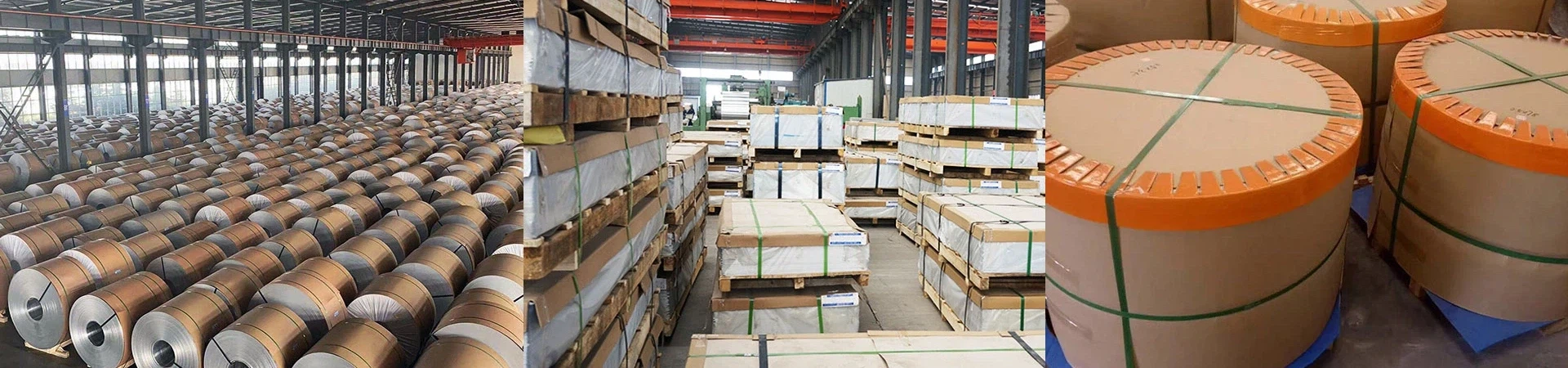
When your manufacturing project requires a weldable, high-strength material with exceptional corrosion resistance, the 5083 aluminum alloy (UNS A95083) is the global standard. Widely used in marine environments, unfired pressure vessels, LNG storage, drilling rigs, and military armor plates, this non-heat-treatable alloy relies on cold working for its strength.
However, looking at a basic data sheet is not enough. You need to know how these numbers translate to actual fabrication on your factory floor. As a leading direct 5083 aluminum alloy plate supplier, GNEE provides this comprehensive engineering guide to help you choose the correct temper, understand the chemical limits, and avoid common fabrication failures.

Chemical Composition of 5083 Aluminum Alloy
To meet AS/NZS 1734, ASTM B209, and EN AW-5083 specifications, the chemical composition of genuine 5083 aluminum must be strictly controlled within these limits:
| Element | Content (%) |
|---|---|
| Aluminum (Al) | Remainder |
| Magnesium (Mg) | 4.0 – 4.9 |
| Manganese (Mn) | 0.4 – 1.0 |
| Chromium (Cr) | 0.05 – 0.25 |
| Silicon (Si) | ≤ 0.40 |
| Iron (Fe) | ≤ 0.40 |
| Copper (Cu) | ≤ 0.10 |
| Zinc (Zn) | ≤ 0.25 |
| Titanium (Ti) | ≤ 0.15 |
| Others | ≤ 0.15 |
When you source from GNEE, every shipment comes with an EN 10204 3.1 or 3.2 Mill Test Certificate (MTC) to guarantee these exact chemical ratios.

Mechanical Properties: 5083 H116 Aluminum Plate vs Other Tempers
Because 5083 cannot be heat-treated, its mechanical limits depend entirely on the "temper" (how it is rolled and stabilized at the mill). Choosing the wrong temper will cause your plates to crack during bending or fail under load.
Here are the typical mechanical properties for the most common tempers we supply:
| Temper | Yield Strength (MPa) | Tensile Strength (MPa) | Elongation (%) | Key Characteristics | Typical Applications |
|---|---|---|---|---|---|
| 5083-O (Annealed / Soft) | ≥ 125 | 275–350 | ≥ 14 | Maximum ductility, excellent formability | Deep drawing, complex cylindrical parts, unfired pressure vessel heads |
| 5083-H116 (Marine Grade) | ≥ 215 | ≥ 305 | ≥ 10 | High strength, उत्कृष्ट seawater corrosion resistance, passes ASTM G66 (ASSET) | Ship hulls, marine decks, offshore structures |
| 5083-H321 (Stabilized Marine Grade) | 215 – 295 | 305 – 385 | ≥ 10 | Stabilized structure, prevents natural aging, excellent corrosion resistance | Shipbuilding, heavy transport equipment, marine structures |
5083 aluminum plate Corrosion Resistance and the 65°C (150°F) Limit Rule
The 5083 aluminum plate has excellent resistance to general corrosion and aqueous solutions in the pH range of 4 to 9. The metal rapidly forms a protective surface oxide film when exposed to oxygen.
Critical Engineering Warning: As per international pressure vessel codes (like AS1210), you must never use 5083 aluminum plates in continuous service environments where temperatures exceed 65°C (150°F).
Because of the high magnesium content, prolonged heat exposure causes "sensitization"-the magnesium migrates to the grain boundaries, making the plate highly susceptible to sudden stress corrosion cracking (SCC) and exfoliation.
5083 aluminum plate metal Fabrication and Cold Bending Parameters
5083 aluminum plate is highly formable, and the tool wear on your press brakes will be lower compared to carbon steel. However, because tempers like 5083 H116 and H321 are strain-hardened, you must strictly follow minimum bend radii to prevent the metal from fracturing along the bend line.
Indicative Minimum Bend Radii (at 90° to rolling direction, where "t" is plate thickness):
5083-O: For plates up to 1.5mm (1.0t for 90° bend). For plates over 1.5mm (1.5t for 90° bend).
5083-H116 / H321: For plates up to 1.5mm (1.0t for 90° bend). For plates over 1.5mm (1.5t to 2.0t for 90° bend).
(Always use a larger radius punch for hardened tempers).

Welding 5083 Alloy Aluminum Plate
This alloy is readily welded using standard TIG and MIG processes.
- Filler Wire: Always use a 5000-series filler wire to match the base metal chemistry. 5183, 5356, or 5556 are the required filler alloys.
- Heat Affected Zone (HAZ): Be aware that the heat from welding will reduce the tensile and yield strength in the HAZ back to the annealed (O-temper) condition.
- Preparation: Aluminum must be completely dry and clean. Remove the oxide layer with a stainless-steel wire brush immediately before welding to prevent weld porosity.
Why Source Your 5083 Aluminum Plates from GNEE?
Using out-of-spec materials leads to failed inspections and rejected structural builds. GNEE provides fully traceable, heavy-duty aluminum plates directly to your facility.
- Class Approvals: We supply marine plates certified by DNV, ABS, LR, CCS, and BV.
- Custom Dimensions: We offer wide formats and heavy thicknesses (up to 200mm) to reduce your welding requirements.
- Direct Factory Pricing: Cut out the middlemen and get a competitive 5083 aluminum plate price directly from the aluminum plate manufacturer.


Get A Quote And Your Free Fabrication Guide
Are you planning a new marine or pressure vessel project? Do not guess your material costs.
Contact GNEE today. Send us your required thickness, temper, and total tonnage. Our technical sales team will provide an accurate quote within 24 hours.
Bonus: Mention this data sheet in your inquiry, and we will email you our free "2026 Aluminum 5083 Press Brake & MIG Welding Parameter Guide" along with a sample MTC!


