

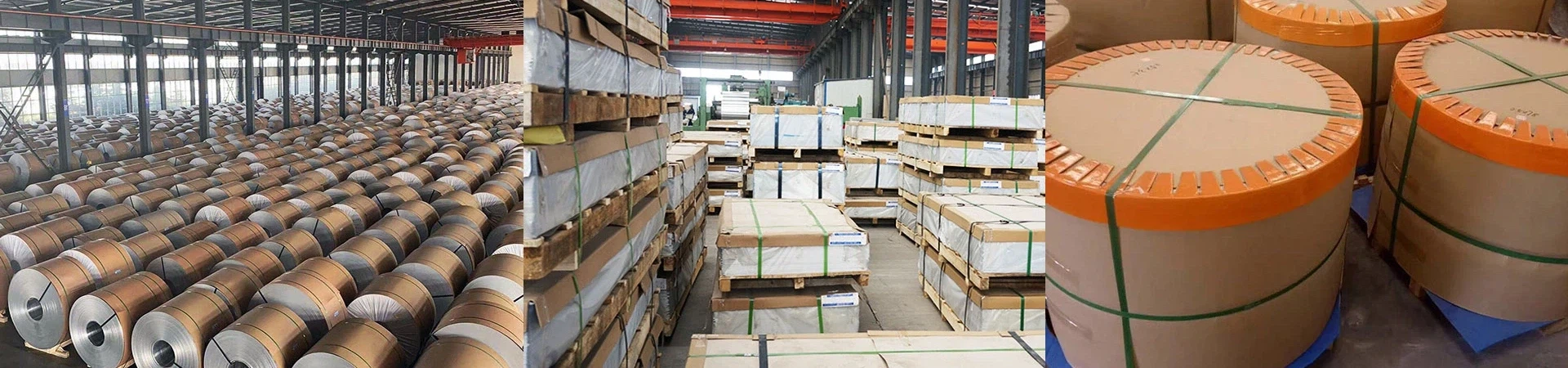
Aluminum foil thickness is typically less than 150mm. Foil is available in gauges as low as 6.3mm. Heavier foil sizes (>17 mm) provide an absolute barrier to gases and liquids. Typical water vapor transmission rate (WVTR) aluminum foil thickness of 9 mm is 0.3 g/m2 every 24 hours at 38°C and 90% relative humidity. As the thickness decreases, the foil becomes more susceptible to tearing or developing pinholes. Aluminum foil is composed of two basic processes:

Σ The traditional method of rolling aluminum slabs, ingots or plates into aluminum plates uses heavy-duty rolling mills to produce narrow gauge aluminum strips,
Σ By continuous casting or hot strip casting (similar to the extrusion process), aluminum occurs immediately after leaving the furnace. Since the rolling mill production method has been established for a longer period of time, recoil stocks are still widely used. When rolled into foil, the ingot-rolled stock must be re-annealed (reheated) between mill passes to overcome work hardening and restore workability. However, the most economical method of manufacturing re-coil stock is through continuous casting. A typical continuous casting line runs directly from the furnace to the reel. The system continuously feeds, casts, cools and winds rewinding stock. Since it is heated during the production process, the raw material does not need to be re-annealed when cast and re-rolled into foil. After the foil is manufactured, it must be further processed and ground on rolling equipment. The work roll surface is finely ground and polished to ensure a flat, uniform foil with a bright surface. The work rolls are paired with heavier backup rolls, which exert very high pressure on the work rolls to ensure stability.

This pressure ensures that the resulting aluminum foil sheet has a uniform size (thickness) (called a mesh). Each time the aluminum foil blank passes through the rolling mill, it is squeezed, its thickness decreases and its length increases, but its width remains the same. This means that the required width of the final foil product must be set at the beginning of the process. The rolling process can be viewed as a form of extrusion. Foil gauges below 25 mm usually pass through the work rolls two webs at a time. This is done so that the two pieces of foil support each other and are less likely to tear when rolled up. During the rolling process, the aluminum billet needs to be annealed to maintain workability. Adding lubricants to aluminum surfaces also maintains the material's machinability. The final annealing stage removes the lubricating oil and therefore makes the foil receptive to printing inks and adhesives.


