

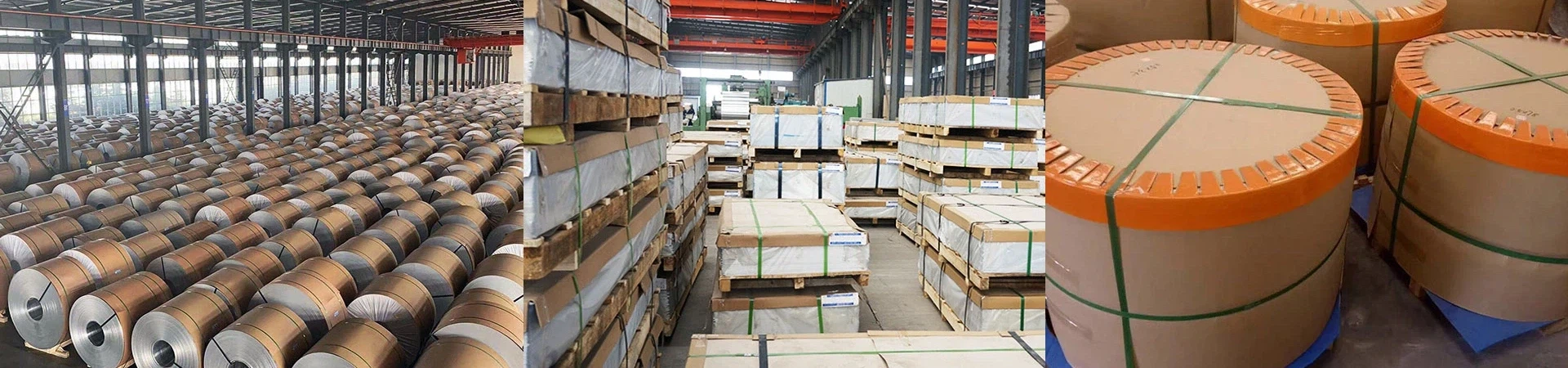
5052 aluminum plate, also known as EN AW-5052 or UNS A95052, is an aluminum-magnesium alloy widely used where corrosion resistance, formability, moderate-to-high strength and weldability are important. Unlike 1xxx-series aluminum such as 1060, 5052 is not a high-purity aluminum alloy. It typically contains approximately 2.2–2.8% magnesium, together with a small amount of chromium and other alloying elements, while aluminum makes up the balance.
The addition of magnesium provides solid-solution strengthening. Because 5052 is a non-heat-treatable alloy, its strength is increased primarily through cold working rather than solution heat treatment and artificial aging. This makes 5052 one of the most widely used higher-strength alloys in the non-heat-treatable aluminum family.
Chemical Composition of 5052 Aluminum
A typical chemical composition is shown below:
| Element | Typical Content (%) |
|---|---|
| Magnesium (Mg) | 2.2–2.8 |
| Chromium (Cr) | 0.15–0.35 |
| Manganese (Mn) | ≤ 0.10 |
| Iron (Fe) | ≤ 0.40 |
| Silicon (Si) | ≤ 0.25 |
| Copper (Cu) | ≤ 0.10 |
| Zinc (Zn) | ≤ 0.10 |
| Aluminum (Al) | Balance, approximately 96–97% |
Actual chemical limits can vary slightly depending on the applicable standard, product form and purchasing specification. For commercial orders, buyers should confirm the required standard and mill certificate rather than relying only on typical composition values.

Key Advantages of 5052 Aluminum Plate
1. Excellent Corrosion Resistance
One of the main reasons 5052 aluminum is widely used is its strong resistance to atmospheric corrosion. It performs well in humid environments and has good resistance to seawater and many industrial conditions.
This makes 5052 particularly suitable for marine equipment, fuel tanks, outdoor structures, transportation equipment and chemical-handling applications where long-term resistance to corrosion is important.
Its corrosion resistance is one reason 5052 is often selected when buyers need a durable Al-Mg alloy rather than a higher-strength heat-treatable alloy.
2. Good Strength for a Non-Heat-Treatable Alloy
5052 offers relatively high strength compared with many other non-heat-treatable aluminum alloys. Since it cannot be strengthened through conventional precipitation hardening, manufacturers obtain higher strength by controlling the degree of cold working.
Common tempers include O, H32 and H34. Typical mechanical properties are:
| Temper | Tensile Strength (MPa) | Yield Strength (MPa) | Elongation |
|---|---|---|---|
| 5052-O | 170–215 | ≥ 65 | ≥ 22% |
| 5052-H32 | 210–260 | ≥ 160 | ≥ 8% |
| 5052-H34 | 235–285 | ≥ 180 | ≥ 6% |
These values are representative ranges rather than universal guaranteed values. Actual mechanical requirements should be checked against the relevant specification, product thickness and temper.
The O temper provides higher ductility and is often selected when extensive forming is required, while H32 and H34 provide higher strength for applications requiring improved structural performance.
3. Excellent Formability
5052 has good forming characteristics and can be processed using conventional fabrication methods. Depending on thickness and temper, it can be bent, roll formed, drawn, stamped and shaped into complex components.
The alloy is available in various product forms, including sheet, plate, coil and strip. This flexibility allows manufacturers to select the appropriate thickness and temper for different fabrication processes.
For demanding forming operations, 5052-O is generally easier to form than harder H tempers.
4. Good Weldability
5052 is also known for its good weldability. Common aluminum welding processes can be used when the correct filler metal, joint preparation and welding parameters are selected.
Because 5052 is non-heat-treatable, welding does not create the same type of precipitation-hardening loss seen in heat-treatable alloys such as 6061-T6. However, welding can still change local mechanical properties, and the final joint strength depends on the welding process and filler material.
For pressure-containing or safety-critical applications, welding procedures should therefore be qualified according to the applicable code or project specification.
Applications of 5052 Aluminum Plate
The combination of corrosion resistance, formability, strength and weldability makes 5052 suitable for a broad range of industries.
Marine: boat hulls, fuel tanks, decks, marine structures and equipment.
Automotive and transportation: body panels, tanker components, fuel tanks and heat shields.
Industrial equipment: pressure vessels, hydraulic reservoirs, storage equipment, appliances and fabricated components.
Construction: roofing components, flashing, architectural panels and exterior structures.
Other applications: lighting equipment, signage, enclosures and general sheet-metal fabrication.
5052 Aluminum Plate vs. 1060 Aluminum Plate
A common source of confusion is the aluminum content. 5052 is not approximately 99.6% aluminum. That level of purity is associated with alloys such as 1060 in the 1xxx series.
The magnesium content of 5052 provides significantly greater strength, while 1060 offers higher electrical and thermal conductivity and very high ductility. Therefore, the correct choice depends on the application rather than simply the aluminum percentage.
Conclusion
5052 aluminum plate is a versatile Al-Mg alloy designed for applications requiring a balance of corrosion resistance, strength, formability and weldability. Its strength comes from magnesium alloying and cold-work hardening rather than heat treatment.
For procurement, buyers should specify the alloy, temper, thickness, width, length, applicable standard, mechanical requirements and surface condition. For marine and outdoor applications, 5052 is particularly attractive because of its corrosion resistance, while O, H32 and H34 tempers allow the material to be selected according to forming and strength requirements.


