

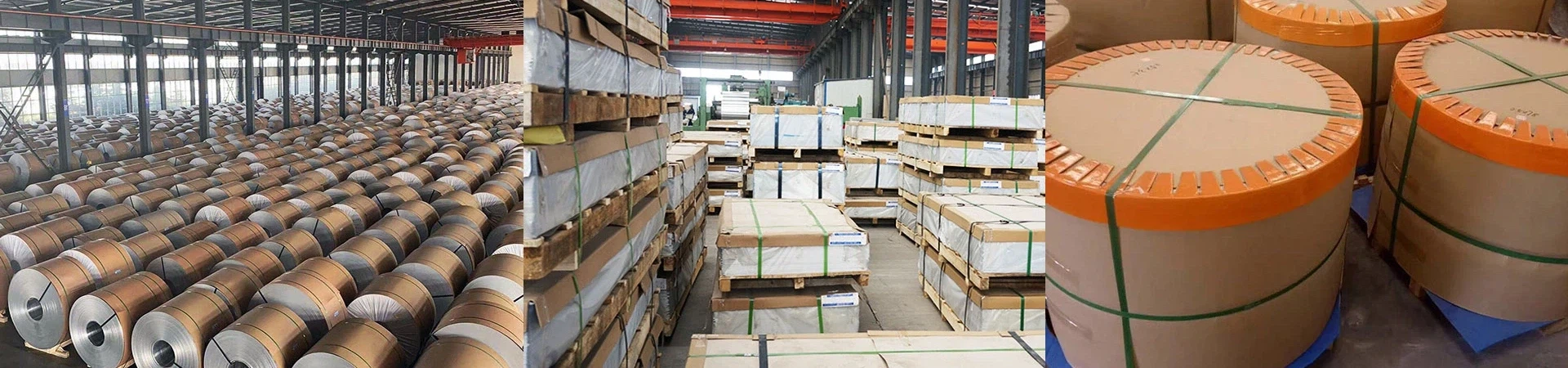
Aluminum alloy 6063 is known as an "architectural alloy" due to its moderate strength and precise extrusion capabilities. When subjected to high temperatures, aluminum alloys lose strength. However, they can be strengthened at sub-zero temperatures, making them appropriate for low-temperature applications. Furthermore, aluminum alloys are highly corrosion resistant. Specifically, the 6063 alloy is commonly utilized for extrusion purposes.
Typical Applications for 6063 T6 Aluminum
T6 6063 aluminum has commercial applications in engineering, including:
Window frames and extrusions
Roofs
Architectural features include balustrading and doors.
irrigation tubing
We offer aluminum alloy 6063 T6 in a variety of shapes and sizes, including flats, round and hexagon bars, round plates, rectangular and hollow bars, square tubes, and channels.
6063 Aluminum Alloy Designations and Standards
Aluminum alloy 6063 / 6063A does not always correspond exactly to other international standards, but it is commonly associated with the following equivalent or comparable designations and specifications used worldwide. At GNEE, these references are often used to support cross-standard material selection and certification.
Common Equivalent Designations for 6063 Aluminum
Al Mg0.7Si
AA6063
AlMgSi0.5
UNS A96063
HE19
GS10 / A-GS
SAE J454
QQ A-200/9
MIL G-18014 / MIL G-18015
MIL P-25995 / MIL W-85
ASTM B210
ASTM B221
ASTM B241 (Seamless Pipe)
ASTM B345 (Seamless Pipe)
ASTM B361
ASTM B429
ASTM B483
ASTM B491

6063 Aluminum Weldability and Fabrication Performance
6063 aluminum alloy is well suited for all common welding processes. Its balanced composition allows for stable weld quality and good post-weld performance.
Recommended Welding Filler Alloys for 6063
Alloy 4043: Preferred when higher electrical conductivity is required
Alloy 5183 or 5346: Recommended when strength and conductivity are both important
When using higher-strength fillers, weld size should be increased to offset reduced conductivity
Fabrication and Joining Performance of 6063 Aluminum
| Process | Performance |
|---|---|
| Cold Working | Good |
| Machining | Good |
| Gas Welding | Good |
| Arc Welding | Excellent |
| Resistance Welding | Good |
| Brazing | Excellent |
| Soldering | Good |
Chemical Composition of 6063 Aluminum Alloy
6063 aluminum belongs to the 6000 series, with magnesium and silicon as the primary strengthening elements.
Typical Chemical Composition of 6063 Aluminum (wt.%)
Silicon (Si): 0.20–0.60
Magnesium (Mg): 0.45–0.90
Iron (Fe): ≤0.35
Copper (Cu): ≤0.10
Manganese (Mn): ≤0.10
Zinc (Zn): ≤0.10
Titanium (Ti): ≤0.10
Chromium (Cr): ≤0.10
Aluminum (Al): Balance
Common Tempers of 6063 Aluminum
At GNEE, the most frequently supplied tempers for 6063 aluminum include:
Annealed (O temper)
6063-T4: Solution heat treated and naturally aged
6063-T6: Solution heat treated and artificially aged
Each temper provides a different balance of strength, ductility, and processing performance.
Physical Properties of 6063 Aluminum
6063 aluminum offers stable physical and thermal characteristics suitable for architectural and industrial applications.
Typical Physical Properties
Melting Point: ~655 °C
Density: 2.70 g/cm³
Coefficient of Thermal Expansion: 23.5 × 10⁻⁶ /K
Modulus of Elasticity: 69.5 GPa
Thermal Conductivity: ~201 W/m·K
Electrical Conductivity: ~52% IACS
Electrical Resistivity: ~0.033 × 10⁻⁶ Ω·m
Element Optimization in 6063-T5 Aluminum Profiles
For 6063-T5 aluminum profiles used in construction, mechanical performance is closely linked to the controlled balance of magnesium and silicon. When processing conditions are consistent, increasing Mg and Si content within limits can improve yield strength and tensile strength.
Strengthening Mechanism of 6063 Aluminum
The primary strengthening phase in 6063 aluminum is Mg₂Si. This compound consists of two magnesium atoms and one silicon atom, with a theoretical Mg:Si mass ratio of 1.73:1.
Mg:Si > 1.73: Excess magnesium remains after Mg₂Si formation
Mg:Si < 1.73: Excess silicon is present
Excess magnesium can negatively affect mechanical properties and increase production costs.
Optimized Magnesium and Silicon Control in 6063 Aluminum
To achieve optimal performance in industrial production:
Magnesium is typically controlled at ~0.5%
Total Mg₂Si content is maintained at ~0.79%
Slight excess silicon improves strength
For example:
With 0.01% excess silicon, tensile strength (σB) can reach ~218 MPa
Increasing excess silicon to 0.13% can raise σB to ~250 MPa (≈14.6% increase)
To ensure proper Mg₂Si formation, silicon losses caused by impurities such as iron and manganese must be considered during alloy batching.
Recommended Composition Range for 6063 Aluminum
At GNEE, optimized 6063 aluminum composition is generally controlled as follows:
Magnesium: 0.45%–0.65%
Silicon: 0.35%–0.50%
Mg:Si ratio: 1.25–1.30
Iron: ≤0.10%–0.25%
Manganese: ≤0.10%
This balance ensures strong mechanical performance, excellent extrudability, and stable surface quality.
Summary: Why GNEE Recommends 6063 Aluminum
6063 aluminum alloy is widely recognized for its excellent weldability, stable mechanical properties, controlled chemistry, and superior extrusion performance. Through precise element optimization-especially magnesium and silicon control-6063-T5 and 6063-T6 profiles achieve reliable strength while maintaining outstanding formability and surface finish.
GNEE supplies high-quality 6063 aluminum profiles for architectural, construction, and industrial applications, with strict composition control and multiple temper options to meet global standards.


