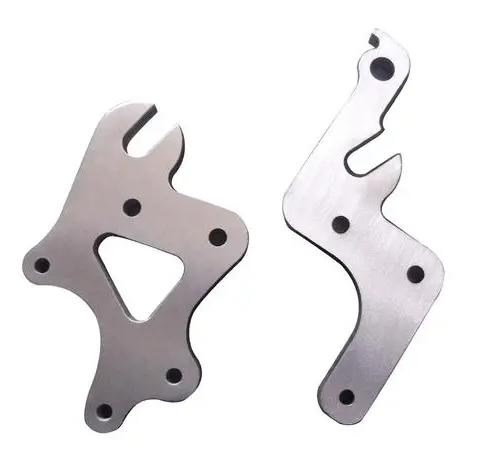
5052 aluminum alloy is part of the Al-Mg series and is widely used across many industries - particularly in the construction sector, which heavily relies on this alloy. 5052 aluminum offers excellent corrosion resistance, outstanding weldability, good cold workability, and medium strength. It is available in various tempers, including O, H32, H34, H36, H38, among others.
5052-O vs 5052-H32
What is the difference between 5052-O and 5052-H32?
The O temper refers to 5052 aluminum sheet that has been fully annealed, resulting in the lowest strength. In contrast, the H32 temper corresponds to material that has been strain-hardened and then stabilized through low-temperature heat treatment to achieve consistent mechanical properties. In summary, 5052-H32 aluminum has higher strength and improved mechanical performance compared to 5052 in the O temper. The national standard clearly specifies the mechanical properties associated with each temper.
5052-H32 aluminum plate is ideal for applications requiring greater strength-such as chassis enclosures or aluminum alloy luggage-owing to its higher tensile strength. Meanwhile, 5052-O aluminum demonstrates excellent elongation, making it suitable for deep drawing, spinning, and other forming processes.
5052 aluminum alloy is classified as a high-hardness grade, with a hardness level approximately 100% higher than that of 1060 aluminum plate, typically ranging between 210–230 MPa. Each temper of the alloy has a distinct hardness: for example, 5052-O typically has a hardness of about 46 HB, 5052-H32 around 60 HB, 5052-H34 approximately 68 HB, and 5052-H36 about 73 HB.

| Feature | 5052-O | 5052-H32 |
|---|---|---|
| Hardness/Strength | Softest, lowest strength | Harder, higher strength |
| Formability | Most formable, best ductility | Less formable, lower elongation |
| Processing | Annealed state | Strain-hardened and stabilized |
| Typical Use | Applications requiring maximum formability | Applications requiring higher strength, such as marine, architectural, or industrial uses |
Key Differences Between 5052 H32 and 5052 H34 Aluminum Sheets
The main distinctions between 5052 H32 and 5052 H34 aluminum sheets lie in their mechanical properties, tempering processes, and specific applications. Below are the primary differences:
1. Mechanical Properties:
Tensile Strength: 5052 H34 typically offers higher tensile strength due to its greater degree of cold working compared to 5052 H32.
Yield Strength: Similar to tensile strength, the yield strength of 5052 H34 is generally higher.
Elongation: 5052 H32 has better elongation, making it more formable. The higher strength of H34 may slightly reduce its ductility.
2. Hardness and Tempering:
The designations H32 and H34 indicate different levels of strain hardening:
H32 (Quarter Hard): This temper is strain-hardened and stabilized, offering a balance of strength and formability.
H34 (Half Hard): This temper involves a higher degree of strain hardening, resulting in enhanced hardness and strength compared to H32.
3. Formability:
5052 H32: Known for its outstanding formability, it is ideal for applications that require bending or shaping, such as architectural panels and general construction.
5052 H34: Still formable, but less ductile than H32 due to increased hardness. It is better suited for applications where higher strength is required.
4. Machinability:
Both tempers have good machinability. However, the increased hardness of 5052 H34 may make machining slightly more challenging compared to 5052 H32.
5. Applications:
5052 H32: Commonly used in products that require high formability and ease of fabrication, such as automotive parts, building panels, and general sheet metal work.
5052 H34: Often selected for more demanding applications where enhanced strength and durability are necessary, such as in marine components, shipbuilding, and heavy-duty outdoor structures.