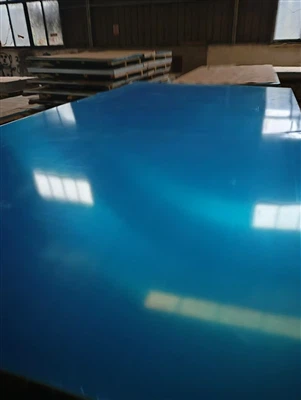
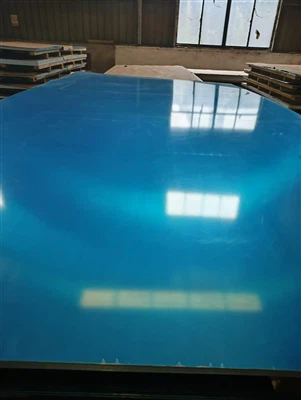
7050 aluminum plate is a type of high-strength aluminum alloy that is commonly used in aerospace and military applications. It is known for its excellent strength-to-weight ratio and good corrosion resistance, making it an ideal material for structural components in demanding environments.
The production process of 7050 aluminum plate typically involves casting the alloy into large ingots, which are then hot rolled and cold rolled to achieve the desired thickness and properties. The plate is then subjected to heat treatment processes to further enhance its strength and durability.
Advantages of 7050 aluminum plate include its high strength, good machinability, and resistance to stress corrosion cracking. However, one drawback is that it can be more expensive than lower strength aluminum alloys.
In terms of application prospects, 7050 aluminum plate is likely to continue to be used in aerospace, defense, and other high-performance industries due to its superior properties.
Five questions about 7050 aluminum plate:
1. What are the main characteristics of 7050 aluminum plate?
7050 aluminum plate is known for its high strength, good corrosion resistance, and excellent strength-to-weight ratio.
2. What is the typical production process for 7050 aluminum plate?
The production process usually involves casting, hot rolling, cold rolling, and heat treatment.
3. What are the advantages of using 7050 aluminum plate?
Advantages include high strength, good machinability, and resistance to stress corrosion cracking.
4. Are there any drawbacks to using 7050 aluminum plate?
One drawback is that it can be more expensive than lower strength aluminum alloys.
5. In which industries is 7050 aluminum plate commonly used?
7050 aluminum plate is commonly used in aerospace, defense, and other high-performance industries.