

What is 6061-T6 Aluminum and How Is It Manufactured?
6061-T6 aluminum is a premium-grade alloy widely used across industries, from aerospace components and electrical fittings to automotive parts, pistons, and bicycle frames. At GNEE, we use 6061-T6 aluminum to produce high-quality industrial products, including ramps, structural components, and custom fabricated items. Its exceptional strength, durability, and versatility make it one of the most trusted aluminum alloys on the market.
How 6061-T6 Aluminum Is Made
The production of 6061-T6 aluminum begins with bauxite, a clay-like soil rich in aluminum oxide. The aluminum oxide is extracted, refined, heated, and processed into a fine white powder. Through high-temperature heat treatment, the alloy's plasticity is reduced while its yield strength and hardness are increased, resulting in the T6 temper. This process ensures that the aluminum can withstand heavy-duty applications without compromising performance.

What Is 6061-T6 Aluminum Composed Of?
6061-T6 aluminum has a density of 2.70 g/cm³ (0.0975 lb/in³) and is remarkably pure, with aluminum accounting for 95.85%–98.56% of the total composition. To enhance its mechanical strength, durability, and corrosion resistance, several alloying elements are added:
Iron-increases strength and hardness
Copper-improves machinability and strength
Manganese – enhances corrosion resistance
Magnesium-improves strength and workability
Chromium-increases toughness and prevents corrosion
Zinc – strengthens the alloy
Titanium – refines grain structure and improves strength
6061-T6 Aluminum Grades / Specifications
AIR 9049
AMS 4115
AMS 4117
AMS QQA 200/8, AMS QQA 225/8
ASNA3277
ASTM B221
BS EN 573, BS EN 755, BS EN 754
6061-T6 Aluminum Chemical Composition
Spec: BS EN 573-3:2009
Alloy 6061
| Chemical Element | % Present |
|---|---|
| Manganese (Mn) | 0.0 - 0.15 |
| Iron (Fe) | 0.0 - 0.70 |
| Magnesium (Mg) | 0.80 - 1.20 |
| Silicon (Si) | 0.40 - 0.80 |
| Copper (Cu) | 0.15 - 0.40 |
| Zinc (Zn) | 0.0 - 0.25 |
| Titanium (Ti) | 0.0 - 0.15 |
| Chromium (Cr) | 0.04 - 0.35 |
| Other (Each) | 0.0 - 0.05 |
| Others (Total) | 0.0 - 0.15 |
| Aluminium (Al) | Balance |
6061-T6 Aluminum Properties
| Physical Property | Value |
|---|---|
| Density | 2.70 g/cm³ |
| Melting Point | 650 °C |
| Thermal Expansion | 23.4 x10^-6 /K |
| Modulus of Elasticity | 70 GPa |
| Thermal Conductivity | 166 W/m.K |
| Electrical Resistivity | 0.040 x10^-6 Ω .m |
6061-T6 Aluminum Spec: BS EN 755-2:2008
6061-T6 Aluminum Extrusions - Up to 200mm Dia. & A/F, 5mm WT for Tube and Prof
| Mechanical Property | Value |
|---|---|
| Proof Stress | 240 Min MPa |
| Tensile Strength | 260 Min MPa |
| Hardness Brinell | 95 HB |
Special Considerations for Welding 6061-T6 Aluminum
Welding 6061-T6 aluminum requires precision and expertise. At GNEE, we perform TIG (Tungsten Inert Gas) and MIG (Metal Inert Gas) welding using skilled operators to ensure high-quality joints.
Aluminum naturally forms a thin oxide layer on its surface, which melts at a higher temperature than the aluminum itself. To achieve strong and reliable welds, the surface must be preheated to approximately 350°F (176°C). Preheating removes the oxide and reduces the risk of weak or shallow welds. Without this step, the welded joint may be compromised, affecting the overall strength and durability of the component.
Conclusion
6061-T6 aluminum is an incredibly versatile and high-strength material suitable for structural, industrial, and aerospace applications. Understanding its composition, manufacturing process, and welding requirements ensures that products made from 6061-T6 maintain their reliability and performance. At GNEE, we specialize in providing high-quality 6061-T6 aluminum solutions for a wide range of applications.

In What Product Lines is 6061 T6 Aluminum Available?
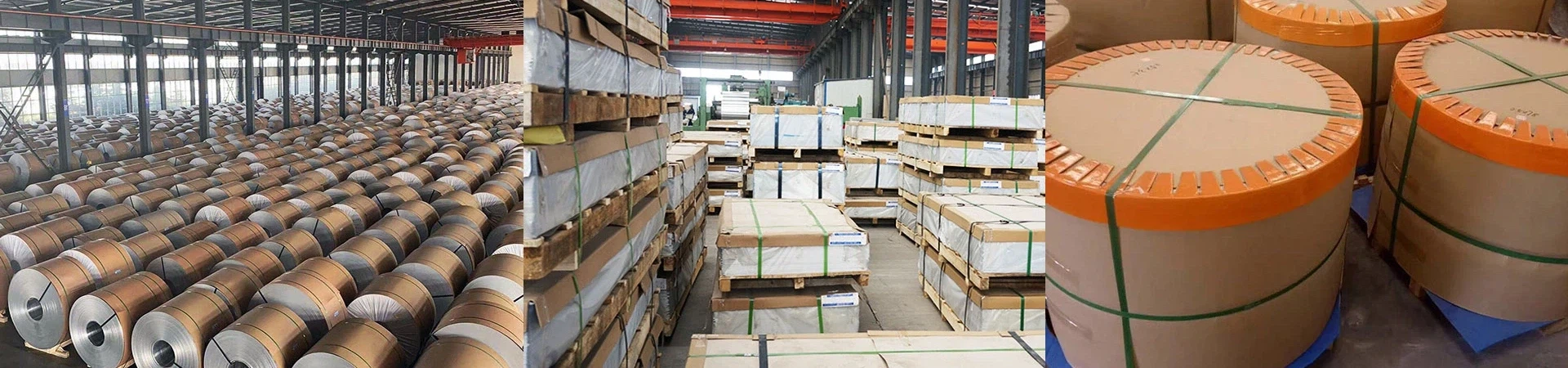
6061 T6 is available in 6061 aluminum sheet, 6061 aluminum tube, 6061 aluminum bar, and 6061 aluminum plate.
6061-T6 bars are produced in Round, Flat, Square, and Hex shapes
Nearly all of our 6061 bars are stocked as 6061-T6511, which are "extruded." 6061-T6511 bars are produced to meet ASTM standards, but also meet AMS specification AMS-QQ-A-200/8.
6061-T651 bars, which are "cold-finished" and are typically harder to source. Produced to meet AMS-QQ-A-225/8 and may be available for special order.
6061-T6 bar Typical Mechanical Properties*
|
|
Tensile Strength min. |
Yield Strength min. |
Elongation min. % in 2" |
|---|---|---|---|
|
Up to .250" |
38,000 psi |
35,000 psi |
8% |
|
.250" and above |
38,000 psi |
35,000 psi |
10% |
*These properties apply to 6061-T6511 Extruded Bar
6061-T6 bar Chemical Analysis - Percent by Weight
|
Cu |
Si |
Fe (max) |
Mn (max) |
Mg |
Zn (max) |
Cr |
Ti (max) |
Other |
Other |
Al |
|---|---|---|---|---|---|---|---|---|---|---|
|
.15/.40 |
.40/.80 |
.70 |
.15 |
.80/1.20 |
.25 |
.04/.35 |
.15 |
.05 |
.15 |
Remainder |
7075 Aluminium vs 6061 Aluminium
Chemical Composition
The 7075 aluminium alloy comes from the 7XXX series and comprises copper and zinc as the main alloying elements.
6061 is from the 6XXX series, where silicon and magnesium are the primary alloying elements. Below is the full chemical composition of both alloys;
| 7075 Aluminium | 6061 Aluminium | |
| Aluminium (%) | 97.9% | |
| Zinc (%) | 5.6% | ___ |
| Magnesium (%) | 2.5% | 0.1% |
| Chromium (%) | 0.23% | 0.2% |
| Copper (%) | 1.6% | 0.28 |
| Silicon (%) | ___ | 0.6% |
Mechanical Properties
The alloys also have different mechanical properties with varying compositions in types and concentrations of alloying elements.
| Type 6061 Aluminium | Type 7075 Aluminium | |||
| Metric | English | Metric | English | |
| Yield strength | 276 MPa | 40,000 psi | 503 MPa | 73,000 psi |
| Modulus elasticity | 68.9 GPa | 10,000ksi | 71.7GPa | 10,400ksi |
| Thermal conductivity | 167 W/m-K | 1160 BTU-in/hr-ft2_0F | 130 W/m-K | 900 BTU-in/hr-ft2_0F |
| Melting point | 1080-12050F | 582 - 6520C | 890-11750F | 477-6350C |
| Electrical resistivity | 3.99 x 10⁻⁶ ohm-cm | 5.15 x 10⁻⁶ ohm-cm | ||
| Hardness (Brinell) | 95 | 150 | ||
| Machinability | Good |
Fair
|
||
Applications of 7075 Vs 6061 Aluminium Alloys
The difference in the properties and characteristics of the alloys determines which applications each is best suited for.
7075
7075 alloy doesn't have the best formability and weldability. But, it excels in high-stress applications that require strength. 7075 is also referred to as an "aircraft grade" alloy because it has one of the highest strength aluminium alloys in the market.
It's used for spacecraft, aircraft missiles and other defence applications. It is also not uncommon to see 7075 grade in parts subjected to high wear and tear, military applications and structural materials.
6061
6061 aluminium alloy is more versatile because of its workability, corrosion resistance, strength and joinability. It has a vast range of applications that include welded assemblies, electronics, structural materials, piping, and fasteners, among others. It is used across various industries in various applications, including:
· Furniture
· Aircraft fittings and structure
· Yachts, sailboats, marine fittings and other shipbuilding hardware
· Trucks, brakes, bus bodies, hydraulic pistons and other automotive applications
· Mouldings
· Awnings
· Food and beverage cans
· Appliance fittings
6061 aluminium comes in various forms, including aluminium plate, aluminium bar and aluminium tube.


