What Alloy 7075 Is
7075 is a precipitation-hardening Al-Zn-Mg-Cu alloy. Under ASTM B209/B209M its composition is zinc 5.1-6.1%, magnesium 2.1-2.9%, copper 1.2-2.0%, chromium 0.18-0.28%, with silicon limited to 0.40%, iron to 0.50%, manganese to 0.30% and titanium to 0.20%. The zinc-magnesium combination produces the precipitate that gives the alloy its very high strength, and the copper addition contributes further strength at some cost to corrosion performance.
In the T6 condition the material is solution heat treated, quenched and artificially aged. Typical tensile strength reaches about 572 MPa with proof stress around 503 MPa, while specification minima in ASTM B209/B209M for 7075-T6 plate sit near 538 MPa tensile and 469 MPa proof stress. Density is 2.81 g/cm³, roughly one third that of steel with comparable static strength.
Strength Data and Comparison
| Property, 7075-T6 | Value |
|---|---|
| Zinc content, % | 5.1-6.1 |
| Magnesium content, % | 2.1-2.9 |
| Copper content, % | 1.2-2.0 |
| Tensile strength, typical | About 572 MPa |
| Tensile strength minimum to ASTM B209/B209M | About 538 MPa |
| 0.2% proof stress, typical | About 503 MPa |
| Elongation, % | About 9-11 |
| Typical Brinell hardness | About 150 HB |
| Density | 2.81 g/cm³ |
| Modulus of elasticity | About 71.7 GPa |
The alloy is roughly twice as strong as 6061-T6 in proof stress terms, which is why it is specified where weight saving has a direct performance or payload benefit.
Principal Applications
Aerospace and defence dominate consumption. Aircraft structures such as wing spars, fuselage frames and bulkheads, ribs, stringers and landing gear components use 7075 because the parts must carry high static loads and fatigue cycles while staying light. Fittings, gears, shafts, missile and launcher components, and regulating valve parts follow the same logic.
Transport: high-performance bicycle frames and components, motorcycle and motorsport suspension parts, rail and automotive structural brackets where strength to weight governs.
Tooling and moulds: blow moulds, injection mould tooling plates, jigs and fixtures requiring high hardness and wear resistance.
Sports and outdoor equipment: climbing hardware, carabiners, tent poles, trekking poles, archery and firearm components.
Industrial: hydraulic and pneumatic fittings, precision machine components, valve bodies and high load fasteners.
Electronics and instrumentation: housings and structural chassis where stiffness and finish matter.
Limitations the Design Team Must Respect
Corrosion: performance is only moderate in marine and chloride environments, so anodising, chemical conversion coating, cladding or painting is used to protect surfaces and cut edges.
Stress corrosion cracking: the T6 temper is susceptible under sustained tensile stress in moist chloride conditions, and highly stressed parts are frequently specified in T73 or T7351, which trade roughly 10-15% of strength for greatly improved resistance.
Welding: 7075 is not suitable for arc welding in structural service; joints are made mechanically, by bonding, or by other solid-state methods, with riveted and bolted assemblies remaining standard in aerospace.
Temperature: the alloy is not intended for continuous elevated temperature service; it gradually loses strength as service temperature rises and is usually limited to moderate temperature airframe use.
Formability: bend radii must be generous in the T6 temper, and tight formed parts rely on other alloys or tempers instead.
Supply Conditions and Fabrication Notes
7075 plate and sheet are supplied in tempers including T6, T651, T73 and T7351, with plate available up to about 150 mm in the thinner-range tempers and to more limited thicknesses in the crack-resistant tempers. T651 offers the same strength as T6 with reduced internal stress for machining stability, while T73 tempers are selected where sustained stress and corrosion exposure coexist.
Machining requires sharp tooling and positive rake geometry because the alloy's hardness and low elongation encourage chatter and hard, stringy chips. Roughing passes should account for stress release in thick sections, and intermediate dimensional checks are common on precision parts. Anodising to EN ISO 7599 or a chromate-free conversion coating is applied after machining where surface protection is needed.
Composition and mechanical properties verified per heat and lot against ASTM B209/B209M.
Ultrasonic inspection for internal discontinuities on thick plate.
Hardness surveys for temper verification where agreed.
Flatness and thickness tolerance checked before machining release.
EN 10204 3.1 mill test certificate with heat number and test results.
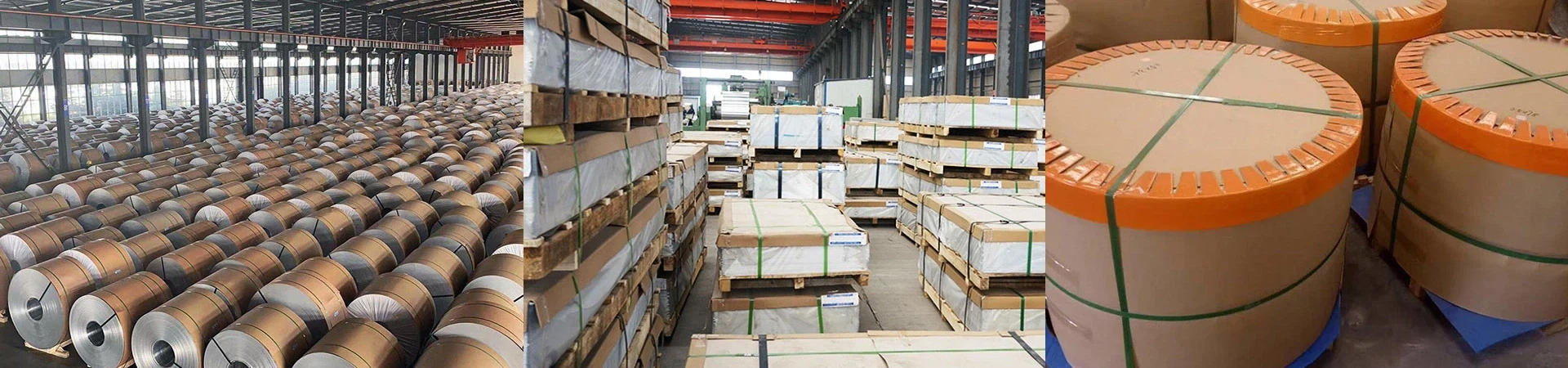
Protective packaging to prevent edge damage and surface staining in transit and storage.
Frequently Asked Questions
Q: What is 7075-T6 aluminum mainly used for?
A: Aerospace and defence structures such as wing spars, frames, ribs and fittings, plus high-performance bicycle frames, precision tooling and high-load mechanical components.
Q: How strong is 7075-T6 compared with other aluminium alloys?
A: Typical tensile strength is about 572 MPa with proof stress near 503 MPa, roughly double the proof stress of 6061-T6.
Q: Why is 7075 not used for welded structures?
A: The alloy is not suitable for structural arc welding: heat degrades properties and cracking risk is high, so joints are normally bolted, riveted or bonded.
Q: How does 7075-T6 cope with corrosion?
A: Only moderately. It is normally protected by anodising, chemical conversion coating, cladding or painting, especially in marine and chloride environments.
Q: When should T73 be specified instead of T6?
A: When parts carry sustained tensile stress in a corrosive environment, since T73 greatly improves stress corrosion cracking resistance at a modest strength cost.
Q: Can 7075-T6 be used at elevated temperature?
A: It is intended for moderate temperature service and loses strength progressively as temperature rises, so it is not selected for sustained hot service.