

What 5052 Aluminium Plate Is
5052 is the most widely used of the aluminium-magnesium sheet and plate alloys. Magnesium is the principal alloying element, at 2.2-2.8 percent, and chromium is added at 0.15-0.35 percent to refine the grain structure and improve resistance to stress corrosion cracking. The alloy is not heat-treatable, so strength is developed by strain hardening: the plate is rolled to the required gauge and then supplied in a temper such as H32, H34, H36 or O.
Sheet and plate for 5052 are supplied to ASTM B209, with European supply to EN 485-2 and domestic supply to GB/T 3880.2. The alloy has higher fatigue strength than most other common sheet alloys and, in the marine environment, better corrosion resistance than either 3003 or 5052's heat-treatable cousins in the 6000 series.
Composition and Mechanical Properties
| Element, percent | Limit for 5052 |
|---|---|
| Magnesium | 2.2-2.8 |
| Chromium | 0.15-0.35 |
| Iron | 0.40 max |
| Silicon | 0.25 max |
| Copper | 0.10 max |
| Manganese | 0.10 max |
| Temper | Tensile strength | 0.2% proof strength | Elongation |
|---|---|---|---|
| O (annealed) | 170-215 MPa | 65 MPa min | 25% min |
| H32 | 215-275 MPa | 160 MPa min | 7-10% |
| H34 | 235-285 MPa | 180 MPa min | 5-8% |
| H36 | 250-300 MPa | 200 MPa min | 4-6% |
The density is 2.68 g/cm3 and the modulus of elasticity about 70 GPa. 5052 can be strengthened only by cold work, so any welding reduces the properties in the heat-affected zone to roughly the annealed level, and heavily formed areas will not match the temper of the surrounding plate.
Corrosion Resistance and Fatigue Behaviour
5052 has the best corrosion resistance of the common non-heat-treatable sheet alloys. It performs well in fresh and salt water, in marine atmospheres, in many organic acids and in mildly alkaline solutions. The alloy is not suitable for strong alkaline service or for contact with chloride solutions at elevated temperature under high stress.
Fatigue performance is another reason designers specify 5052. Its fatigue strength is higher than that of several competing sheet alloys, which matters for panels that see vibration, wave loading or pressure cycling. Where the plate is used in a pressure application, cycles must be counted against the correct fatigue curve, and welded details must be designed to avoid stress concentrations, because a weld toe is the usual initiation point for a fatigue crack.
Because the alloy is susceptible to galvanic corrosion, it should be isolated from steel, stainless steel and copper by an insulating barrier, and fasteners should be of aluminium or stainless steel. In seawater service, cathodic protection is normally applied to the complete structure rather than to isolated components.
Forming, Fabrication and Welding
Forming: 5052 bends and rolls well, and the H32 temper takes moderate bends around a radius of one to two times the thickness. The soft O temper takes much tighter radii and is used for presswork.
Machining: moderate. The alloy is gummy in the annealed condition and machines better in the harder tempers.
Welding: excellent by TIG and MIG using 5356 filler to AWS A5.10. Spot and seam welding also work well.
Brazing: possible with the correct flux, but aluminium filler rods for oxy-fuel welding are the more common shop method.
Surface treatment: anodises to a clear protective film, and also accepts chromate conversion coating, which is the usual preparation for painting in aerospace and marine work.
Bending direction: sharp bends should run across the rolling direction to reduce the risk of cracking.
Typical Applications
Fuel tanks and fuel lines for trucks, buses and marine craft.
Marine structures: hulls of small boats, decks, cabin sides, railings and pontoon decking.
Pressure vessels and receivers for benign duties, air conditioning and refrigeration equipment.
Transport panels: truck and trailer bodywork, bus interior panels and container linings.
Sheet metal products: kitchen equipment, appliance panels, signage and enclosures.
Heat exchangers, cooling coils and evaporator housings.
Architectural panels and roofing in coastal environments.
Electronic chassis and instrument housings where a light, corrosion-resistant enclosure is needed.
Ordering, Tolerance and Documentation
5052 is supplied as sheet from 0.5 mm to 6 mm and as plate from 6 mm upward, in widths up to 2500 mm and lengths up to 12000 mm, in coil or flat form. Thickness tolerance must be specified, because a rolled plate has a crown and the thickness at the centre differs from the edges. Flatness, edge condition and surface quality should also be called out, particularly where the material will be anodised or painted, since surface defects are amplified by finishing.
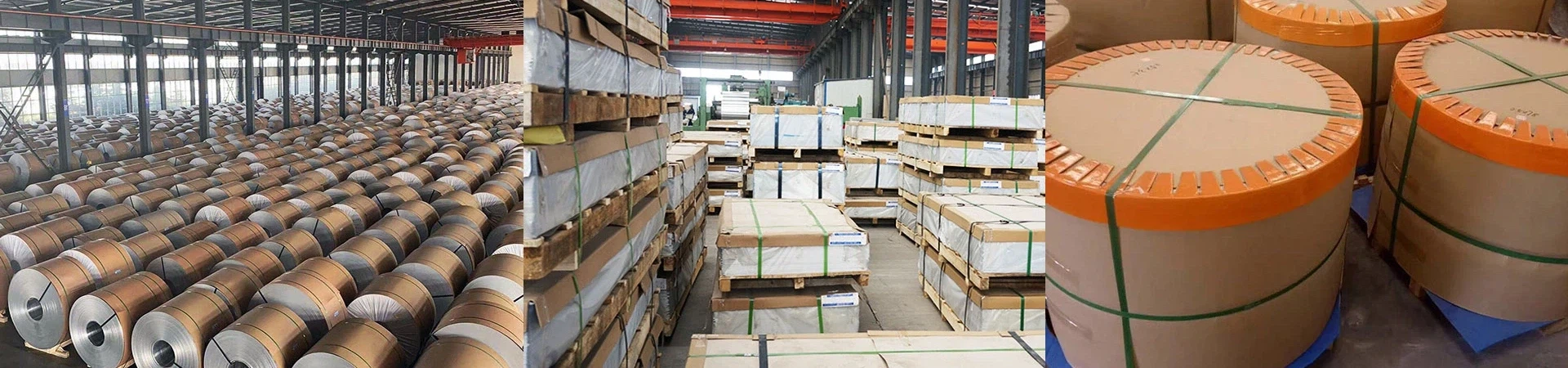
Inspection covers thickness across a grid, width and length, flatness against a straight edge, and chemical and mechanical testing of the heat. Each consignment is accompanied by a mill test certificate reporting the chemical analysis and tensile results for the actual heat, with the heat number marked on the plate or bundle. Plate is shipped on wooden pallets with interleaving and edge protection, and cut-to-size or CNC-profiled parts can be supplied to reduce shop waste.
Frequently Asked Questions
Q: Is 5052 aluminium plate suitable for marine use?
A: Yes. It has the best corrosion resistance of the common non-heat-treatable sheet alloys and resists both fresh and salt water. It is widely used for small boat hulls, decks and marine fittings, and for coastal architectural work.
Q: Can 5052 be heat treated?
A: No. 5052 is not heat-treatable, so it is strengthened only by cold work. That is why welding reduces the strength locally to about the annealed level and why formed areas differ in temper from the rest of the plate.
Q: What is the difference between 5052 and 3003?
A: 5052 contains magnesium as well as the manganese found in 3003, giving it roughly 50 percent higher strength and better marine corrosion resistance and fatigue performance. 3003 is the more economical choice for light-duty panelling.
Q: What filler metal is used to weld 5052?
A: 5356 filler to AWS A5.10 is the usual choice for TIG and MIG welding, giving good strength and corrosion resistance in the joint. 4043 can be used where higher ductility is preferred.
Q: Which temper should be ordered?
A: H32 is the general-purpose temper for panels, tanks and structural sheet; H34 and H36 are used where higher strength is needed and forming is limited; the O temper is ordered where severe forming or deep drawing is required.


