

What-is-the-melting-point-of-3003-aluminum-plate.pdf
We conducted extensive popular science research on the introduction of 3003 aluminum plate, focusing on the 3 and 1 series aluminum plates.
We've also created other relevant introductions based on the upstream and downstream products, as well as the market environment for 3003 aluminum plate.
So the subject of the melting point of 3003 aluminum plate should never have been raised.
Recently, several clients who create aluminum plates have inquired about the melting point of 3003 aluminum plate.
So we've summarized the introduction to the melting points of 1 and 3 series aluminum plates so that everyone can learn more about them.
What is the melting point of 3003 aluminum plate?
The melting point of 3003 aluminum plate is between 660 and 780 degrees.
Why do we provide an interval value for the melting point density of 3003 aluminum plates?
It's primarily due to the differing materials. For example, the normal 3003 aluminum plate.
The aluminum plate producer processes it directly, after which the customer stamps or cuts it.
Because no secondary blending occurs, the structure of the 3003 aluminum plate remains unchanged.
As a result, the initial melting point of the 3003 aluminum plate we provide is typically approximately 660 degrees.
However, the second scenario requires more, such as 3003 aluminum plate profiles.
The fundamental problem is that there are too many secondary processing circumstances for 3003 aluminum plate, making it impossible to provide a definite value.
Then a very important question arises. Which circumstance is high, and which is low?
It is quite simple. Because 3003 aluminum plate is extruded using aluminum rods, the aluminum profile is rather high, therefore the data values are not significantly different.
However, you may confidently plan the melting point of 3003 aluminum plate at 780 degrees.
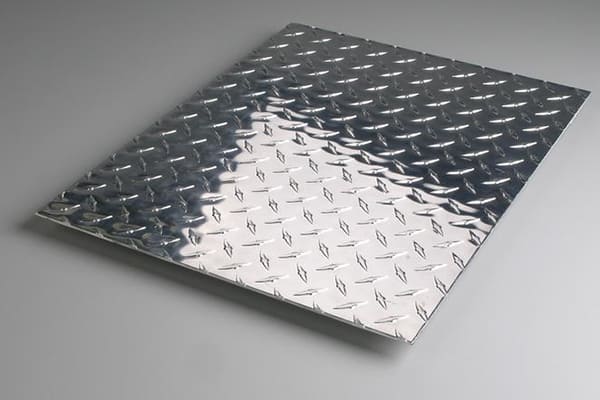
Melting point of 3003 aluminum plate
Introduction to the melting point of 1000 series 3000 series aluminum plate
The 1000 series and 3000 series aluminum plates are made of silver metal and have melting points of 660.4°C and 2467°C respectively.
The relative density is 2.70 g/cm3. It's incredibly light, around 1/4 iron.
It has a modest strength but good plasticity.
It can be drawn into filaments and then rolled into aluminum platinum. The latter is often used to package confectionery and tobacco.
It also has high electrical conductivity and heat transfer capabilities. It is used in the power industry to manufacture cables and cables, as well as in everyday life to make kitchenware.
It may produce a variety of alloys with magnesium, copper, zinc, tin, manganese, chromium, zirconium, silicon, and other elements.
It is widely utilized as a raw material in the manufacture of airports, automobiles, ships, and household goods, as well as in the construction industry. Manufacturing of windows and doors.
Aluminum is a highly effective heat and light reflector. It is utilized as a thermal insulation material, as well as to make reflective lenses for reflecting telescopes.
The purity of raw aluminum produced by modern big and medium-sized prebaked electrolytic cells has increased to the point that they may directly manufacture No. 1 aluminum, although the aluminum content remains at 99.8%.
Some units have very high quality requirements for aluminum, such as wireless communication equipment, lighting reflective lenses, polyester production reactors, acid storage tanks, food packaging products, and so on, which require refined aluminum with an aluminum content exceeding 99.97% to 99.996%; it may also require high-purity aluminum of 99.999% (5N) and ultra-pure aluminum of 99.999% (6N). This necessitates optimizing raw aluminum.
Hoopes' three-layer liquid electrolysis method, invented in 1901, is well-known because the essence management system consists of three layers of solution.
The anode solution is made up of raw aluminum to be refined and a weighing agent (30% Cu, 70% Al).
It is located in rural areas and has a high density (3.3~3.7g/cm3). In the middle, there is an electrolyte (2.6~2.8g/cm3). chloride or chlorochloride); the top is refined aluminum obtained by the elite group, with a density of 2.3g/cm3, which comes into contact with the high-purity graphite cathode to form a practical cathode.
(I) The basic principle of three-layer liquid electrolysis
Three-layer liquid electrolysis is a type of photoelectrocatalytic metallurgy that employs a power-law fluid that can dissolve at the anode.
The aluminum in the anode alloy loses electrons and undergoes photoelectrocatalytic dissolution, producing electrolytes containing Al3+, Na+, F-, Cl-, AlF3-6, and AlF-4. Under the influence of an applied voltage, it reaches the cathode, where Al3+ receives electrons and is transformed into aluminum. That means:
Residues more negatively charged than aluminum at the anode, such as Fe, Ca, Si, etc., do not undergo photoelectrocatalytic dissolution and remain in the anode alloy; residues more negatively charged than aluminum enter the electrolyte, such as Na2+, Ca2+, Mg2+, etc., which cannot be separated at the cathode and remain in the electrolyte, and then reach the extraction point.
If the electrolyte contains residues that are more negatively charged than aluminum, these will be segregated at the cathode.
As a result, the electrolyte should be composed of pure materials and pre-electrolyzed in the electrolyte tank to eliminate residues that are more negatively charged than aluminum.
During electrolysis, aluminum dissolves at the anode and separates at the cathode.
This photocatalytic method is potentially a full-scale battery that uses extremely little electromagnetic energy (0.04-0.049V).
Because of the substantial concentration polarization (0.35-0.40V) and increased electrolyte level to prevent anode aluminum dispersing to the cathode, the purity of the cathode aluminum is lowered, and the electrolyte pressure drop is very large, necessitating a cell voltage of 5.9V.
In addition, no gas is produced during the electrolysis process, and there is no anode.
(II) Anode alloy of three-layer liquid electrolytic essence
The three-layer liquid electrolytic essence for the anode alloy has the following requirements: the density of the molten alloy should exceed the density of the electrolyte; the melting point of the alloy should be smaller than the melting point of the electrolyte; the solubility of aluminum in the alloy should be greater; and the alloy elements should be larger than the melting point of the electrolyte. Aluminum's charge varies.
In industrial production, copper is employed as an anode alloy. Alloys with a copper concentration of 33% to 45%, melting point of 550-590°C, and relative density of 3.2-3.5G/cm3 can fully match the requirements.
If the aluminum component in the anode alloy is reduced to 35% to 40%, the alloy's melting point rises dramatically, and it solidifies when it exceeds the temperature of the feed chamber (which is 30 to 40°C lower than the tank body).
The main aluminum in the tank must be replenished on a regular basis.
(III) Electrolyte
The requirements for electrolytes in three-layer electrolytes are as follows: the relative density of the molten electrolyte should be close to the middle of the anode alloy and the refined aluminum; there should be no elements in the electrolyte that change the charge more than aluminum; the conductivity should be good; the melting point should not be too high above the melting point of aluminum; the volatility should be low; and the electrolyte should not be hygroscopic or hydrolysed.
Currently, there are two types of industrial electrolytes: fluorine-chlorine compounds and pure fluoride compounds.
The molar ratio of NaF to AlF3 in the two types of electrolytes affects the solution's first crystallization point, relative density, and conductivity.
Fluorine-chlorine electrolytes have a minimum melting point about 1.8 molar ratio of NaF/AlF3. In terms of industrial applications, its melting temperature and relative density are lower than that of pure chloride, but its conductivity is slightly lower.
Adding lithium salt lowers the electrolyte's first crystallization point and increases conductivity.
Fluorine-chlorine compounds are pure fluorine molecules.
(IV) Normal operation of three-layer liquid electrolysis
Aluminum tapping, aluminum filling, electrolyte addition, cathode cleaning and replacement, and slag removal are all part of normal three-layer liquid electrolysis operations.
Aluminum tapping in 17-40kA tapping tanks is done using a vacuum pump.
The procedure is to first remove the electrolyte coating from the refined aluminum, then insert a plastic pipette with a high-purity graphite tube into the refined aluminum layer and vacuum-absorb the refined aluminum.
The amount of raw aluminum filled is nearly equal to the amount of refined aluminum tapped, so the raw aluminum should be filled promptly after tapping.
Typically, liquid raw aluminum is added, and the anode alloy solution is agitated to ensure that the raw aluminum is equally distributed.
During electrolysis, the electrolyte evaporates, turns into tank slag, and is lost, necessitating replenishing.
After aluminum tapping, a specific high-purity graphite tube is used to add electrolyte power law fluid to the electrolyte layer, allowing the electrolyte level to remain constant.
During tapping, the bottom of the high-purity graphite cathode adheres to the Al2O3 slag or crust created by the reaction, and the resistor is increased, which must be cleaned individually every half-month.
During the combing, the power should be turned off and the procedure completed swiftly.
As the electrolysis progresses, the residues Si, Fe, and other elements in the anode alloy accumulate, and when they reach a specific point, the big crystal alloy separates smoothly.It is required to clean the alloy slag regularly to keep the anode alloy clean.
(V) Performance parameters and economic data of three-layer electrolytic aluminum
Three-layer electrolytic aluminum has a significantly greater energy usage (3-8kW·h/kg aluminum) compared to primary aluminum manufacturing.
The fundamental reason is that the pole distance must be extended to produce pure aluminum while preventing the anode alloy from scattering to the cathode.

| Name | 3003 Aluminum Plate/Sheet |
| Hot sale status | O, H22, H24, H14, H16, H26, H18, H28, H112 |
| length | Fix & Cut Length or Customized |
| Surface treatment | Mill finish, Bright, polished, hair line, brush, sand blast, checkered, embossed, etching, etc. |
| Lamination type | Blue film, transparent film, black and white film, paper (film thickness: 50 microns, 80 microns) |
| Standard | AMS 4008, ASTM B20, QQ-A-250/2, ASTM B209, AMS4006 |


