

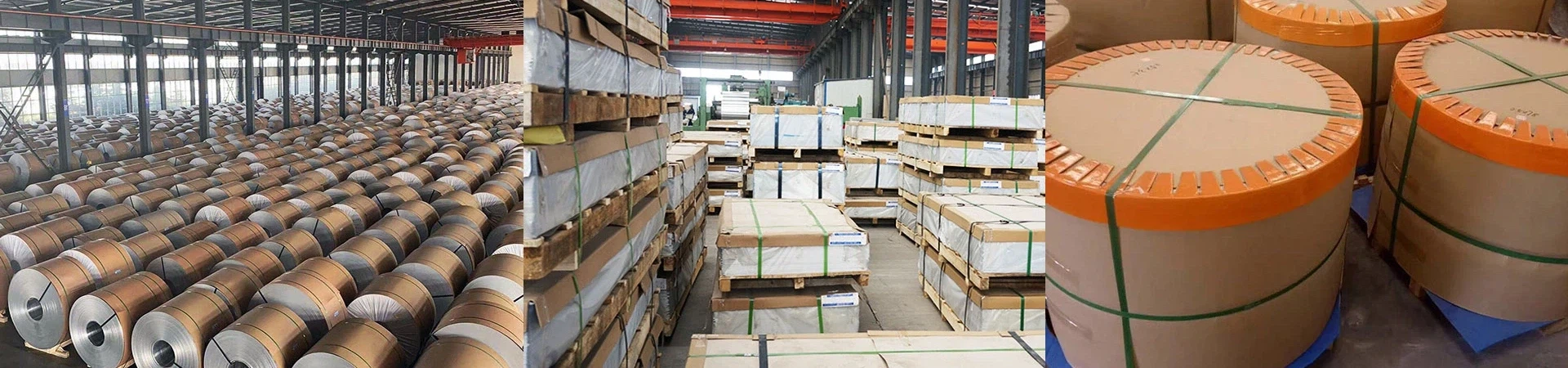
What is the price per kilogram of aluminum sheet? This question is too broad to get a specific answer. You should at least provide the use of the coil or certain details such as alloy, temper, thickness, width, surface finish, etc. These elements are considered necessary to get a quote and the buyer of aluminum sheets should be aware of them before sending an inquiry as detailed below.


Many alloys can be made into aluminum plates such as 1050, 1060, 1070, 1100, 3003, 3004, 3005, 3105, 3104, 5005, 5754, 6061 aluminum plates, etc. The tempering of 6061 aluminum plates includes F, O, H12, H14, and H16 while others include H18, H19, H22, H24, H26, H28, H112, etc. H28, H112, etc. The thickness of the coil can be as thick as 8mm and as thin as 0.2mm. It is not that aluminum cannot be made into coils with a thickness of less than 0.2mm, but rather that this thickness is no longer considered to be aluminum sheet, but rather aluminum foil coil. Aluminum sheets are available in widths ranging from 100mm to 2650mm to meet customer requirements. Coils with a width of less than 100mm belong to the aluminum strip category. Surface treatment methods for aluminum sheet products mainly include anodizing, coating, polishing and embossing.
In addition, each alloy has its own properties and corresponding uses. Therefore, once you have decided on an alloy, you have to dig deeper. For example, if you want to know the price per kilogram of 1050 aluminum sheet, you need to know its basic characteristics: good electrical conductivity and corrosion resistance, low hardness, poor heat treatment and cheap. Its uses include CTP/PS panels, aluminum composite panels, lamp materials, battery explosion-proof valves, lugs, and more. Of course, it's a good idea to start with the use of aluminum coils. Let's say you are a purchasing manager for a cosmetics manufacturer and are looking for materials for bottle caps. You may then find 3003 aluminum sheet to be a good choice, as it is a typical material for cosmetic bottle caps.


