

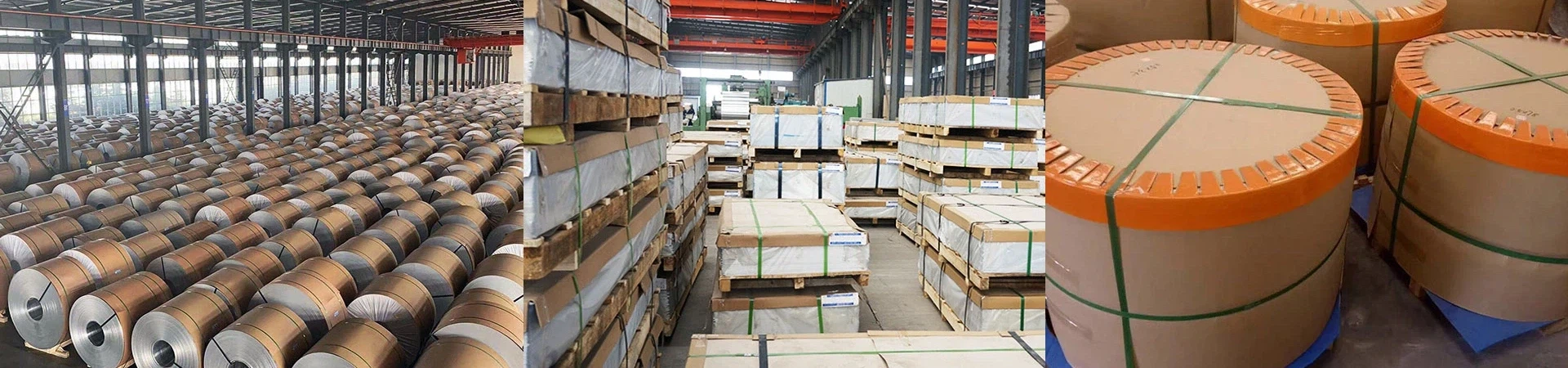
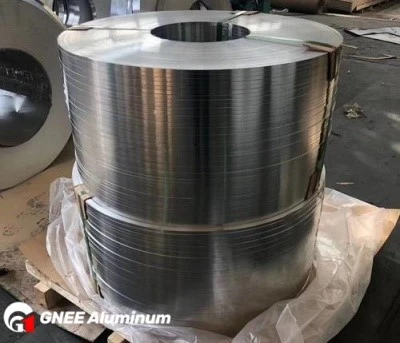
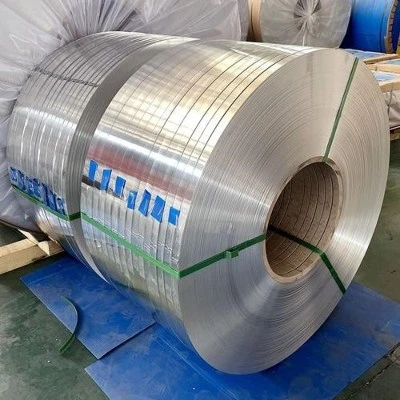
The 6082 O aluminium alloy strip is a cold-rolled, annealed material recognized for exceptional formability prior to heat treatment. The "O" temper represents a fully annealed state, delivering maximum ductility by heating the metal to 415°C. GNEE supplies this product with precise specifications: 140mm width, 3.15mm thickness, and 2-meter lengths.
Belonging to the Al-Mg-Si family, the 6082 series ensures reliable corrosion resistance and excellent weldability. Manufacturers utilize this soft strip to stamp complex shapes, which subsequently undergo artificial aging to achieve structural strength. This technical overview details the material parameters, testing protocols, and industrial applications of the 6082 O strip.
6082 O Aluminium Alloy Strip Specification and Market Data
Specification Data Table: Chemical, Mechanical, and Dimensions
| Parameter | Specification |
|---|---|
| Alloy | 6082 |
| Temper | O |
| Product Form | Aluminium Strip |
| Width | 140 mm |
| Thickness | 3.15 mm |
| Length | 2000 mm (2 m) |
| Applicable Standard | EN 573-3:2019 / EN 485-2:2016 |
Chemical Composition
| Element | Content (wt.%) |
|---|---|
| Si | 0.7–1.3 |
| Mg | 0.6–1.2 |
| Mn | 0.4–1.0 |
| Fe | ≤0.50 |
| Cu | ≤0.10 |
| Cr | ≤0.25 |
| Zn | ≤0.20 |
| Ti | ≤0.10 |
| Al | Remainder |
Mechanical Properties
| Property | Requirement |
|---|---|
| Yield Strength (Rp0.2) | ≤85 MPa (12.3 ksi) |
| Tensile Strength (Rm) | ≤130 MPa (18.9 ksi) |
| Elongation (A50mm) | ≥18% |
Dimensional Tolerances
| Dimension | Target Value | Permissible Tolerance |
|---|---|---|
| Thickness | 3.15 mm | +0.12 mm |
| Width | 140 mm | +1.5 mm |
| Length | 2000 mm | +3.0 mm |
SMM Price Reference
| Product Description | Price Range (USD/MT) |
|---|---|
| 6082 O Aluminium Strip, Cold Rolled | $3,150–$3,350 / MT |
| Price Basis | SMM A00 Base + Processing Fee |
| Reference Period | Q3 2026 |
1. Primary Uses and Applications
This annealed aluminium strip serves specific manufacturing sectors requiring extensive pre-forming operations before final strengthening, resulting in common products visible in everyday urban environments.
Bicycle Component Manufacturing: Frame builders shape this 140mm wide strip into reinforced gussets for bicycle head tubes. The low maximum yield strength of 85 MPa (12.3 ksi) permits intricate stamping before welding and final structural hardening, significantly minimizing stress fractures during the automated assembly process.
Automotive Interior Stamping: Automotive engineers specify the 6082 O strip for internal dashboard support frames and hidden seat track mounts. The annealed temper accommodates the deep drawing requirements of these parts, preventing material tearing while maintaining exact dimensional tolerances of +0.12mm on the designated thickness.
Modular Shelving Systems: Factory equipment suppliers utilize the 2-meter lengths to fabricate modular shelving uprights and cross-braces. By punching positioning holes and folding the edges in the soft O temper, manufacturers achieve precise assembly points before hardening the parts to carry heavy industrial loads.
Lighting Fixture Housings: Manufacturers utilize the cold-rolled strip to form curved reflector housings for commercial LED lighting systems. The excellent surface finish from the cold rolling process combined with an 18% minimum elongation allows seamless contouring, ensuring optimal light distribution in office environments.
To source precise 6082 O aluminium alloy strip materials for your high-volume forming operations, contact the GNEE commercial team for competitive volumetric quotes and guaranteed delivery schedules.
2. Key Benefits and Advantages
The specific combination of cold-rolling and full annealing grants this material unique metallurgical advantages, optimizing both the factory fabrication process and the final structural integrity.
Maximum Metal Formability: The complete annealing process at 415°C reduces internal stresses, lowering the tensile strength to a maximum of 130 MPa (18.9 ksi). This soft state enables severe plastic deformation, allowing manufacturers to execute deep drawing and tight radius bending without material failure.
Precise Dimensional Accuracy: Cold rolling produces a superior surface finish and strict thickness controls. The specified 3.15mm thickness maintains a precise +0.12mm tolerance, ensuring automated stamping presses operate continuously without jamming. This dimensional reliability directly reduces production scrap rates and improves factory output efficiency.
Excellent Processing Weldability: The chemical composition, featuring 0.7-1.3% Silicon and 0.6-1.2% Magnesium, supports highly reliable welding operations. Operators easily apply standard TIG or MIG welding methods to join these formed strips to other 6000-series structural components without experiencing weld pool cracking or excessive porosity.
High Post-Treatment Strength: Although delivered in the soft O temper, the 6082 alloy responds exceptionally well to subsequent artificial aging. Following standard solution heat treatment, the formed parts transition to a T6 temper, achieving final yield strengths exceeding 260 MPa (37.7 ksi) for heavy structural use.
3. Delivery, Inspection Standards, and Packaging
Adhering to strict international standard specifications ensures consistent material quality upon delivery, protecting the physical integrity of the aluminium strips during transit and long-term storage.
Standard Compliance Verification: Quality assurance teams verify all chemical and mechanical properties against current EN 485-2:2016 and EN 573-3:2019 standards. This rigorous compliance ensures that every manufactured batch meets the exact elemental limits and the required maximum tensile strength of 130 MPa (18.9 ksi).
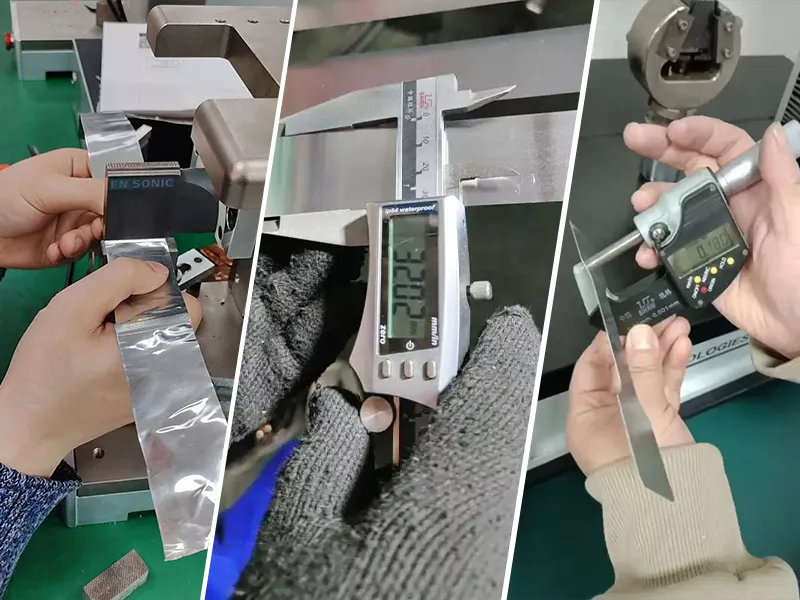
Dimensional Tolerance Checks: Inspectors measure the 2-meter strips using calibrated digital micrometers to confirm the specific +3.0mm length tolerance and +1.5mm width tolerance. Meeting these exact parameters guarantees that the material fits perfectly into automated processing machinery without requiring secondary manual trimming operations.
Surface Defect Inspection: The inspection protocol dictates a thorough visual and automated optical examination of the cold-rolled surface. Technicians reject any strip exhibiting scratches deeper than 0.05mm, oxidation marks, or oil stains, ensuring the material remains suitable for clear anodizing or powder coating post-fabrication.
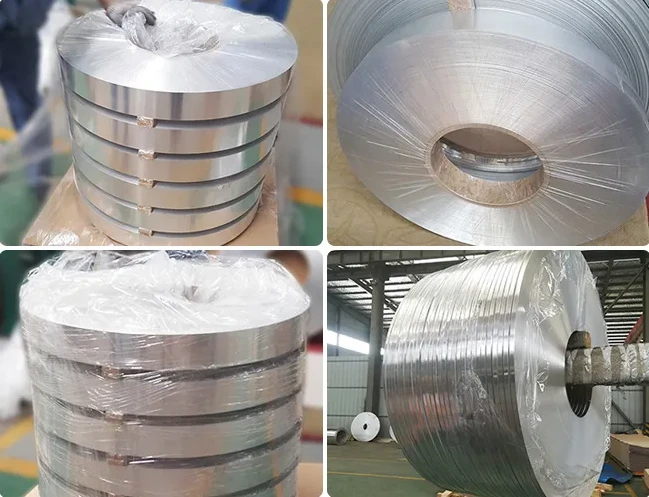
Moisture-Resistant Packaging: GNEE workers wrap the aluminium strips in high-density polyethylene film, inserting silica gel desiccants to prevent condensation. This multi-layer barrier halts water ingress during maritime shipping, preventing localized galvanic corrosion or surface staining prior to the customer receiving the physical inventory.
4. Product Quality Testing
Comprehensive laboratory testing quantifies the physical capabilities of the annealed metal, guaranteeing that the supplied material precisely matches the required metallurgical baseline before customer forming.
Optical Emission Spectrometry: Technicians utilize advanced optical emission spectrometers to analyze the elemental composition of every heat batch. This test confirms that critical alloying elements like Magnesium and Silicon remain strictly within their specified percentage limits, guaranteeing the correct precipitation hardening response later.
Tensile Strength Testing: Operators extract standard test coupons from the 3.15mm thick strip and pull them using a calibrated universal testing machine. The equipment verifies that the yield strength stays strictly below the 85 MPa (12.3 ksi) threshold, physically confirming the success of the annealing process.
Uniform Elongation Measurement: During the tensile test, sensors measure the uniform elongation over a 50mm gauge length. The results must register a minimum elongation value of 18%, proving the material possesses sufficient ductility to endure severe bending operations without initiating micro-cracks along the external edges.
Microstructural Grain Analysis: Metallurgists prepare cross-sectional samples, etching the surface to examine the grain structure under an electron microscope. This evaluation ensures a uniform, equiaxed grain distribution resulting from the 415°C annealing cycle, preventing localized weak points or uneven deformation during the client's stamping phase.
Request your custom quotation and detailed material test certificates for GNEE 6082 O aluminium strips by submitting your exact dimensional requirements through our global procurement portal today.
5. Future Development Prospects
Advancements in alloy processing and automation drive shifting demand patterns for annealed aluminium strips, leading manufacturers to adopt tighter specifications and greener production methodologies globally.
Sustainable Smelting Integration: Aluminium producers increasingly incorporate hydroelectric power and recycled scrap into the 6082 billet casting process. This transition reduces the overall carbon footprint by up to 40%, meeting strict governmental environmental regulations while maintaining the necessary 0.6-1.2% Magnesium composition standard for industrial alloys.
Enhanced Tolerance Controls: Upcoming iterations of cold-rolling technology utilize real-time laser feedback systems to adjust roller pressure dynamically. This innovation will eventually compress thickness tolerances well below the current +0.12mm specification, catering to the micro-manufacturing demands of next-generation electronic device internal support frames.
Optimized Annealing Cycles: Metallurgical researchers currently test electromagnetic induction heating as an alternative to traditional gas-fired annealing ovens. Rapid localized heating reduces the processing time from 3 hours to mere minutes while achieving the exact 130 MPa (18.9 ksi) tensile strength required by the O temper.
Automated Quality Sorting: Factories actively deploy artificial intelligence algorithms paired with high-speed cameras to identify microscopic surface defects during the final cold rolling phase. This automated optical inspection eliminates human oversight errors, guaranteeing flawless material consistency for highly automated automotive and architectural supply chains globally.
Conclusion
The 6082 O aluminium alloy strip delivers essential formability for manufacturing processes demanding extensive plastic deformation. By supplying precise dimensions of 140mm width and 3.15mm thickness, GNEE provides fabricators with material ready for automated processing. Strict compliance with EN 485-2:2016 limits yield strength to 85 MPa (12.3 ksi), effectively preventing failures during deep drawing. The ability to transition from a highly ductile state to a hardened structural component makes this product critical for modern architectural and automotive manufacturing, ensuring consistent and reliable load-bearing results.
FAQ
What is the difference between 6082 O and 6082 T6 aluminium?
The O temper indicates a fully annealed, soft state with a maximum yield strength of 85 MPa (12.3 ksi) designed for high formability. The T6 temper indicates the metal has been solution heat-treated and artificially aged, reaching yield strengths over 260 MPa (37.7 ksi) for structural rigidity.
Why specify a +0.12mm thickness tolerance for the 3.15mm strip?
Automated stamping machinery requires precise material thickness to operate without jamming. A tight +0.12mm tolerance ensures uniform friction and material flow during deep drawing operations, minimizing the defect rate in the final formed components.
Can the 6082 O aluminium strip be welded easily?
Yes, the 6082 alloy features excellent weldability due to its specific Silicon and Magnesium content. Fabricators routinely use TIG and MIG welding processes on the formed O temper parts before sending the entire assembly for final solution heat treatment.
How does GNEE package the 2-meter length aluminium strips?
GNEE protects the strips by wrapping them in moisture-resistant polyethylene film containing silica gel desiccants. Workers then pack the bundles into reinforced wooden crates, preventing physical deformation and protecting the material from galvanic corrosion during international sea transit.
What are the primary commercial applications for a 140mm wide 6082 strip?
Manufacturers utilize the 140mm width to stamp structural building brackets, automotive dashboard mounts, and reinforced bicycle frame gussets. The material's soft state allows complex bending, while subsequent heat treatments provide the necessary load-bearing strength for these components.


