

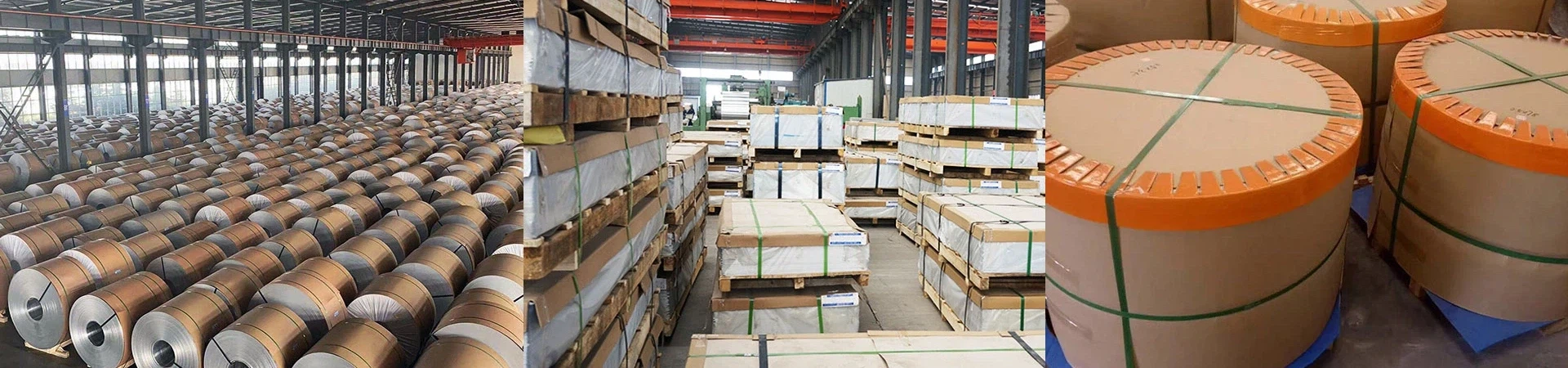
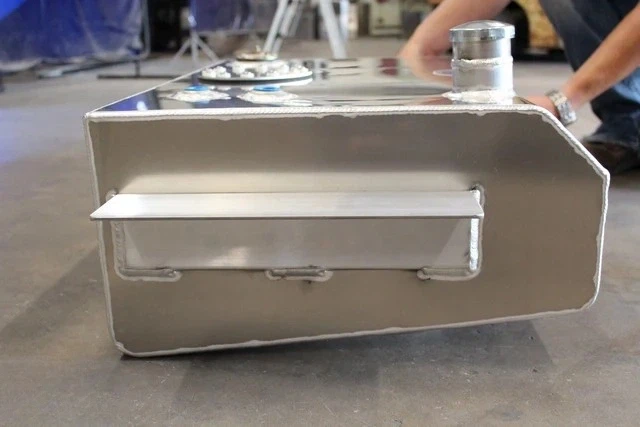
Replacing heavy steel fuel tanks with aluminum is a standard practice in the automotive industry today. Carmakers need to reduce vehicle weight to meet strict fuel efficiency and emissions regulations. For hybrid and electric vehicles that still carry backup fuel systems, saving space and weight is even more critical.
When stamping plants and auto parts manufacturers source materials, 3003 aluminum sheet is the most common choice. It is a non-heat-treatable alloy with manganese added, making it stronger than pure 1000-series aluminum while keeping excellent formability.
This guide explains why 3003 aluminum, specifically in O temper and H14 temper, is used for automotive fuel tanks, how to choose between them, and how to avoid common manufacturing defects.
Standard Specifications for 3003 Aluminum Fuel Tanks
| Parameter | Specification | Notes |
|---|---|---|
| Alloy Grade | 3003 Aluminum | Al-Mn alloy with good corrosion resistance |
| Tempers | O (Fully Annealed) / H14 (Half Hard) | O for deep drawing, H14 for strength balance |
| Typical Thickness | 0.8 mm – 2.5 mm | Custom thickness available |
| Typical Width | 1000 mm – 2000 mm | Can be slit or cut to size |
| Surface Condition | Mill Finish | Clean, oil-free or lightly oiled for stamping |
| Manufacturing Standards | ASTM B209 / EN 485 | International quality standards |
Why 3003 O Aluminum Sheet for Fuel Tanks
The fuel tank body usually consists of two complex halves stamped from flat metal sheets and welded together. This requires a material that can stretch deeply into a die without tearing.
This is where deep drawing aluminum 3003 O comes in. The "O" stands for fully annealed. The metal has been heated to its softest possible state, removing all internal stress from the rolling process.
Maximum Ductility and Elongation
3003-O has an elongation rate of over 30%. When the press machine pushes the aluminum into a complex shape-like a tank with curved corners to fit around an exhaust pipe or rear axle-the metal flows smoothly.
Solving the Edge Cracking Problem
The biggest headache for any stamping factory is high scrap rates due to edge cracking. If you try to deep draw a harder temper, the corners of the fuel tank will tear. 3003 O aluminum sheet minimizes this risk. It stretches evenly.
Avoiding the "Orange Peel" Effect
A common issue in deep drawing is the "orange peel" surface defect, which happens when the grain size of the aluminum is too large. A reliable fuel tank aluminum supplier controls the annealing temperature precisely to maintain a fine grain structure. This ensures the drawn tank remains smooth and ready for welding or surface treatment.
Why 3003 H14 Aluminum Sheet for Fuel Tanks
While the O temper is perfect for the deeply drawn inner shells, fuel tanks also need structural support. Fuel is heavy, and it sloshes around when a vehicle turns or brakes.
This is the job for 3003 H14 aluminum sheet. "H14" means the metal is strain-hardened (cold worked) to a half-hard state. It is not heated to become soft; instead, it retains the strength gained during the rolling process.
Higher Tensile and Yield Strength
3003-O has a yield strength of around 35 MPa. 3003-H14 has a yield strength of at least 115 MPa. It is significantly stiffer.
Where is 3003 H14 Aluminum Plate Used in the Tank?
- Internal Baffles: Inside large fuel tanks (especially in commercial vehicles), metal plates called baffles are welded into place. They stop the liquid fuel from moving too fast and unbalancing the vehicle. Baffles do not need deep drawing, but they need the stiffness of H14 to withstand the constant impact of moving liquid.
- Mounting Brackets and Straps: The parts that hold the tank to the car chassis need higher tensile strength.
- Heavy-Duty Outer Shells: For box trucks or delivery vans that do not require complex, deeply curved tanks, manufacturers sometimes use bending and welding instead of deep drawing. In these cases, 3003 H14 is used for the main body to resist road debris impact.
Mechanical Properties Comparison Of 3003 O H14 Aluminum Sheet
| Property | 3003-O | 3003-H14 |
|---|---|---|
| Tensile Strength | 95–130 MPa | 140–180 MPa |
| Yield Strength | ≥35 MPa | ≥115 MPa |
| Elongation | ≥30% | ≥10% |
| Formability | Excellent | Good |
Corrosion Resistance in Fuel Environments
Steel tanks rust. Even with heavy zinc or terne coatings, if a stone chips the outside, or if moisture builds up on the inside, steel will eventually corrode.
Dealing with Ethanol Blends and Moisture
Modern gasoline often contains ethanol (like E10 or E15). Ethanol is hygroscopic, meaning it absorbs moisture from the air. Over time, water separates from the fuel and sits at the bottom of the tank. In a steel tank, this water causes internal rust, which clogs fuel filters and ruins injectors.
3003 automotive aluminum sheet provides natural resistance to this. Aluminum reacts with oxygen to form a microscopic, invisible layer of aluminum oxide. If scratched, this layer repairs itself instantly. It is highly resistant to gasoline, diesel, moisture, and common chemical additives. It provides a maintenance-free, long service life without the need for thick, heavy internal anti-corrosion paints.
The Manufacturing Process of Aluminum Fuel Tanks
Understanding how the material behaves on the production line helps in sourcing the right specifications.
- Coil Feeding and Blanking: The factory unrolls the aluminum coil and cuts it into flat blanks. Flatness is critical here. If the sheet is wavy, it will feed poorly into the machine.
- Deep Drawing (Using 3003 O): The blank is pressed into a die. Supplier tip: Tight thickness tolerance is vital. An automotive aluminum sheet 0.8mm must strictly remain around 0.8mm. If it is too thick, it jams the die. If it is too thin, it tears.
- Trimming and Piercing: The edges are cut clean, and holes for the fuel pump and filler neck are punched.
- Welding: The upper and lower halves are joined. 3003 aluminum has excellent weldability using TIG or MIG methods. ER4043 filler wire is normally used. To avoid gas porosity (bubbles in the weld), the aluminum surface must be free from heavy rolling oils.
- Leak Testing and Cleaning: The finished tank is tested with air pressure under water.
How to Evaluate a Fuel Tank Aluminum Supplier
Not all aluminum rolling mills can produce automotive-grade 3003 sheets. When you buy 3003 aluminum coil or sheets, check these capabilities:
- Thickness Tolerance Control: For deep drawing, standard commercial tolerances are often not good enough. Demand tight tolerances (e.g., ±0.02mm for thin sheets) to protect your expensive stamping dies.
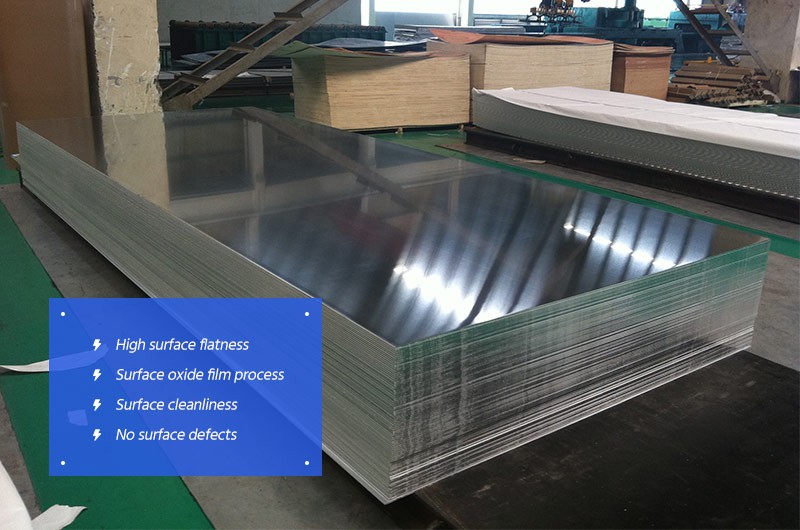
- Surface Quality: The sheet must be free of scratches, roll marks, and heavy oil residues. Dirty surfaces cause weak welds and leaky tanks.
- Consistent Mechanical Properties: The yield strength and elongation must be consistent from the first meter of the coil to the last. Inconsistent metal means you have to constantly adjust your press machine.
- Export Packaging Experience: As mentioned, robust export packaging is non-negotiable to prevent moisture damage during transit.
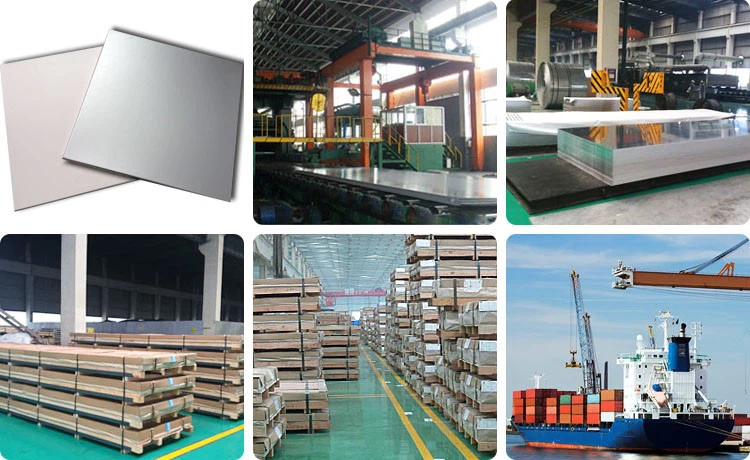
At GNEE, we specialize in 3003 aluminum sheet and coil for automotive applications. We understand the strict requirements of automotive parts stamping. Our production lines are optimized for stable grain size control in O temper and precise strain hardening in H14 temper. We offer custom widths and thicknesses, ensuring you get exactly what your production line needs with zero waste.
Ready to secure a reliable supply of automotive-grade aluminum? Please send us your specific requirements, including:
- Alloy Temper (O or H14)
- Exact Thickness, Width, and Length (or Coil ID/OD)
- Estimated Order Quantity
- Application details (e.g., stamping depth)
Contact our team today. We will review your specifications and provide a direct, competitive quotation within 24 hours to keep your production moving.


