




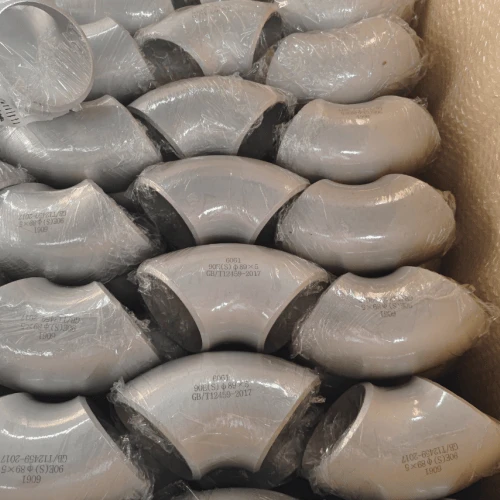

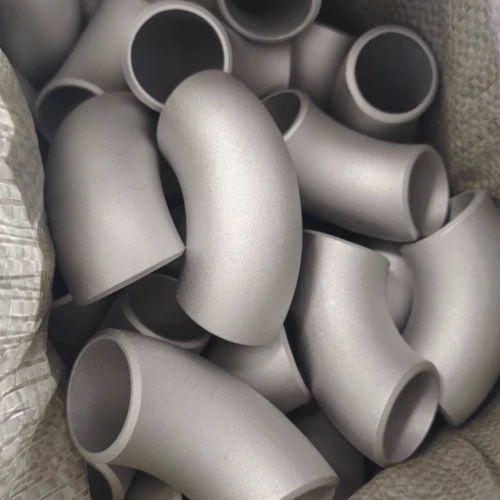
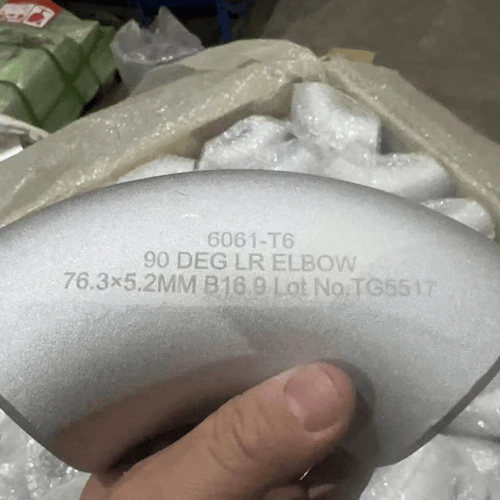
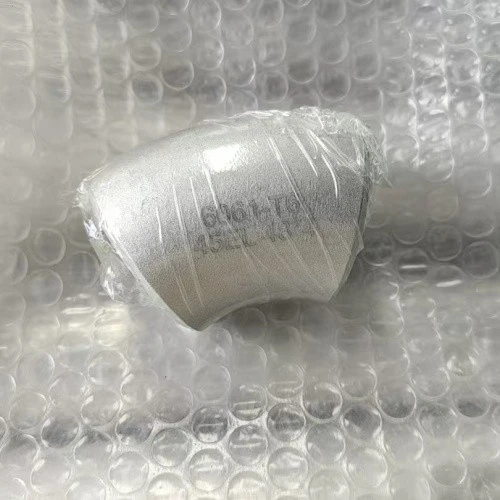
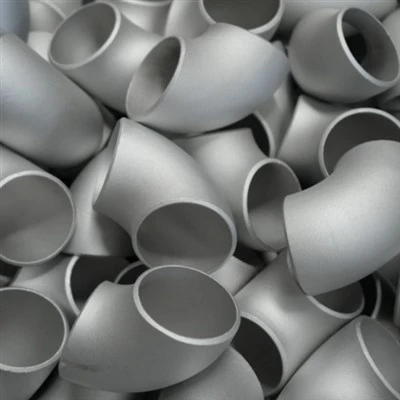
ASME B16.9 6061-T6 Aluminum Elbow
Customer service is online. Enter the chat to get the latest quotation.
 Spot stock
 Customize
 Factory direct sale
 7 days delivery
ASME B16.9 6061-T6 Aluminum Elbow Description
6061 is a precipitation-hardened aluminum-magnesium-silicon alloy (Al-Mg-Si). The "T6" temper means the material has been solution heat-treated and artificially aged to achieve its full strength.
6061-T6 is one of the most widely used aluminum alloys in engineering because it hits a practical balance: high strength, good corrosion resistance, weldable with standard TIG/MIG processes, and machinable with standard tooling. It is not the strongest aluminum alloy (7075-T6 is stronger), nor the most corrosion-resistant (5083 is better in seawater), but it is the most versatile for general industrial piping.
Why 6061-T6 aluminum for pipe elbows
- Strength-to-weight ratio. At 2.70 g/cm³ with 310 MPa tensile strength, 6061-T6 gives you roughly three times the strength-to-weight of carbon steel. This matters in transportation equipment, offshore platforms, and any structure where dead weight costs money.
- Weldability. 6061-T6 can be TIG welded with ER4043 or ER5356 filler rod, or MIG welded with ER5356 wire. The heat-affected zone (HAZ) will lose some strength near the weld (typically drops to T4-level properties in the HAZ), but the joint remains sound. For critical applications, post-weld solution heat treatment and re-aging can restore full T6 properties, though this is rarely done in practice for pipe fittings.
- Corrosion resistance. 6061 forms a stable Al₂O₃ oxide layer that protects against atmospheric corrosion, freshwater, and mild chemicals. It does not need painting or coating for most outdoor applications. However, it is not suitable for continuous seawater immersion or strong caustic/acidic service - see the application notes below.
- Low-temperature toughness. Unlike carbon steel, which becomes brittle at cryogenic temperatures, 6061-T6 retains ductility and impact resistance down to -200°C and below. This makes it suitable for cryogenic piping, LNG handling, and air separation units.
- Machinability. In the T6 temper, 6061 machines cleanly with good chip formation. This is relevant for custom fittings, threaded connections, or post-machining of bevel ends.


Available sizes and dimensions of ASME B16.9 6061-T6 Aluminum Elbow
Standard size range
|
NPS |
DN |
Available |
|
1/2" |
DN15 |
Yes |
|
3/4" |
DN20 |
Yes |
|
1" |
DN25 |
Yes |
|
1-1/4" |
DN32 |
Yes |
|
1-1/2" |
DN40 |
Yes |
|
2" |
DN50 |
Yes |
|
2-1/2" |
DN65 |
Yes |
|
3" |
DN80 |
Yes |
|
4" |
DN100 |
Yes |
|
6" |
DN150 |
Yes |
|
8" |
DN200 |
Yes |
|
10" |
DN250 |
Yes |
|
12" |
DN300 |
Yes |
|
14" |
DN350 |
On request |
|
16" |
DN400 |
On request |
|
18" |
DN450 |
On request |
|
20" |
DN500 |
On request |
Wall schedules available
|
Schedule |
Typical wall thickness (2" NPS) |
Notes |
|
SCH 10 |
2.11 mm |
Light wall, low pressure |
|
SCH 40 |
3.91 mm |
Standard weight, most common |
|
SCH 80 |
5.54 mm |
Heavy wall, higher pressure |
|
SCH STD |
3.91 mm |
Same as SCH 40 for ≤ 10" |
|
SCH XS |
5.54 mm |
Same as SCH 80 for ≤ 8" |
Aluminum Elbow types
|
Type |
Angle |
Radius |
Standard |
|
Long radius elbow |
45° |
1.5 × NPS |
ASME B16.9 |
|
Long radius elbow |
90° |
1.5 × NPS |
ASME B16.9 |
|
Short radius elbow |
90° |
1.0 × NPS |
ASME B16.9 |
|
Long radius return |
180° |
1.5 × NPS |
ASME B16.9 |
|
Short radius return |
180° |
1.0 × NPS |
ASME B16.9 |
45° and 90° are the standard production angles. 180° returns are available but less commonly stocked - typically made to order.
Surface finishes of ASME B16.9 6061-T6 Aluminum Elbow
|
Finish |
Description |
Typical use |
|
Mill finish |
As-formed surface, minor oxidation possible |
Standard industrial piping |
|
Clear anodized |
Thin Al₂O₃ layer, ~5–10 μm |
Architectural, outdoor exposure |
|
Color anodized |
Anodized with dye |
Decorative / architectural |
|
Polished |
Mechanical polish to 180–320 grit |
Decorative, cleanroom, food-contact surfaces |
|
Hard anodized |
Thick oxide layer, 25–50 μm |
High-wear, abrasive service |
Anodizing 6061-T6 produces a clear or slightly grayish finish. If you need a bright, reflective anodized finish, 6063 is a better choice - it anodizes clearer and brighter than 6061.
Applicable standards of 6061-T6 Aluminum Elbow
|
Standard |
Title |
What it covers |
|
ASME B16.9 |
Factory-Made Wrought Butt-Welding Fittings |
Dimensional requirements for butt-weld fittings (all materials) |
|
ASME SB361 / ASTM B361 |
Aluminum and Aluminum-Alloy Butt-Weld Pipe Fittings |
Material and manufacturing requirements for aluminum butt-weld fittings |
|
ASTM B241 |
Aluminum and Aluminum-Alloy Seamless Pipe |
Seamless pipe material spec (used as raw material for seamless elbows) |
|
ASTM B221 |
Aluminum and Aluminum-Alloy Extruded Bars, Rods, Wire, Shapes, and Tubes |
Extruded tube material spec (used as raw material for welded elbows) |
|
ASME B16.25 |
Butt-Welding Ends |
End preparation (bevel geometry) for butt-weld fittings |
Chemical composition of 6061-T6 Aluminum Elbow (per ASTM B221)
|
Element |
Spec range (% by mass) |
|
Silicon (Si) |
0.40 – 0.80 |
|
Iron (Fe) |
0.70 max |
|
Copper (Cu) |
0.15 – 0.40 |
|
Manganese (Mn) |
0.15 max |
|
Magnesium (Mg) |
0.80 – 1.20 |
|
Chromium (Cr) |
0.04 – 0.35 |
|
Zinc (Zn) |
0.25 max |
|
Titanium (Ti) |
0.15 max |
|
Other (each) |
0.05 max |
|
Other (total) |
0.15 max |
|
Aluminum (Al) |
Remainder (calculated: ~95.8 – 98.6%) |
Magnesium and silicon are the primary alloying elements. They form Mg₂Si precipitates during the T6 aging process, which is what gives 6061-T6 its strength. Copper adds strength but slightly reduces corrosion resistance. Chromium controls grain structure during heat treatment.
Mechanical properties of 6061-T6 Aluminum Elbow
Two sets of numbers matter: the spec minimum (what the mill test certificate guarantees) and the typical value (what the material usually tests at in practice). Both are listed below.
|
Property |
Spec minimum |
Typical value |
|
Ultimate tensile strength |
≥ 262 MPa (38,000 psi) |
~310 MPa (45,000 psi) |
|
Yield strength (0.2% offset) |
≥ 241 MPa (35,000 psi) |
~276 MPa (40,000 psi) |
|
Elongation (in 50 mm) |
≥ 8% (varies by wall thickness; up to 10% for thicker sections) |
~12–17% |
|
Brinell hardness (500 kg, 10 mm ball) |
- |
~95 HB |
|
Shear strength |
- |
~207 MPa (30,000 psi) |
|
Fatigue strength (500 × 10⁶ cycles) |
- |
~96 MPa (14,000 psi) |
Physical properties of 6061-T6 Aluminum Elbow (ASM Handbook reference data)
|
Property |
Value |
|
Density |
2.70 g/cm³ (0.098 lb/in³) |
|
Elastic modulus (tension) |
68.9 GPa (10.0 × 10⁶ psi) |
|
Melting range |
582 – 652°C (1,080 – 1,205°F) |
|
Thermal conductivity (25°C) |
167 W/m·K |
|
Electrical conductivity (20°C) |
43% IACS |
|
Coefficient of thermal expansion (20–100°C) |
23.6 × 10⁻⁶ /°C |
What this means in practice: 6061-T6 is about one-third the weight of steel for the same volume. It is strong enough for moderate-pressure piping but will not match the pressure rating of carbon steel in the same schedule. For high-pressure applications, you either step up to a heavier schedule or switch to steel.
Weight comparison with carbon steel
|
Material |
Density |
Same-size, same-schedule weight ratio |
|
Carbon steel (A234 WPB) |
7.85 g/cm³ |
100% (baseline) |
|
6061-T6 aluminum |
2.70 g/cm³ |
~34% of steel weight |
6061-T6 aluminum elbows are approximately 65% lighter than carbon steel elbows of the same size and schedule. In practice, if you are designing an aluminum system to replace steel, you may use a heavier schedule to achieve the same pressure rating, which partially offsets the weight savings. But even with a thicker wall, aluminum systems typically come out 50–60% lighter overall.
Applications of 6061-T6 aluminum elbows

Industrial process piping
Chemical plants, petrochemical facilities, and process industries use 6061-T6 elbows in non-corrosive or mildly corrosive service. Typical media include compressed air, inert gases, low-concentration chemicals, and process water.

Cryogenic systems
6061-T6 aluminum elbows retains toughness at temperatures down to -200°C and below. It is used in:
- Air separation units (oxygen, nitrogen, argon plants)
- LNG storage and transfer piping
- Cryogenic gas distribution
- Low-temperature process piping

Marine and offshore
6061-T6 aluminum elbows is used in shipbuilding for:
- Structural piping above the waterline
- Deck railings and handrails
- Mast and boom structures
- Ventilation ducting
- Non-seawater utility piping

Transportation
Weight savings drive aluminum use in:
- Truck and trailer fluid systems
- Railway compressed air piping
- Marine vessel lightweight piping
- Automotive structural and fluid applications

HVAC and compressed air
6061-T6 elbows are used in:
- Chilled water systems
- Compressed air distribution
- Industrial ventilation
- Cooling water loops
Aluminum's corrosion resistance eliminates the rust problems common in carbon steel HVAC piping, and the weight reduction simplifies installation in overhead and suspended systems.

Electrical and power
6061-T6 is used for:
- Bus pipe and conductor supports
- Substation structural piping
- Cable tray supports and protection
The 43% IACS electrical conductivity is lower than dedicated electrical alloys (6101, 1350), but 6061 is specified when mechanical loading, vibration, or longer spans require more strength than electrical-grade alloys provide.
6061-T6 vs 6063-T6 vs 5083-O aluminum elbows
|
Property |
6061-T6 |
6063-T6 |
5083-O |
|
Tensile strength (typical) |
310 MPa |
240 MPa |
290 MPa |
|
Yield strength (typical) |
276 MPa |
215 MPa |
145 MPa |
|
Typical use |
Industrial piping, structural |
Architectural, low-stress |
Marine, pressure vessels |
|
Relative cost |
Medium |
Low |
High |
6061-T6 aluminum elbow is the default choice for industrial piping where you need strength and weldability. 6063-T6 aluminum elbow is cheaper and finishes better but is significantly weaker - use it for architectural or low-pressure applications. 5083-O aluminum elbow is the go-to for seawater and marine service; it is not as strong as 6061-T6 aluminum elbow in tension but has far better corrosion resistance in salt water.
aluminum elbows Manufacturing and quality control
Production process
- Raw material: Seamless tube per ASTM B241 or extruded tube per ASTM B221, depending on specification
- Cutting: Tube cut to calculated blank length for the required elbow angle and radius
- Forming: Cold induction bending or hot forming to the required angle and radius
- Heat treatment: Solution heat treatment + artificial aging to T6 temper (if not already T6 from the mill)
- Beveling: End preparation per ASME B16.25 for butt-weld joint geometry
- Machining: Dimensional finishing, bore cleanup, and bevel refinement
- Surface treatment: Mill finish standard; anodizing or polishing on request
- Inspection: Dimensional, visual, and NDE per specification

Inspection and testing
|
Test |
Standard |
Purpose |
|
Dimensional inspection |
ASME B16.9 |
Verify center-to-face, wall thickness, bevel angle |
|
Visual inspection |
ASTM B361 |
Surface defects, cracks, lap marks |
|
PMI (positive material identification) |
- |
Verify alloy chemistry on each heat |
|
Mechanical testing |
ASTM B221 |
Tensile, yield, elongation per heat/lot |
|
Hydrostatic testing |
- |
Optional, per customer request |
|
Dye penetrant testing |
- |
Optional, for surface crack detection |

Certificates
EN 10204 3.1 (standard): Mill test certificate with chemistry and mechanical results per heat
EN 10204 3.2 (on request): Certified by independent third-party inspector (SGS, BV, DNV, TUV, ABS)

Packaging and shipping
|
Item |
Detail |
|
Inner wrapping |
VCI anti-corrosion film (protects against galvanic corrosion during transit) |
|
Outer packaging |
Fumigation-free plywood cases (ISPM 15 compliant) or export pallets |
|
Marking |
Heat number, alloy grade, size, schedule, standard (per MSS SP-25) |
|
Incoterms |
FOB Shanghai/Tianjin, CIF, EXW (per customer request) |
|
Lead time (stock sizes) |
7–15 days |
|
Lead time (custom/non-stock) |
20–35 days depending on size and quantity |


Hot Tags: asme b16.9 6061-t6 aluminum elbow, China asme b16.9 6061-t6 aluminum elbow manufacturers
Previous
Aluminum Elbow — Factory DirectNext
No InformationYou Might Also Like


Send Inquiry