

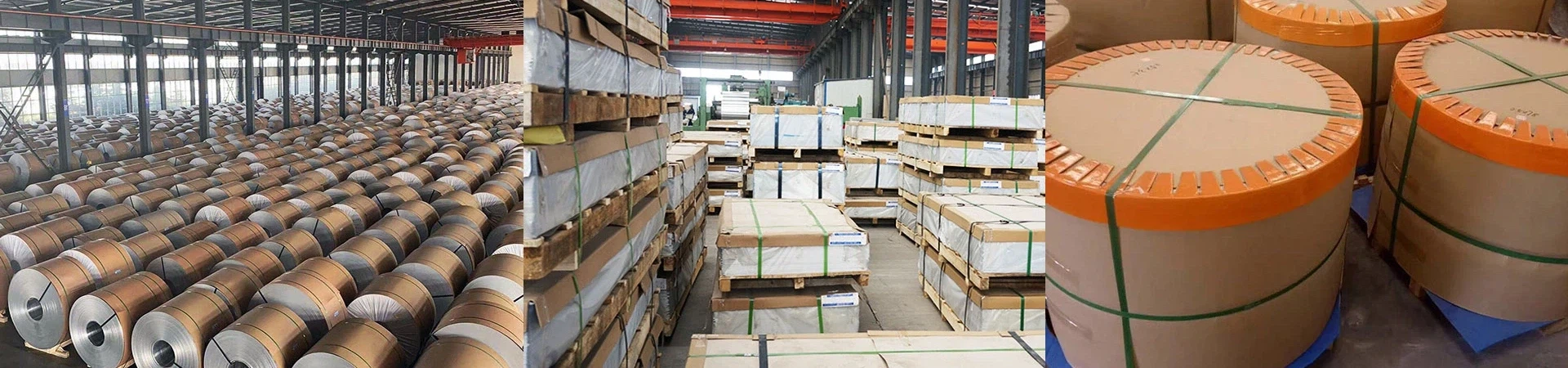
When sourcing commercially pure 1050 aluminum for your manufacturing project, understanding the difference between 1050 H14 and H18 aluminum tempers is critical to preventing costly fabrication failures.
Both are exactly the same 1050 alloy (minimum 99.5% pure aluminum). The difference lies entirely in their strain hardening levels:
- 1050 H14 Aluminum: Strain hardened to a "half-hard" condition. It offers a perfect balance of moderate strength and good formability.
- 1050 H18 Aluminum: Strain hardened to a "full-hard" condition. It provides the absolute maximum strength and hardness for this alloy, but possesses very limited ductility.
The industrial rule is clear: H18 is significantly stronger and harder than H14, but it is much less formable. If you try to bend H18 sharply, it will crack.
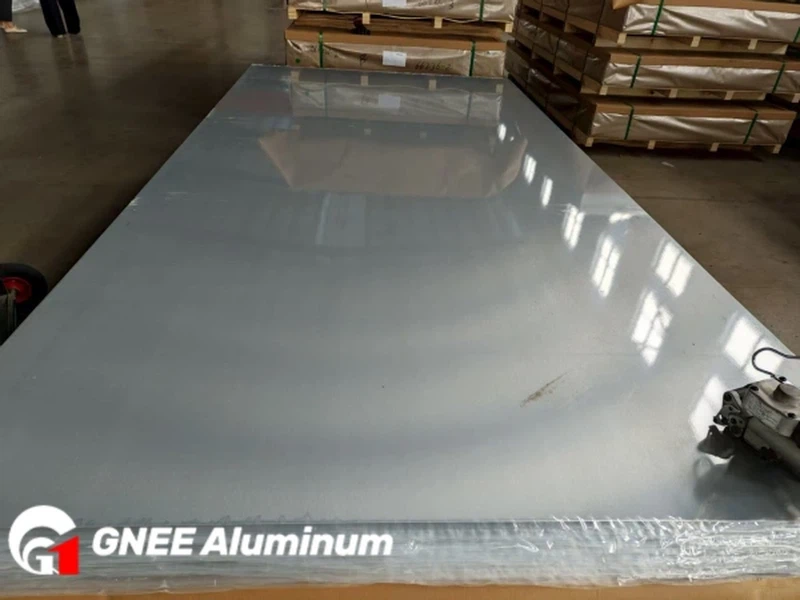
1050 H14 vs 1050 H18 Aluminum
For engineers, CNC operators, and procurement managers, here is the high-level reference data you need to make a quick decision.
| Property | 1050 H14 Aluminum Sheet | 1050 H18 Aluminum Sheet |
| Temper Definition | 1/2 Hard (Half Hard) | Full Hard |
| Overall Strength | Medium | High (Maximum for 1050) |
| Formability / Bending | Good | Very Poor (Prone to cracking) |
| Surface Hardness | Medium | Very High |
| Elongation Level | Moderate (≥ 6%) | Extremely Low (≥ 2%) |
| Typical Industrial Use | General sheet metal fabrication | Rigid, flat products; reflectors |
What Do "H14" and "H18" Mean in Aluminum Tempers?
To successfully buy 1050 aluminum sheet that won't fail on your factory floor, you must understand the metallurgy behind the "H" designation.
The "H" stands for Strain Hardened (cold worked). This means the aluminum sheet gains its strength by being rolled under massive pressure at room temperature, not through heat treatment.
- H14: The metal has been cold-rolled to reach 1/2 of its maximum potential hardness. Often, the mill rolls it harder and then uses a controlled partial-annealing process to soften it back to exactly the half-hard state, restoring enough ductility for bending.
- H18: The metal has been cold-rolled to its absolute maximum hardness (Full Hard). It comes directly off the cold rolling mill with maximum internal stress and no annealing.
The Golden Engineering Rule: As the temper number increases (from 4 to 8), the tensile strength and hardness go up, but the ductility (elongation) goes down dramatically.
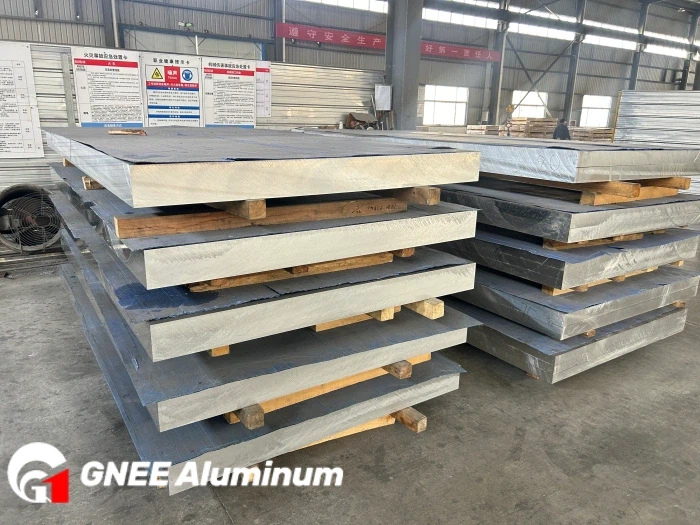
1050-H14 vs 1050-H18 Aluminum Plate Mechanical Properties
Let's look at the exact mechanical data that dictates how these sheets will behave in your press brakes or stamping machines.
| Mechanical Property | 1050-H14 Aluminum | 1050-H18 Aluminum | What it means for fabrication |
| Tensile Strength | 110 – 145 MPa | 130 – 165 MPa | H18 can withstand higher physical loads before breaking. |
| Yield Strength | ≥ 85 MPa | ≥ 110 MPa | H18 provides extreme rigidity for flat panels. |
| Elongation (in 50mm) | ≥ 6% | ≥ 2% | Crucial Metric: H18 has almost zero stretch. It snaps rather than bends. |
Core Conclusion: 1050-H18 offers the highest strength available in the 1000-series, but its incredibly low elongation (2%) means it has almost no capacity to deform without fracturing.
In-Depth Industry Case Study: The Bending Disaster
To demonstrate the real-world impact of choosing the wrong temper, let us share a sourcing case from our factory operations.
The Client: A manufacturer of large-scale architectural signage and highway billboards.
The Problem: The client wanted the strongest, most rigid 1050 aluminum available to prevent "oil-canning" (wavy deformation) on their large billboard faces caused by wind pressure. Their procurement team ordered a full container of wholesale 1050 H18 aluminum sheets.
When the material arrived, their fabrication team attempted to bend a 90-degree flange around the edges of the sheets to mount them to the steel frames. Every single H18 sheet cracked violently along the bend line.
Our Engineering Analysis: The client equated "strongest" with "best." They ignored the elongation data. At full hard (H18), the aluminum's grain structure is stretched to its absolute limit. When the press brake applied force, the material had no remaining ductility to stretch around the radius. It simply fractured.
The Solution: We helped them restructure their Bill of Materials (BOM) to match the correct temper to the specific process:
- For the internal folded chassis and mounting brackets: We supplied 1050 H14 aluminum sheets. The 6% elongation allowed for clean, sharp 90-degree bends without any cracking, ensuring easy assembly.
- For the massive flat face panels: We kept the 1050 H18 aluminum sheets. Because these panels were riveted flat and required zero bending, the H18 temper provided maximum rigidity, completely eliminating the wind-induced wavy appearance.
The Lesson: Stop wasting money on scrapped parts. Never buy H18 if your design requires sharp bending or forming.
Are you experiencing cracking during your press brake operations? Or are your flat aluminum panels suffering from wavy deformations? Send your part drawings and processing methods to our engineering team. We will provide a free material assessment and recommend the exact temper you need, along with a direct factory quote.
1050 H14 vs H18 Aluminum: Key Processing Differences
If you are a manufacturer, here is exactly how these two materials will perform in your facility.
1. Formability (The Ultimate Limiting Factor)
- 1050 H14 Aluminum: Can be readily bent, folded, and formed. While not as ductile as H12 or O (annealed) tempers, H14 handles standard sheet metal fabrication (like 90-degree bends with a proper inner radius) with ease.
- 1050 H18 Aluminum: Not suitable for bending. H18 is notoriously prone to cracking during any forming operation. It must be used in its flat, as-rolled condition or cut via laser/waterjet without any subsequent folding.
2. Strength and Rigidity
- 1050 H18 Aluminum: Delivers maximum yield strength. It is the perfect choice for applications where a thin, flat sheet must remain perfectly straight and resist denting or bowing.
- 1050 H14 Aluminum: Offers moderate strength. It is strong enough for general enclosures and casings but will bend under heavy impact more easily than H18.
3. Hardness and Wear Resistance
Because H18 is heavily cold-rolled, its surface is significantly harder. It resists minor surface scratching and abrasion during handling much better than the softer H14.
4. Processing Behavior
- 1050 H14 Aluminum: The standard go-to for general fabrication shops doing cutting, punching, and folding.
- 1050 H18 Aluminum: Mainly used in processes where the sheet is simply sheared or punched into flat blanks without any 3D deformation.
Which One Should You Choose?
As a factory-direct supplier, we guide our B2B buyers through this decision daily. Follow this logic:
Choose 1050-H14 Aluminum Sheet When:
- Your production process requires bending, folding, or mild forming.
- General sheet metal fabrication is required (e.g., equipment enclosures, folded brackets).
- A balanced combination of moderate strength and workability is sufficient.
Choose 1050-H18 Aluminum Sheet When:
- You need the absolute maximum strength and hardness available in the 1000-series.
- No bending or forming is required. The product will be used completely flat.
- Flatness, rigidity, and resistance to bowing are critical to the final product.
1050 H14 vs H18 Aluminum Application Comparison
Here is how different industries divide the use of these two specific tempers:
| Industrial Application | Recommended Temper | Engineering Reason |
| Sheet Metal Enclosures | 1050 H14 | Requires bending to form box shapes. |
| Flat Reflective Panels | 1050 H18 | Requires high surface hardness and perfect flatness. |
| Highway Signage Boards | 1050 H18 | Requires maximum rigidity to resist wind loads (if used flat). |
| Kitchen Utensils (Pots/Pans) | 1050 H14 (or H12) | Requires stretching and forming without fracture. |
| Printing Plates (Lithography) | 1050 H18 | High dimensional stability and surface hardness needed. |
| Folded Architectural Trim | 1050 H14 | H18 would crack when folded into trim profiles. |
Factory Supply Capabilities and Packaging
Whether you order H14 or H18, dealing with a direct factory ensures your material arrives in perfect condition for your machines.
- Custom Slitting and Shearing: We supply wholesale 1050 aluminum coils and sheets cut to your exact dimensions, minimizing your factory scrap.
- Surface Protection: H18's flat applications often require pristine surfaces. We apply PE/PVC protective films to prevent scratches.
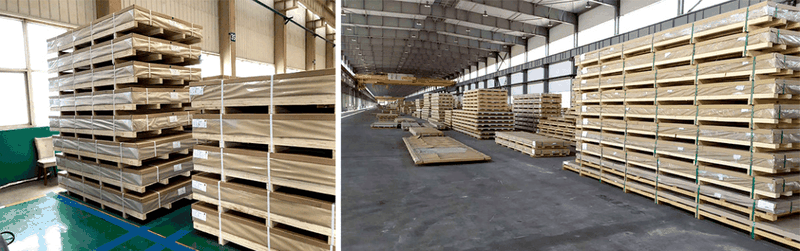
- Seaworthy Export Packaging: Aluminum is susceptible to white rust (oxidation) if exposed to sea moisture. We wrap all sheets in high-density waterproof plastic, insert desiccants, and strap them securely to ISPM 15 fumigated wooden pallets to ensure safe global transit.
Common Buyer Questions (FAQ)
Q: Is H18 stronger than H14 aluminum?
A: Yes, absolutely. H18 is the "full hard" condition and represents the highest tensile and yield strength available for the 1050 aluminum alloy in the H-series.
Q: Can 1050 H18 aluminum be bent?
A: No, it is highly unadvised. H18 has extremely low ductility (elongation is usually around 2%). If you attempt to bend it in a press brake, it will almost certainly crack or completely fracture along the bend line.
Q: Which is better for general fabrication, H14 or H18?
A: 1050 H14 is far better for fabrication. Its "half-hard" temper retains enough ductility to allow for clean cutting, punching, and 90-degree bending without material failure.
Q: Does H18 cost more than H14?
A: In terms of raw factory price, there is usually no significant difference. The base aluminum ingot cost is the same. The difference is merely the rolling and annealing schedule at the mill. Your focus should be on matching the temper to your machine's capabilities, not the raw material cost.
Are you preparing a Bill of Materials (BOM) for your next large-scale project? We support mixed container loads-you can order H18 flat plates for your facings and H14 sheets for your folded frames in one shipment. Send your required sizes and quantities today for a highly competitive, direct-factory quotation.


