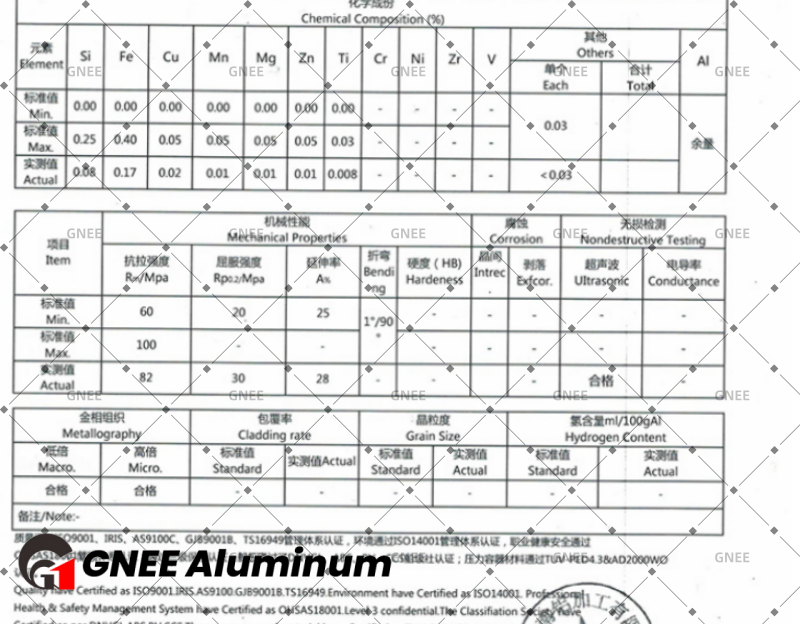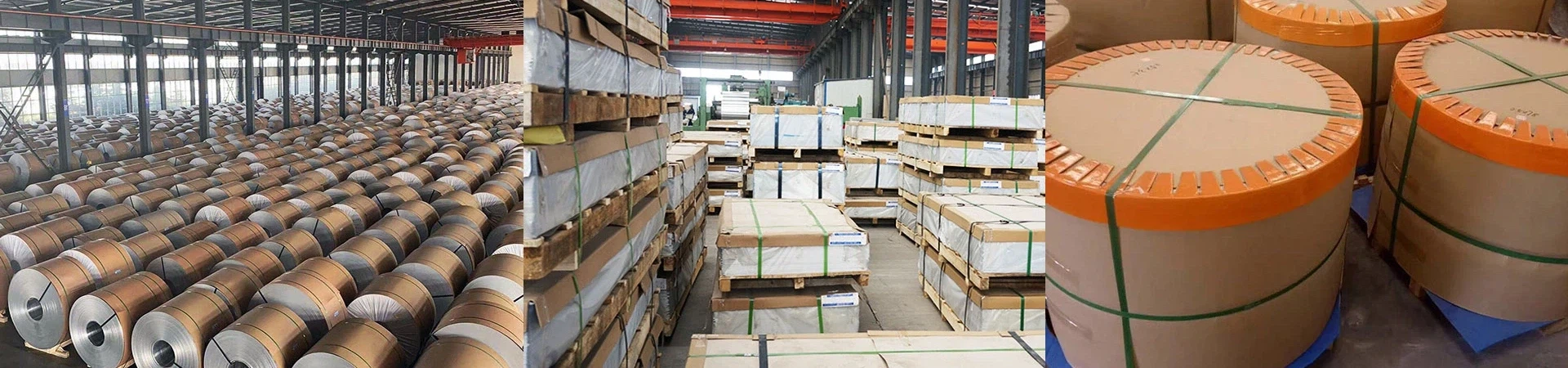
When sourcing commercially pure aluminum for manufacturing, choosing between 1050 H14 and H12 aluminum is a critical engineering decision. Both are exactly the same 1050 alloy (minimum 99.5% pure aluminum), but they have different tempers, meaning they have undergone different levels of cold working.
- 1050 H12 aluminum is strain-hardened to a "quarter-hard" (1/4 hard) condition. It has lower strength but offers excellent formability, making it easier to bend and shape.
- 1050 H14 aluminum is strain-hardened to a "half-hard" (1/2 hard) condition. It possesses higher mechanical strength and rigidity but has reduced ductility compared to H12.
The rule of thumb for procurement is simple: H14 is stronger than H12, while H12 is significantly easier to bend, stretch, and deep-draw.
1050 H12 vs 1050 H14 Aluminum Sheet
For procurement managers and CNC operators needing immediate reference data, here is the high-level comparison.
| Property | 1050 H12 Aluminum Sheet | 1050 H14 Aluminum Sheet |
| Temper Definition | 1/4 Hard (Quarter Hard) | 1/2 Hard (Half Hard) |
| Mechanical Strength | Lower | Higher |
| Formability / Ductility | Excellent (High stretch) | Good (Limited deep drawing) |
| Surface Hardness | Lower (Easier to scratch) | Higher (More wear resistant) |
| Typical Use Case | Deep drawing, spun parts | General forming, flat panels |
What Do "H12" and "H14" Mean in 1050 Aluminum Tempers?
To understand how to buy the right 1050 aluminum sheet, you must understand the metallurgical meaning of the "H" temper designation system.
The letter "H" stands for Strain Hardened. This means the aluminum is not strengthened by heat (like the 6000 series), but rather by cold working-rolling the metal through heavy steel rollers at room temperature. The more you roll it, the harder and stronger it gets.
- The first digit "1" in H1x indicates that the metal is only strain-hardened, with no subsequent thermal treatment (like partial annealing).
- The second digit (2 or 4) indicates the final degree of hardness achieved. The scale goes up to 8 (which is fully hard).
- H12 = Strain hardened to 1/4 of its maximum hardness capability.
- H14 = Strain hardened to 1/2 of its maximum hardness capability.
The Crucial Engineering Trade-off: The higher the temper number, the greater the strength and hardness, but the lower the ductility. You cannot have maximum strength and maximum formability at the same time.
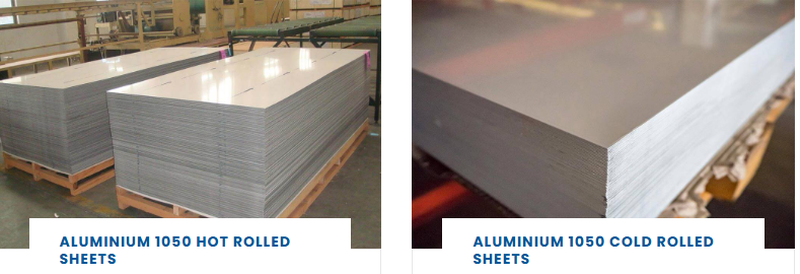
1050-H12 vs 1050-H14 Aluminum Sheet Mechanical Properties
How do these rolling processes translate to actual factory floor performance? Let's look at the hard data.
| Mechanical Property | 1050-H12 Aluminum | 1050-H14 Aluminum | What it means for fabrication |
| Tensile Strength | 95 – 125 MPa | 110 – 145 MPa | H14 can withstand more overall pulling force before tearing. |
| Yield Strength | ≥ 65 MPa | ≥ 85 MPa | H14 requires significantly more force from a press brake to bend. |
| Elongation | ≥ 10% | ≥ 6% | H12 can stretch much further before microscopic cracks form. |
Core Conclusion: The 1050 H14 aluminum sheet is demonstrably stronger and stiffer but noticeably less ductile than H12.
In-Depth Industry Case Studies: The Cost of Choosing the Wrong Temper
Case 1: The Deep Drawing Disaster (Why 1050 H12 Won)
A manufacturer of commercial high-bay lighting reflectors placed an order for wholesale 1050-H14 aluminum coils from a local trader simply because it was immediately available in stock. The reflectors required deep drawing (a process where a flat sheet is pushed deep into a mold).
- The Problem: During the stamping process, the corners of the reflectors were tearing and cracking. The H14 temper was too hard; it lacked the elongation required to stretch into the deep mold.
- The Solution: They contacted our factory. We analyzed the failure and immediately supplied 1050-H12 aluminum coils. The 1/4 hard condition provided the exact ductility needed. The tearing stopped completely, dropping their scrap rate from 18% to near zero.
Case 2: The Dented Ductwork (Why H14 Won)
An HVAC contractor ordered 1050-H12 sheets to fabricate large, flat air-conditioning duct panels.
- The Problem: While the H12 was very easy to cut and fold, the large flat surfaces lacked rigidity. During transport and installation, simply pressing on the panels caused permanent dents. The yield strength of H12 (≥ 65 MPa) was too low to support wide, flat spans.
- The Solution: For the next project phase, we supplied 1050-H14 aluminum sheets. The higher yield strength (≥ 85 MPa) provided the "stiffness" required to keep the large flat panels perfectly straight and dent-free during handling, without making the 90-degree edge bends too difficult to perform.
Experiencing cracking during deep drawing? Or are your flat panels denting too easily? Using the wrong temper wastes time and material. Send us your drawings and fabrication methods, and our material engineers will recommend the exact 1050 temper you need with a fast factory quote.
Key Differences between 1050 H12 vs. H14 Aluminum
1. Formability and Deep Drawing
- 1050 H12 Aluminum: Excellent for aggressive forming operations. It is the preferred temper for spinning, deep drawing, and complex stamping.
- 1050 H14 Aluminum: Limited formability. It can handle basic 90-degree bends on a press brake, but if you attempt to deep-draw H14, it will likely fracture because it has already consumed half of its cold-working capability at the mill.
2. Strength and Rigidity
- 1050 H14 Aluminum: Provides a stiffer, more rigid panel. It is better for applications where the sheet must support its own weight over a span without sagging.
- 1050 H12 Aluminum: Lower yield strength means it will dent or deform under lower impacts or loads.
3. Processing Behavior: The Springback Effect
When you bend a piece of metal, it naturally wants to "spring back" slightly to its original flat shape.
- 1050 H14 Aluminum has a higher yield strength, meaning it exhibits more springback. A CNC press brake operator must over-bend H14 slightly more than H12 to achieve the same final angle.
- 1050 H12 Aluminum has lower springback, making it slightly more predictable for intricate hand-forming or low-tonnage bending operations.
4. Surface Hardness and Scratch Resistance
Because H14 is rolled harder, its surface is slightly more resistant to minor abrasions and scratches during handling and transport compared to the softer H12 surface.
Which 1050 Aluminum Sheet Should You Choose?
Use this direct guide to finalize your procurement decision.
Choose 1050-H12 Aluminum Sheet When:
You are performing deep drawing, metal spinning, or aggressive stamping.
The product has complex, tight-radius bends that would crack a harder temper.
Maximum ductility is the primary requirement for your manufacturing process.
Choose 1050-H14 Aluminum Sheet When:
You need higher mechanical strength and rigidity for flat panels.
Your fabrication process only involves simple, general bending and cutting.
Better surface durability and dent resistance during handling are required.
Application Comparison
Here is how different manufacturing sectors utilize the two tempers:
| Industrial Application | Recommended Temper | Engineering Reason |
| Deep-Drawn Cookware | 1050 H12 | Requires high elongation to prevent tearing in molds. |
| HVAC Ducting & Casings | 1050 H14 | Requires higher yield strength to prevent denting. |
| Lighting Reflectors | 1050 H12 | Often spun or stamped; requires excellent formability. |
| General Sheet Metal Parts | 1050 H14 | Best balance of strength for basic cutting and folding. |
| Chemical Storage Covers | 1050 H14 | Provides better rigidity for flat cover plates. |
| Complex Electrical Housings | 1050 H12 | Prevents cracking during complex multi-stage bending. |
Supply Capabilities and Cost Considerations
As a direct factory supplier, buyers often ask us about the price difference between H12 and H14.
The Commercial Reality: There is virtually no difference in the base price between 1050-H12 and 1050-H14. The raw material (aluminum ingot) is the same, and the rolling cost is almost identical.
The true cost factor lies in availability and processing waste.
If you force your shop to use H14 for a deep-draw part just because it is in stock, your scrap rate will destroy your profit margins. We solve this by supplying exactly what you need.
Custom Size Processing: We slit coils and shear sheets to your exact CNC dimensions, reducing your scrap waste regardless of the temper you choose.
Protective Packaging: Both H12 and H14 have high-quality mill finishes. We supply them with optional PVC protective films and pack them on heavy-duty, fumigated wooden pallets to prevent moisture and physical damage during sea freight.
Planning your next production run? Don't compromise on the temper. We supply wholesale 1050 aluminum sheets and coils in both H12 and H14 conditions, cut to your exact sizes with fast global delivery. Share your required dimensions and quantities today for a direct factory quotation.