When sourcing materials for industrial manufacturing, understanding the exact capabilities of 1050A and 5052 aluminum sheets is critical. They serve entirely different purposes and are engineered for distinct environments.
- 1050A aluminum sheet is a commercially pure aluminum (minimum 99.5% purity). It provides excellent formability, high electrical conductivity, and good basic corrosion resistance, but it possesses low mechanical strength.
- 5052 aluminum sheet is an alloy containing magnesium and chromium. It offers much higher structural strength, a high fatigue limit, and superior corrosion resistance, earning its reputation as a standard "marine grade" aluminum.
For most structural, load-bearing, or marine-related applications, 5052 aluminum is the required choice. Conversely, 1050A is ideal for non-structural applications requiring extreme ductility, deep forming, or electrical conductivity.
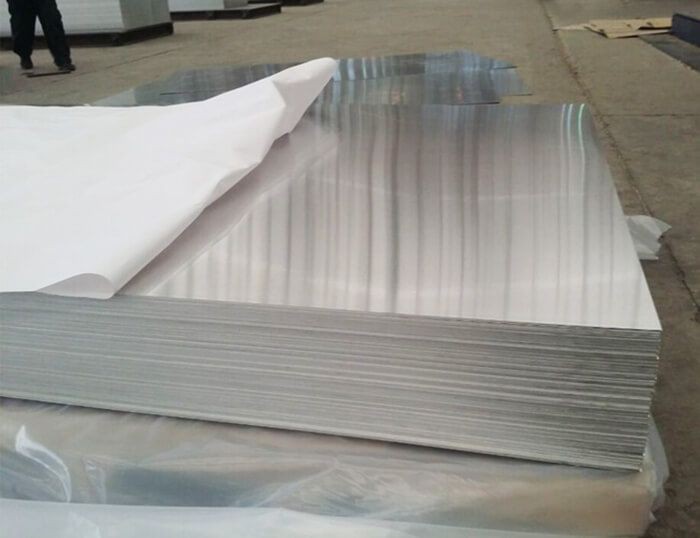
1050A vs 5052 Aluminum Sheet
For procurement managers and engineers needing fast reference data, here is the high-level comparison between the two materials.
| Property | 1050A Aluminum Sheet | 5052 Aluminum Sheet |
| Aluminum Content | ≥ 99.5% (High Purity) | ~97.5% (Alloyed) |
| Overall Strength | Low | Medium – High |
| Corrosion Resistance | Good (in pure environments) | Excellent (Marine Grade) |
| Formability | Excellent (Deep drawing) | Good (Can be formed, but stiffer) |
| Weldability | Excellent | Excellent |
| Typical Use Case | Forming, electrical, reflectors | Marine, fuel tanks, heavy industrial |
1050A vs 5052 Aluminum Chemical Composition Difference
To understand why you should buy a 5052 aluminum plate for a boat hull but a 1050A aluminum sheet for a transformer winding, we must look at their metallurgical makeup.
| Element | 1050A Aluminum (%) | 5052 Aluminum (%) |
| Aluminum (Al) | ≥ 99.5 | Balance |
| Magnesium (Mg) | - (Trace) | 2.2 – 2.8 |
| Chromium (Cr) | - (Trace) | 0.15 – 0.35 |
| Copper (Cu) | ≤ 0.05 | ≤ 0.10 |
| Iron (Fe) | ≤ 0.40 | ≤ 0.40 |
The Metallurgical Explanation:
The 1050A alloy is nearly pure. Because it lacks alloying elements, its crystal lattice can move freely, which gives it extreme ductility but very little strength.
The 5052 alloy changes completely with the addition of Magnesium (Mg) and Chromium (Cr). Magnesium acts as a solid solution strengthener, drastically increasing the metal's hardness and tensile strength without destroying its weldability. Chromium further enhances the alloy's resistance to stress-corrosion cracking, particularly in saltwater environments.
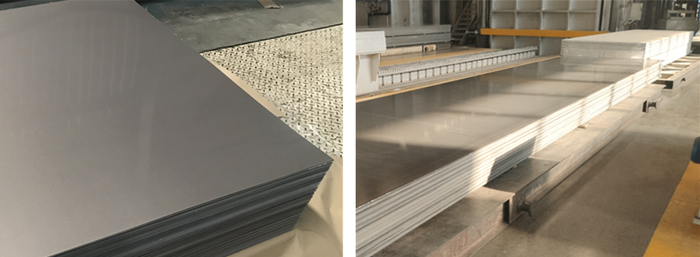
1050A-H12 vs 5052-H32 Mechanical Properties Comparison
Let's compare these materials in their most commonly requested industrial tempers. H12 means strain-hardened to 1/4 hard. H32 means strain-hardened and stabilized to 1/4 hard.
| Mechanical Property | 1050A-H12 Aluminum | 5052-H32 Aluminum |
| Tensile Strength | 95 – 125 MPa | 210 – 260 MPa |
| Yield Strength | ≥ 65 MPa | ≥ 130 MPa |
| Elongation | ≥ 10% | 8 – 12% |
| Fatigue Strength | Low | High |
Core Conclusion: 5052 aluminum sheet is significantly stronger than 1050A. The yield strength of 5052-H32 is exactly double that of 1050A-H12. This means 5052 can withstand twice the mechanical load before it begins to permanently dent or deform, making it far superior for demanding environments.
Real-World Case Study: The Marine Fuel Tank Failure
To illustrate the importance of choosing the correct alloy, consider this sourcing case from our factory.
The Client's Problem: A manufacturer of small pontoon boats and marine equipment was experiencing severe warranty claims. They were manufacturing their custom marine fuel tanks out of standard 1000-series pure aluminum (similar to 1050A) because it was cheap and very easy to bend and weld into box shapes.
However, within a year of use on the water, the tanks were developing micro-cracks along the welded seams and leaking fuel.
Our Engineering Analysis: We identified two fatal flaws in their material choice.
- Vibration and Fatigue: Pure aluminum has a very low fatigue limit. The constant pounding of the boat against the waves, combined with the engine vibration, caused the soft 1050A material to suffer from metal fatigue and crack.
- Saltwater Corrosion: While pure aluminum has a good oxide layer, it does not hold up well to the harsh, continuous exposure of salty sea air compared to alloyed marine grades.
The Solution: We transitioned their procurement to wholesale 5052-H32 marine grade aluminum sheets.
- The 5052 alloy has an exceptionally high fatigue strength, meaning it easily absorbs marine vibrations without cracking.
- The high magnesium content provided superior resistance to saltwater corrosion.
- Although the 5052 sheet was slightly stiffer to bend in their press brakes, it welded beautifully using 5356 filler wire.
The Result: The client's fuel tank failure rate dropped to zero. They learned that saving a few cents per kilogram on pure aluminum is never worth catastrophic failure in a demanding environment.
Not sure which aluminum sheet fits your specific application? Choosing the wrong grade can lead to product failure or wasted machining time. Send your drawings, operating environments, and load requirements to our engineers for a fast, accurate material recommendation and a direct factory quote.
Key Differences Explained 1050A-H12 Vs 5052-H32
1. Strength and Load Capacity
- 5052 Aluminum Plate: Designed for medium-to-high-strength applications. It is strong enough for walk-in refrigerator panels, truck trailers, and marine hulls.
- 1050A Aluminum Sheet: Designed for low-strength applications. It will easily dent and bend if subjected to weight or impact.
2. Corrosion Resistance Environments
- 5052 Aluminum Plate: Excellent in harsh environments. It is highly resistant to saltwater, marine atmospheres, and many industrial chemicals. It is considered the standard marine alloy.
- 1050A Aluminum Sheet: Good in basic, pure environments (like indoor air or distilled water), but it is not suitable for harsh, corrosive, or salt-heavy conditions.
3. Formability and Deep Drawing
- 1050A Aluminum Sheet: Unbeatable formability. If you are manufacturing deep-drawn cooking pots, complex spun lamp shades, or intricate foil packaging, the extreme ductility of 1050A prevents the metal from tearing during deep forming.
- 5052 Aluminum Plate: Good formability, but it requires a larger bend radius than 1050A. Because it is much stronger, it has more "springback" when bent in a press brake.
Which Aluminum Sheet Should You Choose?
Use this direct guide to finalize your procurement decision.
Choose 1050A Aluminum Sheet When:
- You need maximum ductility for deep drawing, spinning, or complex bending.
- Electrical or thermal conductivity is the critical factor (e.g., busbars, heat sinks, transformer windings).
- The part is entirely non-structural and faces no mechanical stress (e.g., light reflectors, cosmetic panels, nameplates).
Check full specifications and request pricing for 1050a-aluminum-sheet.
Choose 5052 Aluminum Sheet When:
- You need higher strength and rigidity without moving to a heat-treatable alloy like 6061.
- Your product will be used in marine, coastal, or outdoor environments subject to salt and weather.
- You are building tanks, pressure vessels, or enclosures that face vibration and require high fatigue strength.
Source marine-grade materials. Get a quote for 5052-aluminum-sheet.
1050A-H12 Vs 5052-H32 Application Comparison
| Industrial Application | Recommended Alloy | Why This Alloy? |
| Electrical Conductors | 1050A | Highest electrical conductivity due to unalloyed purity. |
| Lighting Reflectors | 1050A | Exceptional surface finish and reflectivity after polishing. |
| Marine Panels & Boat Hulls | 5052 | High resistance to saltwater; high strength. |
| Fuel Tanks & Pressure Vessels | 5052 | High fatigue limit resists vibration cracking; excellent weldability. |
| Chemical Storage & Piping | 1050A / 5052 | 1050A for basic chemicals; 5052 for structural tanks. |
| Truck Trailer Side Panels | 5052 | Resists denting and road salt corrosion. |

1050A-H12 Vs 5052-H32 Cost vs Performance
- 1050A Cost: Generally has a lower cost. Because it lacks alloying elements like magnesium and chromium, the raw material cost is closer to the base London Metal Exchange (LME) aluminum price. It is also easier and faster for the mill to roll.
- 5052 Cost: Higher cost. Magnesium is an expensive alloying element. Furthermore, 5052 is harder to roll at the mill and requires careful stabilization (the "3" in H32) to prevent age-softening over time. This increases the processing fee.
The Business Verdict: While 1050A is cheaper upfront, 5052 offers a significantly better long-term value in demanding environments. If you use 1050A where 5052 is required, the costs of product failure, warranty claims, and reputational damage will far exceed the initial material savings.
Our Factory Supply Capabilities
When you partner with us, you are buying direct from a factory that understands industrial processing. We provide:
- Custom Size Cutting: We shear and cut 1050A and 5052 sheets to your exact manufacturing dimensions, reducing your scrap waste.
- Mixed Container Loading: We support projects that require multiple grades. You can order thick 5052 marine plates and thin 1050A conductive coils in the same shipment.
- Export-Grade Packaging: Aluminum is vulnerable to water stains during sea freight. We pack all sheets on heavy-duty, fumigated wooden pallets, wrapped in VCI (Vapor Corrosion Inhibitor) paper and thick waterproof plastic, complete with desiccants.
Common Buyer Questions (FAQ)
Q: Is 5052 stronger than 1050A aluminum?
A: Yes. 5052 aluminum is significantly stronger. Thanks to the addition of magnesium, 5052 has roughly double the yield strength of 1050A in standard strain-hardened tempers, making it much more resistant to bending and denting.
Q: Which aluminum is better for marine use?
A: 5052 aluminum is the standard choice for marine environments. Its chemical composition provides excellent resistance to saltwater corrosion, and its high fatigue limit handles the stress of waves and engine vibration perfectly. 1050A should not be used for marine structural applications.
Q: Can 1050A replace 5052 in manufacturing?
A: No, not in high-strength or corrosion-critical applications. Replacing 5052 with 1050A to save money will result in a product that easily dents, suffers from fatigue cracking, and potentially corrodes in harsh environments.
Q: Are both alloys good for welding?
A: Yes, both have excellent weldability using TIG or MIG processes. For 5052, 5356 filler wire is typically used to match the magnesium content and strength. For 1050A, a pure aluminum filler wire like 1100 or 1050 is used.
Do you have an upcoming production run? We supply both wholesale 1050A and marine-grade 5052 aluminum sheets with custom sizes, strict tolerance control, and fast delivery. Share your Bill of Materials (BOM) with us today for a comprehensive, direct-factory quotation.