

When sourcing 1xxx series high-purity aluminum for electrical or thermal applications, purchasing managers and engineers often debate between 1060-H22 aluminum and 1070-H22 aluminum. On paper, these two alloys look almost identical. However, in an actual manufacturing environment, the slight 0.1% difference in pure aluminum content dramatically shifts how the metal behaves during stamping, bending, and electrical conduction.
Understanding the "H22" Temper
Before comparing the alloys, we must understand the temper. Both alloys discussed here are in the H22 temper.
In metallurgy, "H2" means strain-hardened and partially annealed. The second digit "2" indicates it is a quarter-hard (1/4 hard) temper.
It means the aluminum has been rolled to increase its strength, but then slightly heated to soften it just enough to prevent cracking during severe bending. If you are manufacturing formed parts like transformer windings or deep-drawn heat shields, the H22 temper gives you the perfect balance: it holds its shape but won't fracture at the corners.

1060-H22 vs 1070-H22 Aluminum
Both 1060 and 1070 belong to the commercially pure aluminum. The primary difference lies strictly in the trace impurities (iron, silicon, and copper).
- 1060 Aluminum: Minimum 99.6% pure aluminum.
- 1070 Aluminum: Minimum 99.7% pure aluminum.
Here is the exact chemical breakdown. Notice how 1070 has stricter limits on Iron (Fe) and Silicon (Si). These tighter limits are what give 1070 its edge in ductility.
| Element | 1060-H22 Aluminum (%) | 1070-H22 Aluminum (%) |
| Aluminum (Al) | 99.6 to 100 | 99.7 to 100 |
| Iron (Fe) | 0 to 0.35 | 0 to 0.25 |
| Silicon (Si) | 0 to 0.25 | 0 to 0.20 |
| Copper (Cu) | 0 to 0.05 | 0 to 0.04 |
| Zinc (Zn) | 0 to 0.05 | 0 to 0.04 |
| Magnesium/Manganese | Max 0.03 (each) | Max 0.03 (each) |
Mechanical Properties of 1060 and 1070
Because 1060 and 1070 are quarter-hard (H22), their tensile and yield strengths are nearly identical. Neither of these alloys is used for structural load-bearing; they are used for forming.
The most critical metric here is Elongation at Break.
Because 1070-H22 aluminum has fewer trace impurities (less iron and silicon), its internal grain structure is softer and more uniform.
Therefore, 1070-H22 has a higher elongation rate (10%) compared to 1060-H22 (6.8%).
If your factory is bending aluminum busbars at sharp 90-degree angles, 1070-H22 will handle the stress much better, significantly reducing your scrap rate from corner micro-cracks.
| Mechanical Property | 1060-H22 Aluminum | 1070-H22 Aluminum |
| Tensile Strength (UTS) | ~13,000 psi (90 MPa) | ~13,000 psi (90 MPa) |
| Yield Strength | ~9,700 psi (65 MPa) | ~9,100 psi (63 MPa) |
| Elongation at Break | 6.8% | 10% |
| Shear Strength | 7,600 psi | 7,600 psi |


Thermal and Electrical Properties Comparison
Because 1070-H22 aluminum has fewer alloying elements to disrupt the flow of electrons and heat, it actually possesses slightly higher thermal and electrical conductivity than 1060.
Electrical Applications: For high-voltage transmission or busbars, 1070 is often the premium choice because its equal-volume conductivity approaches 62% IACS, edge-beating 1060's ~61% IACS. Over thousands of hours of operation, this tiny percentage saves massive amounts of energy.
Thermal Applications: 1070 transfers heat slightly faster, but 1060 is more than capable for standard heat exchangers.
| Property | 1060-H22 Aluminum | 1070-H22 Aluminum |
| Electrical Conductivity | ~ 61% IACS | ~ 61.5% - 62% IACS |
| Thermal Conductivity | ~ 135 BTU/h-ft-°F | ~ 140 BTU/h-ft-°F |
| Melting Point | 1190 °F - 1210 °F | 1180 °F - 1190 °F |
Buy 1060 aluminum or 1070 aluminum directly from the GNEE mill. Send us your dimensions, and we will provide a precise conductivity calculation for your project.
Common Applications of 1060-H22 Aluminum and 1070-H22 Aluminum
Where to use 1060-H22 Aluminum:
- Lithium Battery Soft Connections: Used in EV battery packs for flexible busbars.
- Heat Exchangers & Radiators: The standard material for HVAC fins.
- Signage and Lighting Reflectors: Polishes well and reflects light efficiently.
- Chemical Equipment: Highly resistant to basic chemical corrosion.
Where to use 1070-H22 Aluminum:
- Heavy-Duty Electrical Busbars: Power distribution panels requiring maximum IACS.
- Capacitor Foils & Electronic Components: Where absolute material purity prevents electrical shorts.
- Deep-Drawn Cosmetic Casings: Because of its 10% elongation, it forms smoothly for premium consumer goods packaging.

GNEE Factory Strength, Packaging & Delivery
As a premier high-purity aluminum supplier, GNEE ensures every batch of 1060-H22 aluminum sheet and 1070-H22 aluminum coil meets rigorous international standards (ASTM B209, EN 485).
- Quality Control: Every order comes with a Mill Test Certificate (MTC). We conduct ultrasonic testing and spectral analysis to guarantee the 99.6% / 99.7% purity levels.
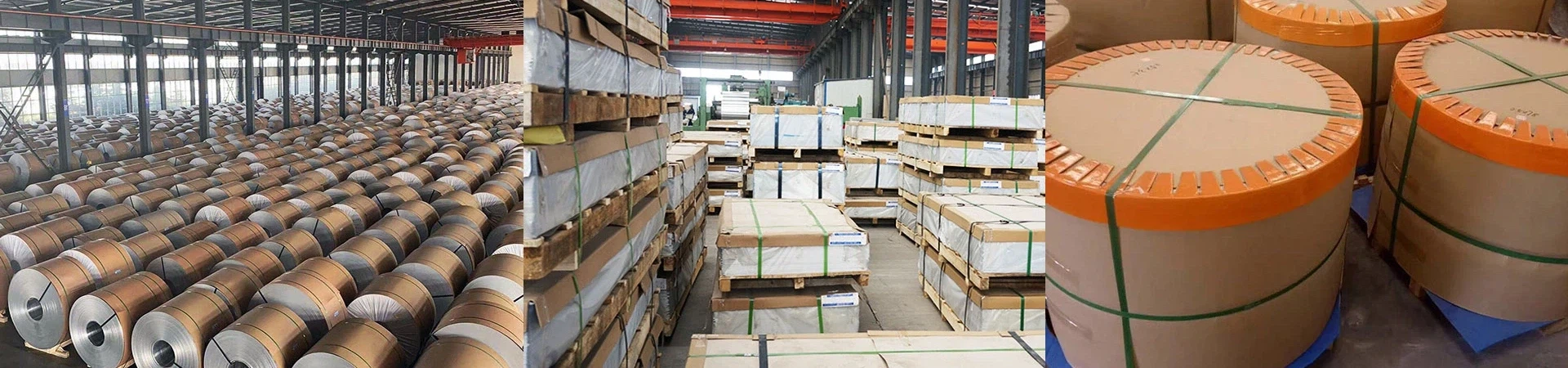
- Export Packaging: Seawater moisture destroys aluminum. We pack all coils and sheets using heavy-duty moisture-proof kraft paper, wrap them in plastic film with desiccants, and secure them to fumigated wooden pallets (eye-to-sky or eye-to-wall for coils).
- Customization: We don't just sell standard sizes. We slit coils to your exact width and cut sheets to your precise length, saving you secondary processing costs.

Email us today to see our loading photos and request a free material sample.
How SMM Pricing Works for 1xxx Series Aluminum
At GNEE, we calculate your cost using this standard industry formula:
Final Price = SMM Aluminum Ingot Price + Processing Fee
- SMM Ingot Price: This is the live spot price of raw aluminum on the Shanghai Metals Market (SMM). It fluctuates daily based on global supply and demand.
- Processing Fee: This covers the cost of rolling, annealing to the H22 temper, slitting, and packaging. For 1xxx series alloys, the processing fee is relatively low because pure aluminum is easier to roll than hard 5xxx or 6xxx series alloys.
Note: Because 1070 requires higher purity control, its processing fee is generally slightly higher than 1060.


