

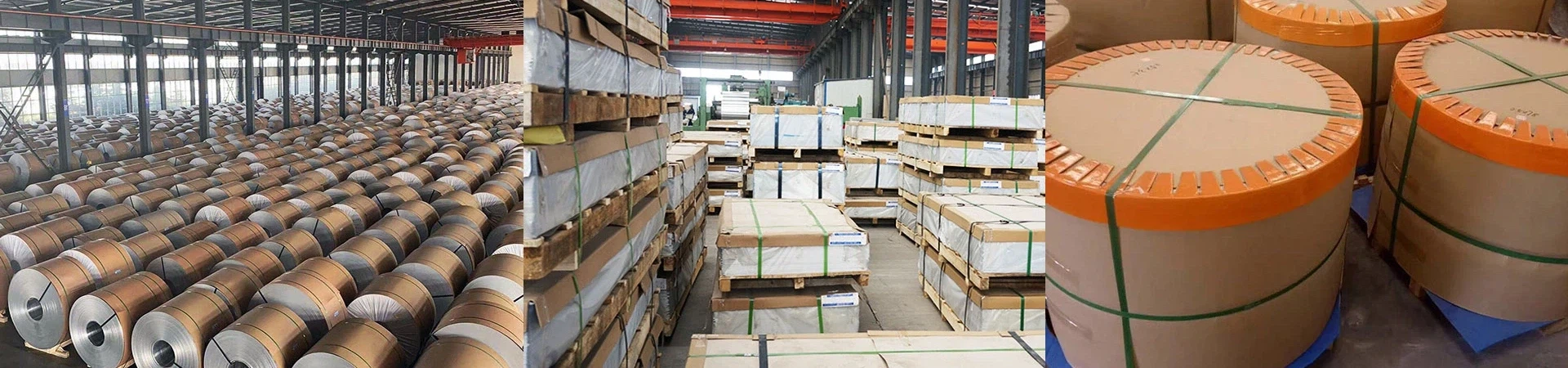
As the automotive industry shifts toward lightweight design and electric vehicles (EVs), the demand for high-strength, lightweight materials is growing rapidly. 5083 aluminum alloy has become a standard material for automotive manufacturing. Originally known as a marine-grade Al-Mg alloy, 5083 is now widely used in automotive body panels, EV battery enclosures, and structural components due to its high strength, excellent corrosion resistance, and good weldability.
For automotive OEMs and Tier-1 suppliers, choosing the right alloy temper, precise dimensions, and a reliable supply chain is critical.
Why 5083 Aluminum plate for Automotive Bodies?
- High Strength-to-Weight Ratio: Reduces overall vehicle weight, which directly improves fuel efficiency for traditional cars and extends the driving range for EVs.
- Excellent Corrosion Resistance: Performs exceptionally well in harsh environments, preventing rust and degradation on exposed body panels and underbody parts.
- Good Weldability: Essential for modern body-in-white (BIW) assembly. 5083 can be easily welded using standard automotive industry methods like TIG, MIG, and laser welding.
- Wide Size Availability: 5083 can be rolled into ultra-wide sheets, which is necessary for forming large single-piece body panels (like roofs or side panels) to reduce welding joints.

The chemical composition of 5083 aluminum for automotive body sheet panels
| Element | Content Limit (%) |
| Magnesium (Mg) | 4.0 – 4.9 |
| Manganese (Mn) | 0.40 – 1.0 |
| Silicon (Si) | ≤ 0.40 (Max) |
| Iron (Fe) | ≤ 0.40 (Max) |
| Chromium (Cr) | 0.05 – 0.25 |
| Zinc (Zn) | ≤ 0.25 (Max) |
| Titanium (Ti) | ≤ 0.15 (Max) |
| Aluminum (Al) | Remainder |
Alloy Tempers and Mechanical Properties
The performance of 5083 aluminum changes significantly based on its temper. For automotive applications, we mainly use O, H111, and H32 tempers.
Here is the typical mechanical property data and how to choose the right temper for your auto parts:
| Temper | Tensile Strength (MPa) | Yield Strength (MPa) | Elongation (%) | Characteristics & Formability |
| 5083 O | 270 – 350 | ≥ 125 | ≥ 16 | Fully annealed, softest state. Offers the highest elongation. |
| 5083 H111 | 305 – 385 | ≥ 145 | ≥ 14 | Slight work hardening. Balanced strength and formability. |
| 5083 H32 | 315 – 405 | ≥ 215 | ≥ 10 | Work hardened and stabilized. Higher strength, lower elongation. |
How to Choose:
5083 O Temper: Use this for deep-drawn auto body panels. Because it has high elongation (≥16%), it will not crack easily when pressed into complex shapes like car doors or fenders.
5083 H111: The most versatile temper. It is widely used for general body structures, fuel tanks, and EV battery base plates where both moderate bending and solid strength are required.
5083 H32: Use this for structural reinforcements, inner panels, and commercial truck bodies. It provides higher yield strength to protect the vehicle frame.
Are you unsure which temper suits your specific automotive stamping process? Contact GNEE engineers today with your part drawings, and we will recommend the most cost-effective 5083 temper for your production line.
Specifications of 5083 Aluminum car body sheet
| Aluminum alloy | 5083 Aluminum sheet |
| Temper | O, H12, H14, H16, H18, H19, H22, H24, H26, H28, H32, H34 H36, H38, H111, H112, H114, H116, H321 |
| Thickness (mm) | 0.15-500 |
| Width (mm) | 20-2650 |
| Length (mm) | 500-16000 |
| Application examples | Marine plate, LNG tanker, air reservoir, GIS switchgear enclosure, bus skin, flange, etc. |

Automotive Applications of 5083 Aluminum Sheet
| Application Category | Specific Use | Recommended Alloy & Temper | Recommended Thickness | Key Requirements | Why 5083 is Suitable |
|---|---|---|---|---|---|
| Passenger Vehicles | Outer Body Panels (Doors, Roofs, Hoods) | 5083-O / 5083-H111 | 0.8 – 1.2 mm | Excellent formability, smooth stamping, no cracking | High elongation ensures deep drawing without tearing |
| Inner Panels & Reinforcements | 5083-H32 | 1.0 – 1.5 mm | Structural rigidity, impact resistance | Higher strength improves passenger safety | |
| New Energy Vehicles (EVs) | Battery Enclosure Shells | 5083-H111 / 5083-H32 | 1.0 – 1.5 mm | Lightweight + high strength + impact resistance | Balances weight reduction and battery protection |
| Commercial Vehicles & Trucks | Truck Body Panels & Side Walls | 5083-H32 | 1.2 – 1.5 mm | Dent resistance, durability under heavy use | High yield strength resists deformation |
| Anti-Slip Floor Plates (Truck Beds / Steps) | 5083-H32 (Aluminum Checkered Plate) | 2.0 – 6.0 mm (typical) | Anti-skid safety, wear resistance | Raised pattern improves grip and safety | |
| Automotive Fuel Systems | Fuel Tanks & Tank Covers | 5083-H111 | 1.0 – 1.5 mm | Corrosion resistance, leak prevention | Excellent chemical resistance ensures long service life |
Key Notes for Buyers
Deep drawing parts → choose 5083-O / H111
Load-bearing structures → choose 5083-H32
Anti-slip applications → use 5083 checkered plate (thicker gauge)
EV battery systems → prioritize H111 for balance or 5083 H32 for strength

Manufacturing Tolerances
| Parameter | Standard / Tolerance Limit |
| Thickness Tolerance | ±0.02 mm to ±0.05 mm |
| Width Tolerance | ±2 mm |
| Flatness | ≤ 3 mm per meter |
| Surface Quality | Clean, flat, no scratches, no oil stains, no oxidation spots |
Planning a trial run for new EV battery enclosures or truck body panels? GNEE supports small-batch trial orders with fast delivery. Send us your trial specifications to get started.
Quality Control and Tolerance Standards
In automotive manufacturing, inconsistent material thickness or poor flatness can cause defects during the automated stamping process. "Automotive grade" means strict tolerance control. GNEE follows international standards, including EN 485, ASTM B209, JIS H4000, IATF 16949,and GB/T 33227-2016 to ensure global OEM compatibility.
For automotive outer panels, surface quality is everything. A tiny scratch on the aluminum sheet will magnify after the car goes through the painting and clear-coat process.

Why Surface Finish Matters:
Automotive exterior panels require a flawless surface. Any deep scratch or oil stain will affect the final car paint process. GNEE provides 100% surface inspection. We offer mill finish as standard, but brushed, checkered, or coated finishes are available upon request.
As an IATF 16949-certified supplier, GNEE implements zero-defect surface control:
EDT (Electrical Discharge Texturing): Upon request, we can provide EDT surfaces. This creates a microscopic uniform roughness on the sheet, which holds stamping lubricants perfectly and improves final paint adhesion.
100% Surface Inspection: No oil spots, no roll marks, no white rust, and no scratches.
Ultrasonic Testing (UT): All raw aluminum ingots undergo ultrasonic testing to ensure there are no internal air pockets before rolling.

Partner with GNEE for Auto Aluminum Supply
GNEE is an experienced supplier in the automotive aluminum supply chain. We understand the strict quality, documentation, and delivery requirements of OEMs and Tier-1 manufacturers.
- Flexible Orders: We accept multi-size and mixed-specification orders.
- Production Strength: Our advanced rolling equipment guarantees a stable supply of ultra-wide sheets up to 2650 mm.
- Complete Data Support: We provide full technical data tables and compliance certificates (SGS/BV third-party inspections available).


Request a sample of our 5083 sheet along with a recent Mill Test Certificate (MTC) to verify our chemical and mechanical properties in your own lab.
GNEE Standard Export Packaging:
- Pallets: Heavy-duty export wooden pallets that meet ISPM-15 standards.
- Moisture Protection: The aluminum is wrapped tightly in waterproof plastic film and kraft paper, with desiccant packets placed inside to absorb any trapped moisture.
- Physical Protection: Hardboard covers and metal edge protectors are applied, then secured tightly with steel straps to prevent shifting.
- Container Loading: We optimize loading plans for 20GP or 40HQ containers. Coil or sheet loading is calculated precisely to maximize space and reduce your average freight cost per ton.


How 5083 Aluminum is Priced
Pricing Formula:
Final Price = SMM Aluminum Ingot Price + Processing Fee
SMM Aluminum Price: This is the base metal cost, which fluctuates daily based on the Shanghai Metals Market (SMM).
Processing Fee: For 5083 automotive sheets, the processing fee usually ranges from USD 400 to USD 900 per ton.
What affects the processing fee?
- Dimensions: Ultra-wide sheets (over 2400 mm) or very thin gauges require more rolling mill time, increasing the cost.
- Tolerances: Tighter thickness tolerances (e.g., ±0.02 mm) require higher precision control.
- Temper: Heat treatments to achieve specific tempers like H111 or H32 add processing costs.
Material Comparison: 5052 vs 5083 vs 5182 Aluminum plate
1. Mechanical Properties Comparison (Typical Values)
| Alloy | Temper | Tensile Strength (MPa) | Yield Strength (MPa) | Elongation (%) | Strength Level | Formability |
|---|---|---|---|---|---|---|
| 5052 | H32 | 210 – 260 | ≥130 | ≥12 | Medium | Excellent |
| 5083 | H32 | 315 – 405 | ≥215 | ≥10 | High | Good |
| 5182 | H32 | 275 – 350 | ≥125 | ≥12 – 16 | Medium-High | Excellent |
2. Automotive Application Comparison
| Alloy | Typical Automotive Parts | Recommended Thickness | Key Advantage | Limitation |
|---|---|---|---|---|
| 5052 | Inner panels, brackets, covers | 0.8 – 1.5 mm | Low cost + excellent forming | Lower strength, not suitable for heavy structures |
| 5083 | Structural parts, EV battery enclosures, truck bodies, large panels | 1.0 – 1.5 mm | High strength + corrosion resistance | Slightly lower formability than 5182 |
| 5182 | Inner doors, complex stamped panels | 0.8 – 1.2 mm | Excellent elongation, ideal for deep drawing | Strength lower than 5083 |


