

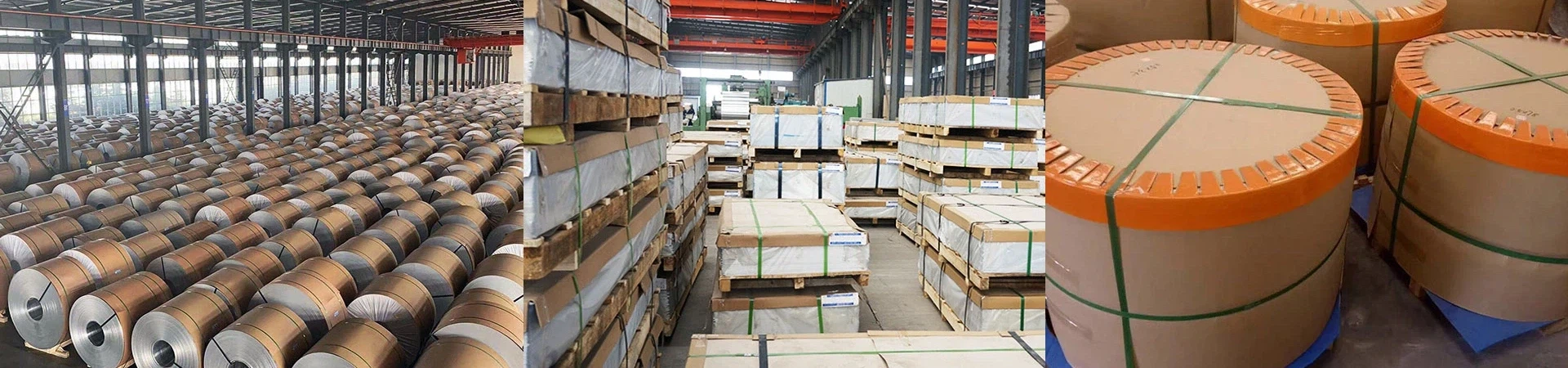
What Is an Automotive Aluminum Fuel Tank Plate?
An automotive aluminum fuel tank plate is a specialized aluminum alloy sheet used to manufacture fuel storage systems for passenger cars, commercial trucks, and hybrid vehicles.
Unlike standard industrial plates, the aluminum material used for fuel tanks must meet extremely strict requirements. It must have outstanding corrosion resistance to withstand long-term contact with fuel, moisture, and road salt. It also requires excellent weldability to ensure strict airtightness and great formability to be stamped into complex tank shapes.
Because of the global push for carbon reduction, automotive manufacturers are rapidly replacing traditional steel fuel tanks with aluminum ones. Aluminum reduces the total weight of the vehicle, which improves fuel efficiency and lowers emissions without sacrificing safety.
Are you looking for a reliable supplier of automotive aluminum fuel tank plates? Contact GNEE today to get a fast and competitive quote for your manufacturing project. We respond within 24 hours.
Core Advantages of Automotive Aluminum Fuel Tank Plate
1. Longer Service Life
Aluminum naturally forms a dense oxide film on its surface when exposed to air. This natural barrier effectively prevents corrosion from fuel chemicals, moisture, and harsh salt-spray environments on winter roads. The service life of an aluminum fuel tank is significantly longer than that of a traditional steel tank, greatly reducing maintenance costs and leakage risks.
2. Lightweight and Energy Saving
Aluminum has only one-third the density of steel. Using aluminum plates can reduce the total weight of the vehicle by 5% to 10%.
For every 100 kg of weight saved, fuel consumption drops by about 0.4 liters per 100 km.
CO₂ emissions are reduced by approximately 1 kg for every 100 kg saved.
This makes aluminum the perfect material for meeting strict modern emission standards.
3. Excellent Welding and Forming
Fuel tanks are often deep-drawn into two halves and then welded together. Our aluminum plates are optimized for deep drawing without tearing. They also offer excellent compatibility with MIG and TIG welding processes, ensuring high structural stability and 100% airtightness to prevent fuel vapor leaks.
4. 100% Recyclable Green Material
Aluminum has a recycling rate of over 95%. Using aluminum aligns perfectly with the green manufacturing trends and the environmental regulations of the new energy vehicle (EV and Hybrid) industry.

How to Choose the Right Aluminum Alloy
| Alloy Grade | Strength | Forming Ability | Welding Ability | Corrosion Resistance | Typical Auto Use |
| 3003 | Medium | Excellent | Excellent | Excellent | General passenger car tanks |
| 3004 | Medium-High | Good | Good | Excellent | Commercial vehicle tanks |
| 5052 | Medium-High | Good | Excellent | Very Good | Truck fuel tanks |
| 5754 | Medium-High | Good | Excellent | Very Good | European standard vehicle tanks |
| 5083 | High | Medium | Good | Extreme | Heavy-duty / special vehicle tanks |
| 5A03 | Medium-High | Good | Excellent | Very Good | Low-temperature / extreme environments |
Chemical Composition
| Alloy | Si | Fe | Cu | Mn | Mg | Cr | Zn | Al |
| 3003 | ≤0.6 | ≤0.7 | ≤0.2 | 1.0–1.5 | – | – | ≤0.1 | Balance |
| 3004 | ≤0.3 | ≤0.7 | ≤0.25 | 1.0–1.5 | 0.8–1.3 | – | ≤0.25 | Balance |
| 5052 | ≤0.25 | ≤0.4 | ≤0.1 | ≤0.1 | 2.2–2.8 | 0.15–0.35 | ≤0.1 | Balance |
| 5754 | ≤0.4 | ≤0.4 | ≤0.1 | ≤0.5 | 2.6–3.6 | ≤0.3 | ≤0.2 | Balance |
| 5083 | ≤0.4 | ≤0.4 | ≤0.1 | 0.4–1.0 | 4.0–4.9 | 0.05–0.25 | ≤0.25 | Balance |
Need help matching the right chemical composition and alloy to your auto part drawings? Send your technical requirements to GNEE's engineering team for a free material consultation.
Mechanical Properties
| Alloy | Temper | Tensile Strength (MPa) | Yield Strength (MPa) | Elongation (%) |
| 3003 | O / H14 | 120–170 | 95–140 | 5–12 |
| 3004 | H32 | 150–200 | 120–170 | 6–12 |
| 5052 | H32 | 210–260 | 130–200 | 7–15 |
| 5754 | H22 | 190–240 | 110–180 | 10–18 |
| 5083 | H111 | 275–350 | 125–275 | 10–16 |
Note: The "O" temper (fully annealed) offers the highest elongation for deep drawing, while "H" tempers offer better strength for flatter structural tank parts.
Standard Specifications
| Parameter | Available Range |
| Thickness | 0.8 mm – 4.0 mm |
| Width | Custom (Standard range: 500 mm – 2200 mm) |
| Length | 500 mm – 12000 mm or supplied in coils |
| Temper | O, H32, H34, H111 |
| Surface | Mill Finish, Clean Surface (Ready for welding/stamping) |
Common Applications in the Auto Industry
1. Passenger Cars and SUVs
Application: Fuel systems for family sedans, SUVs, and hybrid vehicle energy storage tanks.
Recommended Alloy: 3003 or 5052.
Why: These vehicles require complex tank shapes to fit into tight chassis spaces. 3003 and 5052 offer the perfect balance of cost control and excellent deep-drawing formability.
2. Commercial Vehicles and Trucks
Application: Large fuel tanks for heavy trucks, long-haul logistics vehicles, and buses.
Recommended Alloy: A 5052 aluminum plate or 5754.
Why: Truck fuel tanks are exposed outside the chassis and face heavy road vibrations and flying stones. 5052 and 5754 provide high fatigue strength and long-term durability.
3. Heavy-Duty and Special Vehicles
Application: Engineering vehicles, mining trucks, and special transport equipment.
Recommended Alloy: 5083 or 5A03.
Why: These vehicles operate in extreme environments (mud, deep water, chemical exposure). 5083 offers extreme corrosion resistance and high impact strength to protect the fuel system.

Buying for a commercial truck production line or passenger car project? Share your monthly volume with us, and GNEE will provide you with a long-term, stable supply contract with discounted pricing.
Production Process
- Melting and Casting: Raw aluminum ingots are melted with precise alloy elements.
- Hot Rolling: The thick metal slab is rolled into sheets under high temperatures.
- Cold Rolling: Precision rolling to achieve the exact target thickness.
- Annealing (O Temper): Heat treatment to soften the metal and optimize it for deep-drawing performance.
- Surface Cleaning: Removing all rolling oils so the surface is perfectly clean and ready for immediate welding at your factory.
- Inspection: Checking thickness, flatness, and surface quality.
- Cutting and Packing: Cut to customized dimensions and packed securely.

Quality Control and Testing
- Chemical Analysis: 100% spectrometer testing per batch to ensure accurate alloy composition.
- Tensile Testing: To confirm strength data matches the MTC (Material Test Certificate).
- Erichsen Test (Cupping Test): We physically test the deep-drawing performance to ensure the sheet will not crack when you stamp it into a tank.
- Airtightness Simulation: Ensuring the material structure is perfectly dense for welding.
- AI Visual Inspection: Cameras scan the surface to guarantee there are no scratches, inclusions, or rolling marks.
Our materials comply with ASTM B209, EN 485, and GB/T 3880, and we can align with IATF 16949 requirements for automotive supply chains.

Auto-Grade Tolerance Standards
Automated robotic welding lines require materials with zero dimensional variations. If the plate thickness varies, the welding robot might burn through the metal. GNEE guarantees strict automotive tolerances:
| Check Item | Tolerance Range |
| Thickness | ±0.02 mm to ±0.08 mm (Depends on base thickness) |
| Width | ±1.0 mm to ±2.0 mm |
| Flatness | ≤ 3 mm per meter |
| Surface Quality | No oil spots, no pressure marks, no cracks |
Contact GNEE today to request a free testing sample and our latest Material Test Certificate (MTC)
Packaging and Delivery
When transporting metal across the ocean, moisture can cause oxidation (white rust). We use professional export packaging to protect your investment.
- Packaging: Every stack of plates is wrapped in moisture-proof paper and thick PE plastic film.
- Support: Loaded onto strong export-standard wooden pallets (fumigated).
- Securing: Strapped with heavy-duty steel bands to prevent any shifting or bending inside the container.
- Delivery Options: 20GP or 40HQ containers via sea freight. We also support rail freight and air delivery for urgent orders.
- Lead Time: 15–25 days for standard orders. Custom sizes usually take 25–35 days.

How the Price is Calculated
Pricing Formula:
Price = SMM (Base Ingot Price) + Processing Fee + Forming Performance Premium
- SMM Base Price: The real-time cost of raw aluminum ingots on the market (like the Shanghai Metals Market).
- Alloy Grade: 3003 is easier to roll, so the processing fee is lower. 5083 is harder and takes more machine time, making the processing fee higher.
- Temper: Achieving a highly stable "O" temper for deep drawing requires specialized annealing, which adds a small premium to the cost.
- Dimensions: Very thin plates or ultra-wide plates take longer to produce and have higher processing costs.
Why Choose GNEE?
- Customization: We support non-standard widths, extra-thin, and thick plate customization to match your specific stamping dies.
- Flexible Volumes: We accept small batch trial orders for your R&D projects and can scale up to massive bulk supplies when you start mass production.
- Mixed Orders: You can order 3003, 5052, and 5083 alloys all in the same shipment.
- Consistency: Our strict rolling process guarantees that batch 1 and batch 100 will perform exactly the same on your production line.
- Certified Quality: We provide a complete MTC with every order and welcome third-party inspections like SGS or BV.
Send us your exact specifications and monthly demand today, and our experts will provide a customized, cost-saving quotation within hours.


