

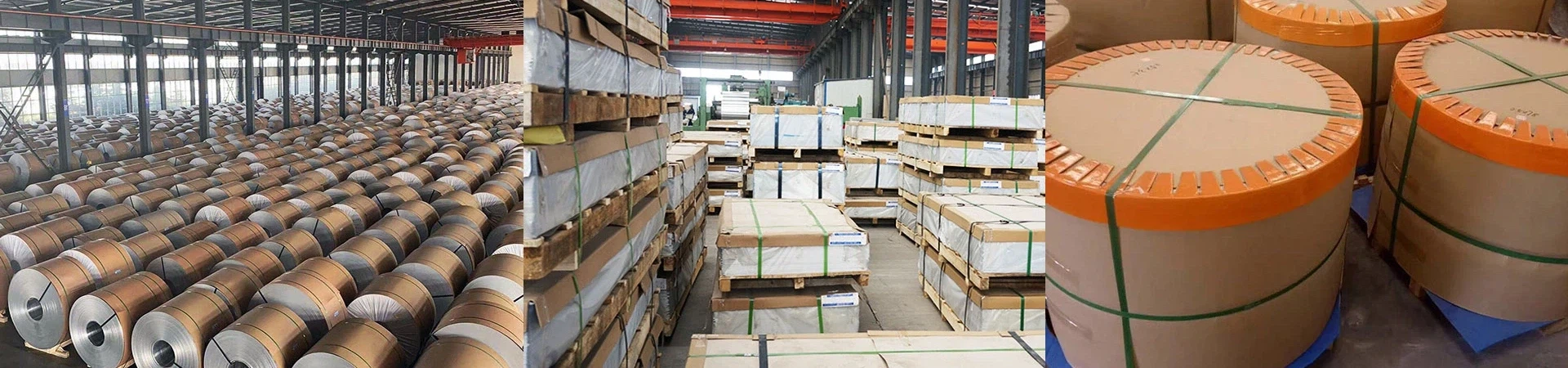
The three most common aluminum flat products in the manufacturing sector are 3003, 5052, and 6061.
- 3003 is your low-cost, highly formable bent metal.
- 5052 is the mid-tier standard for marine corrosion resistance and laser cutting.
- 6061 is the high-strength, rigid plate designed for heavy CNC machining and structural support.
Properties of 3003 Aluminum Flat Sheet
The wholesale 3003 aluminum flat sheet is the baseline material for general sheet metal fabrication. It belongs to the 3000 series, using roughly 1.2% Manganese (Mn) as its primary alloying element. It is a non-heat-treatable alloy, meaning it gains strength through cold rolling, not thermal aging.
3003 is soft. If you are doing extreme deep drawing (like stamping seamless cooking pots or HVAC ductwork), 3003-O (annealed) or 3003-H14 (half-hard) is your best choice. It easily achieves a 0t to 1t bend radius without outer grain fracturing. However, if you try to CNC mill 3003, it behaves "gummy." The metal melts and sticks to the cutting tool, causing poor surface finishes.
| Property (H14 Temper) | Value | Factory Application Reality |
| Tensile Strength | ~150 MPa | Handles its own weight well, but not meant for structural loads. |
| Yield Strength | ~145 MPa | Low resistance to physical deformation. |
| Elongation | 8% - 16% | Highly ductile. Excellent for sharp press brake operations. |
| Common Uses | - | HVAC ducts, chemical storage tanks, and acoustic ceiling panels. |

CNC Machining of 6061 Aluminum Plate
When you need serious structural support, you upgrade to a 6061-T6 aluminum plate supplier. 6061 uses Magnesium and Silicon. Unlike 3003 and 5052, 6061 is a heat-treatable alloy. After rolling, it is solution heat-treated and artificially aged in an oven to achieve the "T6" temper, resulting in massive strength.
A 6061-T6 plate is extremely rigid. If you put it in a press brake for a sharp 90-degree bend, it will snap. You must use a large bend radius (often 4t or higher) or form it in the O-temper and heat-treat it later.
Where 6061-T6 shines is CNC Machining. Because it is hard (approx. 95 Brinell), it chips cleanly away from the milling cutter, leaving a mirror-like finish with precise threaded holes.
| Property (T6 Temper) | Value | Factory Application Reality |
| Tensile Strength | ~310 MPa | Rivals some mild steels. Handles heavy, dynamic loads. |
| Yield Strength | ~275 MPa | Will not permanently deform under heavy pressure. |
| Machinability | Excellent | The best choice for CNC milling, drilling, and tapping. |
| Common Uses | - | CNC base plates, automated assembly frames, thick structural brackets. |
SMM Pricing and Factory Cost Structure
At GNEE, our export pricing is transparent and calculated using the following formula:
Current SMM (Shanghai Metals Market) Base Price + Mill Processing Fee + Ocean Freight.
Why do processing fees differ?
- 3003 Cost: Lowest. Manganese is cheap, and the metal only requires cold rolling. Fast production equals low processing fees.
- 5052 Cost: Medium. Magnesium is slightly more expensive, and rolling this harder alloy creates more wear on factory mill rolls.
- 6061-T6 Cost: Highest. Achieving the T6 temper requires massive industrial ovens for solution heat treatment and hours of artificial aging. The electricity and time required drastically increase the factory processing fee.
Moisture-Proof Export Packaging
Whether you order a 3003 flat sheet or a thick 6061 plate, ocean freight condensation is your biggest enemy. Trapped container humidity causes "white rust" (oxidation). GNEE implements strict marine-grade packaging for all global shipments:
- Sheets are interleaved with acid-free paper to prevent surface scratching.
- Wrapped tightly in heavy-duty waterproof kraft paper.
- Encapsulated in plastic shrink film loaded with industrial silica gel desiccants.
- Strapped with steel bands to ISPM-15 fumigated wooden pallets for safe forklift handling.


