

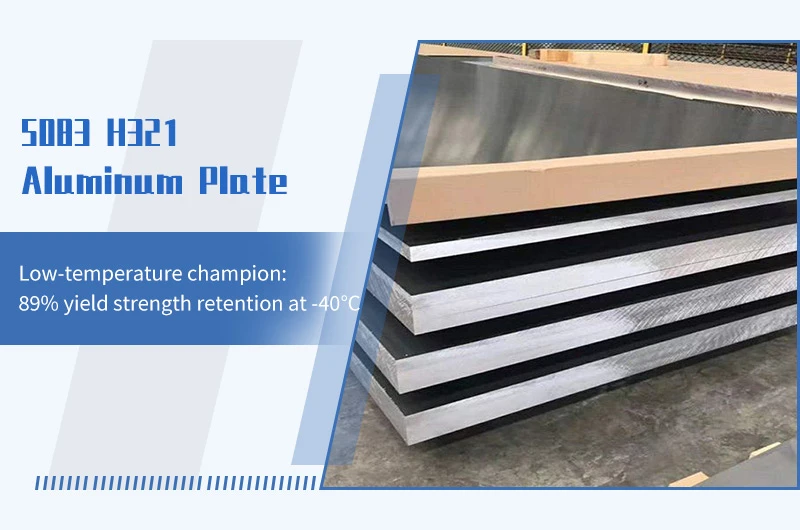
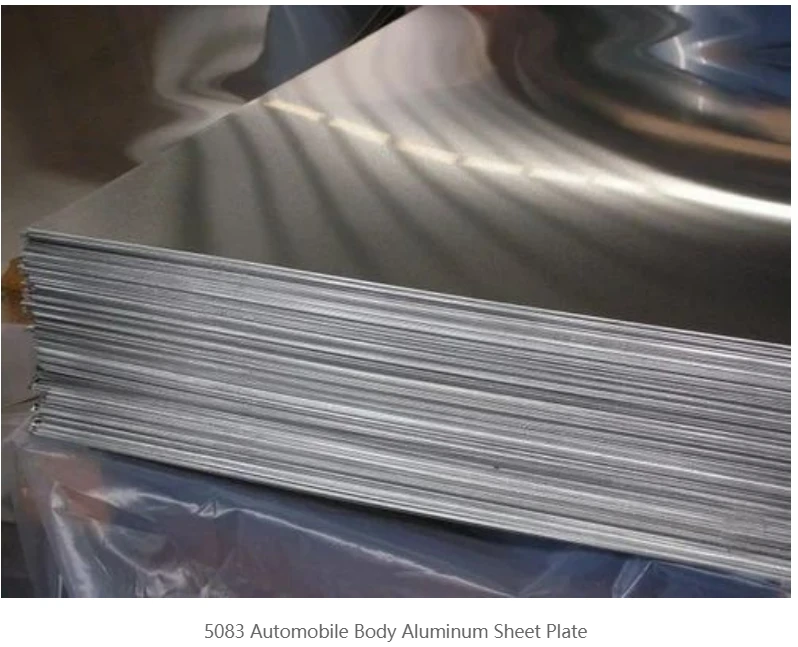
5083 aluminum sheet and plate is a non-heat-treatable 5xxx (Al-Mg) alloy with 4.0–4.9% magnesium, supplied by GNEE for automotive body panels, welded transport structures and lightweight fabrication. It combines a low density of 2.66 g/cm³ (about one-third of steel) with strong corrosion resistance, good weldability and excellent formability in the soft O / H111 tempers.
What is 5083 aluminum sheet for automotive body panels
5083 (EN AW-5083, UNS A95083, AlMg4.5Mn) is a non-heat-treatable 5xxx-grade aluminum–magnesium alloy. Its strength comes from magnesium in solid solution plus strain hardening, not from heat treatment. With 4.0–4.9% magnesium it is one of the highest-strength weldable non-heat-treatable alloys, while staying soft and formable in the O and H111 tempers.
Vehicle body panels are a natural fit for 5083 because the alloy delivers four properties that matter on the road:
Lightweighting - at 2.66 g/cm³ it is roughly one-third the density of steel, cutting body weight and improving fuel economy or EV range.
Corrosion resistance - the high magnesium content forms a stable, adherent oxide film; in both atmospheric and salt-spray conditions it outperforms the 6xxx and 7xxx families.
Weldability - 5083 keeps most of its strength after MIG/TIG welding, so body sub-frames and enclosures can be welded rather than only riveted or bonded.
Formability - in the O temper it supports deep drawing and complex forming; a 90° bend can be made to a minimum inner radius of only 1–2× the sheet thickness.
For outer skin panels where maximum drawability is the priority, 5xxx grades such as 5754 or 5182 are often chosen; 5083 is the choice where higher strength or a welded structure is required.
Chemical composition of 5083 aluminum alloy
Values below are the specification limits per ASTM B209 and EN 573-3 for alloy 5083. It is an Al-Mg alloy with manganese for strength and chromium for grain control; copper and silicon are kept low.
| Element | Content (%) | Role / function |
|---|---|---|
| Aluminum (Al) | Remainder | Base metal |
| Magnesium (Mg) | 4.0 – 4.9 | Primary strengthening element; forms stable oxide, gives corrosion resistance and weldability |
| Manganese (Mn) | 0.40 – 1.00 | Refines grains, raises strength and strain-hardening response |
| Chromium (Cr) | 0.05 – 0.25 | Controls recrystallization and improves stress-corrosion resistance |
| Silicon (Si) | ≤ 0.40 | Kept low to protect weld corrosion resistance |
| Iron (Fe) | ≤ 0.40 | Impurity, limited for formability and finish |
| Copper (Cu) | ≤ 0.10 | Kept very low (high Cu would hurt corrosion resistance) |
| Zinc (Zn) | ≤ 0.25 | Impurity |
| Titanium (Ti) | ≤ 0.15 | Grain refiner |
| Others (each / total) | ≤ 0.05 / ≤ 0.15 | Residual limits |
Mechanical properties of 5083 aluminum plate and sheet
5083 is non-heat-treatable, so its properties are set by temper. The table shows ASTM B209 / EN 485-2 minimum and typical values; figures vary with thickness and product form - confirm the exact numbers on the Mill Test Certificate. O and H111 are the panel-forming tempers; H32 / H116 / H321 add strength for structural use.
| Temper | Tensile strength (MPa) | Yield strength, min (MPa) | Elongation, min (%) | Brinell (HB) |
|---|---|---|---|---|
| O / H111 (sheet 0.2–6.3 mm) | 275 – 350 | 125 | 16 | 75 |
| O / H111 (plate 6.3–80 mm) | 270 – 345 | 115 | 14 | 75 |
| H112 (plate) | ≥ 275 | 125 | 12 | - |
| H32 (sheet 0.2–6 mm) | 305 – 380 | 215 | 12 | 89 |
| H116 | ≥ 305 | 215 | 10 | - |
| H321 | 305 – 385 | 215 | 12 | - |
Per GB/T 3880, the four-digit alloy 5083 adopts the same tensile and yield ranges as ASTM B209 / JIS H4000, so a single set of values is valid across these standards. H116 / H321 are stabilized tempers developed for high-magnesium alloys to resist exfoliation and stress-corrosion cracking.
Physical and thermal properties of 5083 aluminum
| Property | Typical value |
|---|---|
| Density | 2.66 g/cm³ (about 1/3 of steel) |
| Melting range | 570 – 640 °C |
| Modulus of elasticity | 72 GPa |
| Thermal conductivity | ~117 W/(m·K) |
| Coefficient of thermal expansion | ~23.8 × 10⁻⁶/K |
| Electrical conductivity | ~29 % IACS |
| Brinell hardness | 75 HB (O) / 89 HB (H32) |
| Poisson's ratio | 0.33 |
specifications of 5083 aluminum sheet and plate
| Item | Range / option |
|---|---|
| Thickness | 0.5 – 6 mm (thin sheet) / 6 – 200 mm (thick plate) |
| Width | 1000 – 2650 mm |
| Length | 500 – 16000 mm, or cut-to-length / coil as required |
| Temper | O, H111, H112, H32, H116, H321 |
| Common stock sizes | 1250×2500, 1500×3000 mm (4×8 ft also available) |
| Surface finish | Mill finish, brushed, PVC/PE film protected, painted |
| Standards | ASTM B209, EN 485-2, EN 573-3, JIS H4000, GB/T 3880 |
| Tolerance | Thickness, flatness and length per ANSI H35.2(M) and ASTM B209 / EN 485-2 |
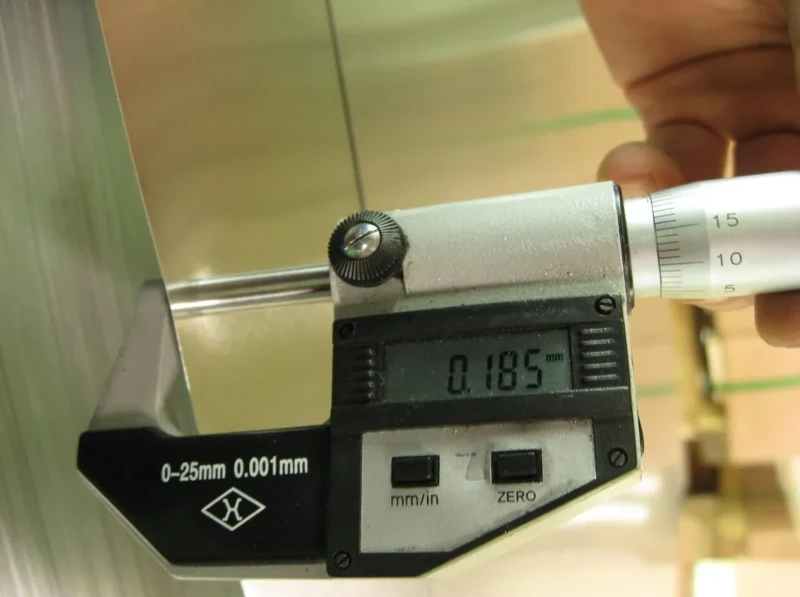
Thickness tolerance per ANSI H35.2(M) (Table 3.1a, non-aviation alloys): ±0.040 mm for 0.40–0.63 mm sheet up to 1000 mm wide (±0.06–0.10 mm over wider widths); ±0.09–0.18 mm for 1.0–2.5 mm sheet; ±0.36–0.46 mm for 6.3–8.0 mm plate; ±1.00–1.40 mm for 25–40 mm plate. Flatness (Table 3.11, 5000/5083/6061 group): 4 mm per 500 mm wave length up to 14 mm for waves over 2000 mm. Length: shear ±3 mm up to 3000 mm; saw cut +4 to +7 mm up to 5000 mm.
Heat treatment and temper guide for 5083 aluminum
5083 is non-heat-treatable - it does not take a T-temper and there is no solution-heat-treat and artificial-age cycle (the 530°C / 175°C×8h route used for 6xxx alloys does not apply). Its tempers are produced as follows:
| Temper | Process | What it gives |
|---|---|---|
| O (annealed) | Full anneal, typically held ~410–430 °C then slow-cooled | Softest, highest formability - the choice for deep drawing and tight-radius bends |
| H111 | Slight work hardening from shaping, less than H11 | Near-annealed softness with a little extra strength |
| H112 | As-fabricated (hot worked), not heat treated | Economical plate condition for structural use |
| H32 | Strain hardened then stabilized (quarter hard) | Higher strength while staying formable |
| H116 / H321 | Strain hardened and thermally stabilized (marine grades) | Strength plus resistance to exfoliation and stress-corrosion cracking |
Keep 5083 service temperature at or below about 65 °C. Sustained exposure above this range can sensitize the grain boundaries and reduce corrosion resistance. 5083 is not supplied in T-tempers.
Equivalent designations of 5083 aluminum
| System | Designation |
|---|---|
| AA (Aluminum Association) | 5083 |
| UNS | A95083 |
| EN | EN AW-5083 (AlMg4.5Mn0.7, material 3.3547) |
| DIN | AlMg4.5Mn / 3.3547 |
| JIS | A5083 |
| GB (China) | GB/T 3880 grade 5083 (same four-digit alloy; older 5A06 / Al-Mg6 is higher-Mg and not identical - confirm before substitution) |
| ISO | AlMg4.5Mn |
Corrosion resistance of 5083 aluminum
Atmospheric: Excellent. The high magnesium content forms a stable, self-healing oxide film; 5083 is widely used where long service life with little maintenance is required.
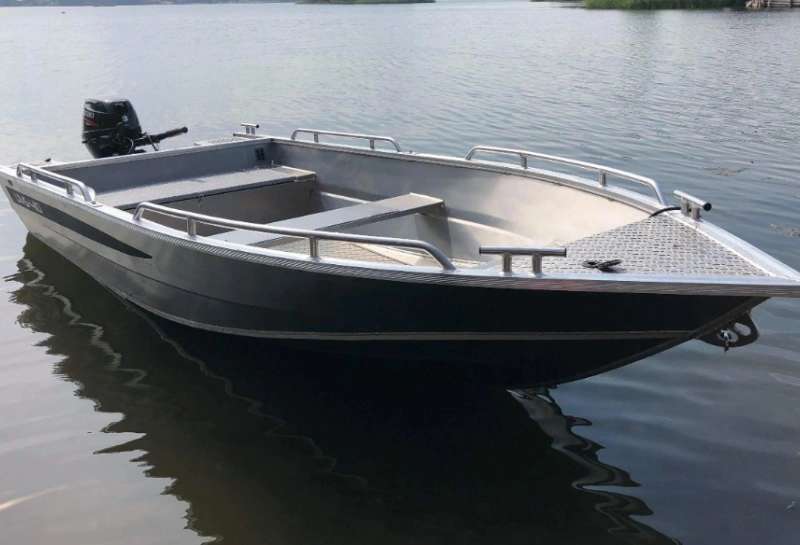
Marine / salt spray: Excellent - among the common aluminum alloys, 5083 gives the strongest general corrosion resistance in seawater, which is why it is used for hulls and decks. It is stronger in this environment than 6xxx or 7xxx grades.
Galvanic: Good on its own, but like all aluminum it should be isolated from steel or copper where continuous electrolyte contact is expected; use insulated fasteners or barrier coatings at dissimilar-metal joints.
Stress-corrosion cracking (SCC): Low risk in O / H111. H116 / H321 tempers are stabilized to resist exfoliation and SCC; avoid sustained service above ~65 °C, which can sensitize the material.
After finishing: 5083 anodizes to a grey, less decorative film; for appearance and extra protection, painted (PVDF / polyester) or PVC/PE-film-protected finishes are common, and cladding is used where maximum marine durability is needed.
Fabrication of 5083 aluminum (welding, machining, forming)
Welding: Excellent with standard MIG (GMAW) and TIG (GTAW). Use ER5183 filler for the closest strength match to the base metal, or ER5356 / ER5556 for high joint strength and good color after anodizing. Do not use ER4043 on 5083 - the silicon in 4043 forms Mg₂Si in the weld, lowering joint strength and corrosion resistance on a high-magnesium base metal. 5083 retains most of its strength after welding.
Machining: Fair to poor compared with free-machining grades. Use sharp carbide tooling, positive rake angles and suitable coolant; expect shorter tool life than on 6061. Slower feeds and rigid setups give a cleaner finish.
Formability: Excellent in O / H111 - supports deep drawing and complex panel shapes, and a 90° bend can be made to a minimum inner radius of 1–2× the sheet thickness. H32 bends at larger radii; plan bend radius by temper and thickness.
Cutting & joining: Shear, saw, laser and water-jet cutting all work well; mechanical fastening and bonding are also common on body assemblies.
Quality control of 5083 aluminum sheet
Automotive and transport buyers care about consistency, not just a certificate. For 5083 sheet and plate GNEE checks the following before the order leaves the warehouse:
| Risk if skipped | What we check | Standard / method | Result you get |
|---|---|---|---|
| Wrong alloy or temper shipped | Alloy, temper and dimensions confirmed against your drawing and PO | ASTM B209 / EN 485-2 / EN 573-3 | Material matches the agreed specification, verified on the MTC |
| Out-of-tolerance sheet causing fit-up problems | Thickness, width, length, flatness and edge squareness measured | ANSI H35.2(M), gauge / straightedge / CMM | Dimensional report within the agreed tolerance band |
| Hidden corrosion or forming defects | Surface and edge inspected for scratches, edge cracks, oxide and coil marks | Visual + spot check per lot | Clean, defect-free surfaces ready for forming |
| Weld or forming failure in service | Chemistry and mechanical properties verified on the mill heat | Mill Test Certificate EN 10204 3.1 (3.2 / third-party on request) | Traceable properties you can pass to your QA |
Any deviation from the agreed specification is resolved with you before the material enters production or shipment.
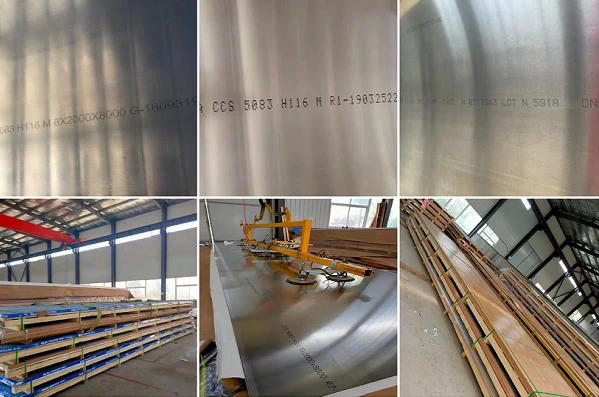
Surface finishes for 5083 aluminum sheet and plate
| Finish | Notes |
|---|---|
| Mill finish | As-rolled surface; standard for structural and welded parts |
| Brushed / polished | Directional or specular finish for visible trim |
| PVC / PE film protected | Protective film applied to avoid scratches during forming and transport |
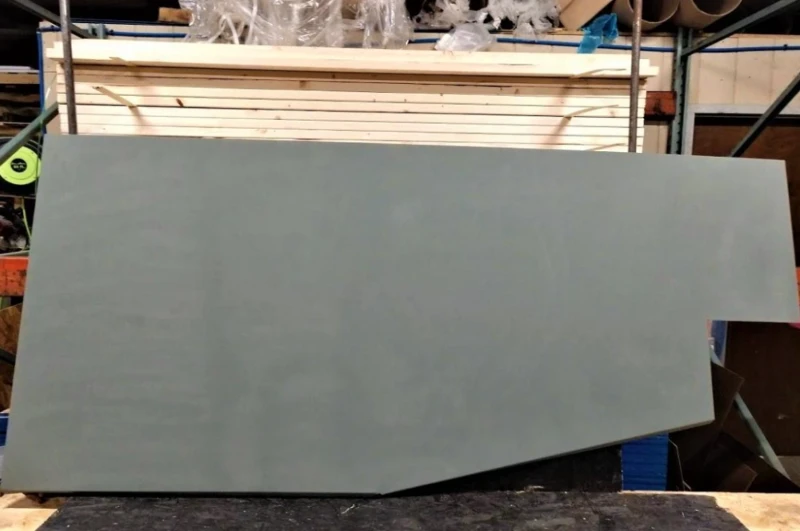
| Painted (PVDF / polyester) | Specified color and extra corrosion/UV protection for exterior panels |
| Clear anodizing | Possible but gives a grey, less uniform film; confirmed on sample before production |
Applications of 5083 aluminum in automotive and transport
5083 is used across vehicle and transport applications where light weight, weldability and corrosion resistance are needed:
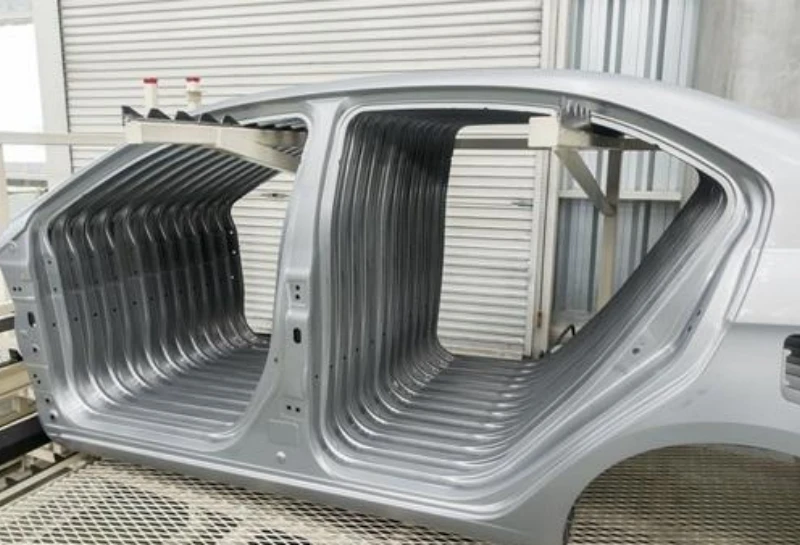
Automotive body panels
Doors, hoods, fenders and inner structural panels in O / H111 for drawability and H32 where more strength is needed - cutting body weight to improve fuel economy and EV range.
Battery enclosures & EV housings
Lightweight, weldable enclosures and tray structures for battery packs and e-drive housings, where 5083's strength-to-weight and corrosion behavior help safety and range.
Welded body sub-frames & brackets
Because 5083 keeps its strength after welding, it is used for welded sub-structures, mounting brackets and reinforcement where riveting alone would not suffice.
Trucks, trailers & tankers
Tipper bodies, tanker shells and curtain-side structures that benefit from low weight and resistance to road salt.
Rail & rolling stock
Car-body sheet and welded interior structures where weight saving and corrosion resistance extend service life.
Marine & offshore
Hulls, decks and superstructures - the original strength of 5083 - useful where vehicle and marine duty overlap.
5083 aluminum vs other alloys comparison
For body-panel and lightweight-sheet selection, 5083 is most often compared with 5052 (general sheet) and 6061 (structural, heat-treatable). The table uses ASTM B209 / EN 485-2 typical values.
| Property | 5083 (O / H111) | 5052 (O) | 6061 (T6) |
|---|---|---|---|
| Alloy family | 5xxx Al-Mg | 5xxx Al-Mg | 6xxx Al-Mg-Si |
| Mg content | 4.0 – 4.9% | 2.2 – 2.8% | 0.8 – 1.2% |
| Heat-treatable | No | No | Yes |
| Tensile strength | 275 – 350 MPa | 210 – 260 MPa | 290 min, ~310 typ |
| Yield strength, min | 125 MPa | 65 MPa | 241 MPa |
| Density | 2.66 g/cm³ | 2.68 g/cm³ | 2.70 g/cm³ |
| Formability (O / soft) | Excellent | Very good | Moderate (T6) |
| Weldability | Excellent | Good | Good |
| Marine corrosion | Excellent | Very good | Good |
| Typical use | Marine, welded structures, body sub-frames | General sheet, enclosures, panels | Machined & structural parts |
Where maximum drawability for outer skin panels is the priority, 5xxx grades with lower magnesium such as 5754 or 5182 are commonly selected; 5083 is the stronger option for welded or higher-load parts. GNEE can supply 5052, 5754, 5182 and 6061 as alternatives - tell us the priority and we will recommend the temper.
About GNEE
GNEE has supplied aluminum products since 2008 and now exports to 100+ countries and regions.
Common tempers and sizes of 5083 are kept in stock; both small and large orders are accepted with a flexible MOQ.
Standard lead time is 15–30 days; each order ships with an EN 10204 3.1 Mill Test Certificate, and third-party inspection (e.g. SGS) can be arranged.
Our technical team helps select the right alloy, temper and finish for your body-panel or structural application and provides drawings-based quotations.
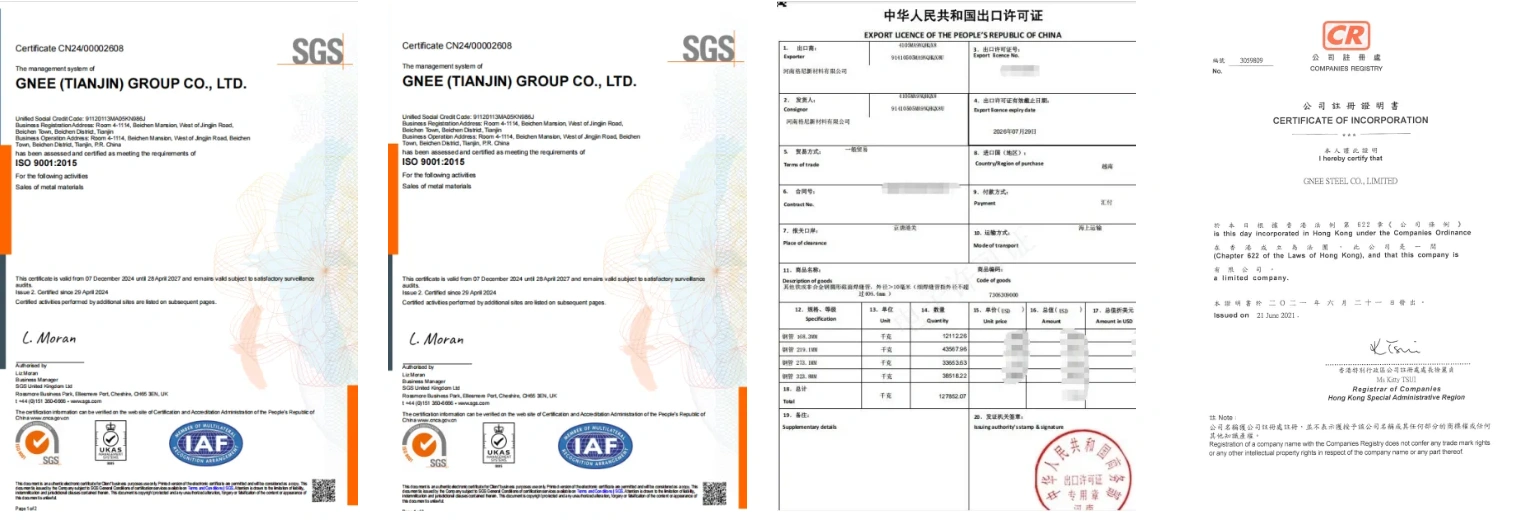
Why choose GNEE for 5083 aluminum
Stock and flexibility: 5083 in O / H111 / H32 and common plate thicknesses are held in stock, with a flexible MOQ so trial and small batches are accepted alongside full containers.
Lead time: 15–30 days for stock and common specifications, with cut-to-length and processing scheduled to your build plan.
Certification you can pass on: every shipment carries an EN 10204 3.1 Mill Test Certificate; 3.2 and third-party inspection (SGS, BV, TÜV) are arranged on request, and chemistry/mechanical data is traceable to the heat.
Processing to near-net shape: shearing, sawing, laser/water-jet cutting, bending, welding and protective-film application are available so you receive parts closer to finished size.
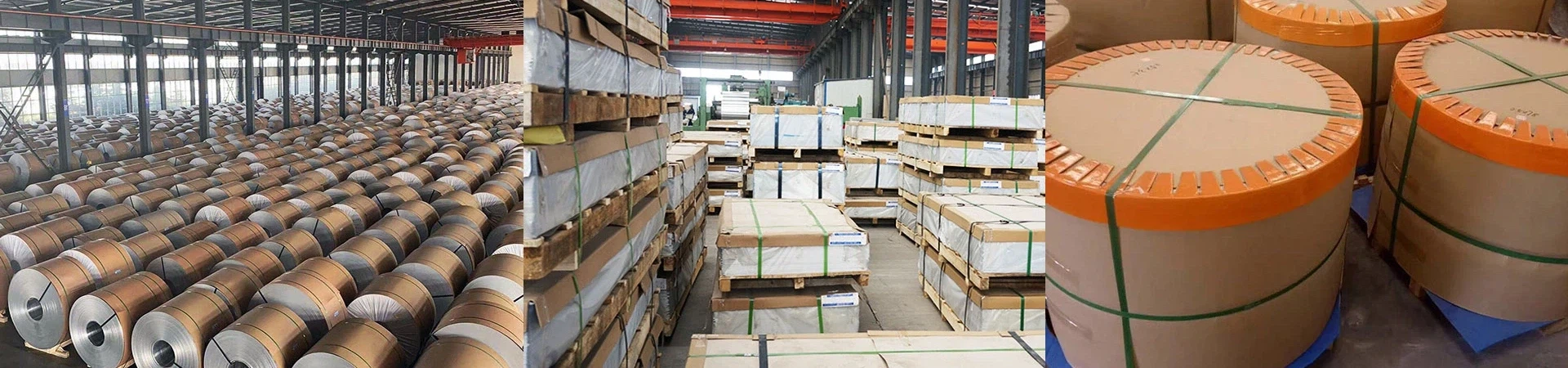
Packaging built for sea freight: seaworthy export packing on ISPM-15 fumigated pallets with edge protection, waterproof kraft, desiccant and PE/paper interleaving between sheets to prevent scratches and corrosion in transit.


