

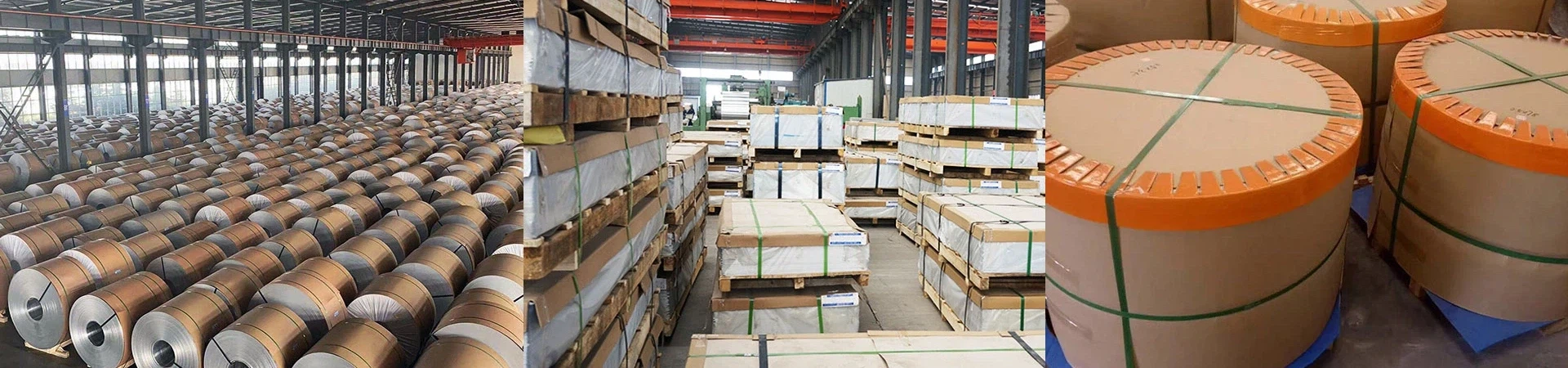
5083 H116 refers to an aluminum alloy (5083) that has undergone an H116 temper treatment, providing it with high strength and exceptional corrosion resistance, particularly in marine environments. The H116 temper is achieved through a combination of solution treatment and cold working, enhancing the alloy's resistance to exfoliation and intergranular corrosion. This makes it ideal for demanding applications, such as shipbuilding.
What 5083 h116 Means:
5083: This is the alloy designation. It is a non-heat-treatable aluminum alloy with a high magnesium content (approximately 4–5%), which contributes to its strength and excellent corrosion resistance.
H116: This is the temper designation, indicating a specific processing method and hardness level.
H: The temper category for mechanically hardened (strain-hardened) aluminum.
116: A specific level within the H temper, meaning the alloy has been solution-treated and cold-worked to achieve a precise balance of strength and corrosion resistance. This temper is particularly engineered to resist exfoliation corrosion.
Key Properties and Uses:
Corrosion Resistance: The alloy exhibits outstanding resistance to saltwater corrosion, making it an excellent choice for marine applications.
Strength: It offers high strength for a non-heat-treatable aluminum alloy.
Weldability: It is well-suited for welding, which is essential for fabrication in shipbuilding and other large structural applications.
Applications: Common uses include shipbuilding, marine structures, pressure vessels, and other environments that demand high strength and resistance to harsh, corrosive conditions.
5083 H116 is a high-strength, corrosion-resistant aluminum alloy from the 5000 series, specifically designed for applications in marine environments. The "5083" designates the alloy, while "H116" indicates its temper, which is achieved through a specific heat treatment process that enhances its strength and resistance to corrosion, especially in seawater.
5083 Alloy
Composition: Part of the aluminum-magnesium (Al-Mg) family, it is non-heat-treatable but gains strength through work hardening.
Corrosion Resistance: Offers exceptional resistance to corrosion, particularly in marine and saltwater environments.
Strength: Known for its high strength compared to other non-heat-treatable alloys, making it ideal for demanding applications.
Weldability: Good weldability, ensuring minimal loss of strength after welding.
Common Applications: Widely used in shipbuilding, marine structures, cryogenic applications, pressure vessels, and transportation.
H116 Temper
Strain Hardening and Stabilization: The H116 temper indicates that the alloy has undergone strain hardening and stabilization to reduce susceptibility to stress corrosion and exfoliation corrosion.
Marine-Specific Design: This temper is specifically formulated for marine environments, offering excellent resistance to seawater corrosion.
Mechanical Strength: Provides good mechanical strength and high corrosion resistance, particularly in harsh marine conditions.
Seawater Resistance: Ideal for applications exposed to seawater for prolonged periods, such as hulls and offshore structures.
5083 H116 Aluminum Properties
Corrosion Resistance: Exceptional resistance to seawater, industrial chemicals, and low temperatures. It performs significantly better than carbon steel, with a corrosion rate of just 0.02 mm/year in a 3.5% NaCl solution.
Workability:
Weldability: Excellent weldability with conventional methods. Use of 5356 or 5183 filler wire is recommended, and surface cleaning is essential before welding.
Formability: Good cold forming performance, with a bend radius 1.5 times the plate thickness for complex curved surfaces.
Machinability: Cutting forces are reduced by 30% compared to 7075 aluminum, and tool life is significantly improved, making it suitable for various machining processes.
Heat Treatment: Annealing temperature is 415°C, which improves machinability. It maintains excellent mechanical properties even under high-temperature conditions.
Surface Treatment: Can be anodized with a thickness of up to 25μm, offering high hardness and protection. Suitable for decorative and protective finishes, and can also undergo spraying or electroplating.
5083 H116 Aluminum Plate Sheet Sizes
Thickness: 3-50 mm
Width: 2000 mm or customized
Length: 6000/8000/9000/12000 mm or customized
5083 h116 aluminum plate sheet mechanical properties
Tensile Strength (Rm): ≥305 MPa
Yield Strength (Rp0.2): ≥215 MPa
Elongation at Break: ≥10%
Exfoliation Corrosion: ≤PB
Intergranular Corrosion: ≤15 mg/cm²

5083 h116 aluminum plate sheet physical properties
| Property | Metric | English |
|---|---|---|
| Density | 0.096 lb/in³ | 2.66 g/cc |
| Ultimate Tensile Strength | 47 ksi | 325 MPa |
| Yield Strength | 33 ksi | 228 MPa |
| Fatigue Strength | 23 ksi | 160 MPa |
| Shear Strength | 28 ksi | 193 MPa |
| Modulus of Elasticity | 9,900 ksi | 68 GPa |
| Poisson's Ratio | 0.33 | 0.33 |
| Machinability | 30% | 30% |
| Melting Point | 1,080-1,180 °F | 582-640°C |
| Specific Heat | 2.2 x 10^-1 | 0.215 BTU/lb-°F |
| Thermal Conductivity | 816 BTU-in/hr-ft²-°F | 140 W/m·K |
| Electrical Conductivity | 29% IACS | 29% IACS |
5083 h116 aluminum plate sheet chemistry information
| Element | Percentage |
|---|---|
| Al | 92.4 - 95.6% |
| Fe | Max 0.4% |
| Cr | 0.05 - 0.25% |
| Cu | Max 0.1% |
| Mg | 4 - 4.9% |
| Mn | 0.4 - 1% |
| Ti | Max 0.15% |
| Si | Max 0.4% |
| Zn | Max 0.25% |
| Residual | Max 0.15% |
Advantages of 5083 H116
Corrosion Resistance: Offers excellent resistance to corrosion, making it highly suitable for marine environments.
Workability: Features good machinability, outstanding weldability, and a smooth surface after anodizing.
High Strength-to-Weight Ratio: 5083 H116 provides an exceptional strength-to-weight ratio, which helps enhance the fuel efficiency and speed of vehicles and ships.
Superior Corrosion Resistance: The alloy forms a protective oxide film with extremely high resistance to seawater corrosion, classifying it as a "marine-grade" aluminum. The H116 temper is specifically engineered to improve resistance to exfoliation and stress corrosion cracking.
Excellent Weldability and Formability: This alloy can be easily welded using common methods like GMAW (MIG) and GTAW (TIG), maintaining strong joints. Additionally, it demonstrates excellent cold and hot forming properties, allowing for shaping without cracking.


