

If you are procuring aluminum checker plates for marine decks, industrial flooring, or custom toolboxes, choosing the wrong alloy will ruin your project.
The debate between 6061 vs 5052 aluminum checker plate is the most common engineering dilemma in metal fabrication. Make the wrong choice, and one of two things will happen: you will buy 6061-T6, try to bend it 90 degrees, and watch it crack in half; or you will buy 5052-H32 for a heavy-duty forklift ramp and watch it dent permanently under the load.
At GNEE Aluminum, we supply thousands of tons of both alloys to global manufacturers. We don't just ship metal; we align our materials with your fabrication line. Here is the definitive engineering guide to the difference between 5052 and 6061 diamond plate and how GNEE uses advanced manufacturing to solve your biggest fabrication headaches.
6061-T6 & 5052-H32 The Core Difference: Marine Grade Bending vs. Structural Strength
To make the right purchasing decision, you must understand the metallurgical purpose of each alloy.
1. 5052-H32 Aluminum Checker Plate (The Marine & Bending Master)
Alloy 5052 is alloyed with Magnesium (Mg). It is non-heat-treatable and gets its strength from strain hardening (usually supplied in the H32 quarter-hard or H34 half-hard temper).
- The Pros: It possesses extreme corrosion resistance, especially against saltwater, making it a true "Marine Grade" aluminum. More importantly, it has excellent formability. You can bend and brake-form 5052-H32 into tight angles without cracking.
- The Cons: It has a lower yield strength (~193 MPa). It is not designed to support heavy, dynamic structural loads.

2. 6061-T6 Aluminum Checker Plate (The Structural Heavyweight)
Alloy 6061 contains Magnesium and Silicon. It is heat-treatable (usually supplied in the T6 temper-solution heat-treated and artificially aged).
- The Pros: It is built for raw strength. With a yield strength of ≥ 276 MPa and high surface hardness, it acts as a structural component. It resists severe abrasion and heavy impact (e.g., truck beds and loading ramps).
- The Cons: It is brittle. Because of the T6 heat treatment, attempting to bend a 6061-T6 checker plate past a very shallow angle will cause immediate cracking along the bend line.
How GNEE Solves Common Fabrication Problems
Knowing the difference is only step one. Even with the right alloy, poor manufacturing from an unqualified mill will cause your automated lines to fail. Here is how GNEE solves industry-wide material defects.
Problem 1: 6061 Warping During Laser Cutting
Standard 6061-T6 plates contain high internal residual stress from the water quenching process. When your CNC or laser cutter slices into the plate, this stress releases, causing the metal to warp or bow instantly.
The GNEE Solution: For precision cutting applications, we supply 6061-T651 temper. After quenching, we process the plates through our heavy-duty Tension Leveling Machine. We apply a controlled 1.5% to 3% mechanical stretch, permanently erasing internal stress. Your cut parts will remain dead flat.

Problem 2: 5052 Failing in Saltwater Environments
Many suppliers mix cheap scrap aluminum into their 5052 billets, introducing copper or iron impurities that destroy the alloy's natural saltwater corrosion resistance.
The GNEE Solution: We guarantee true Marine Grade 5052. Before casting, we use Optical Emission Spectrometers (OES) to verify the molten metal. We keep Copper (Cu) strictly under 0.10% and ensure Magnesium (Mg) is locked between 2.2% and 2.8%. Your ship decks and dock gangways will survive decades in harsh marine environments.
Problem 3: Inconsistent Anti-Slip Pattern Height
If the diamond pattern is shallow or uneven, safety is compromised.
The GNEE Solution: We use CNC-machined hardened steel embossing rollers. Coupled with our Siemens Automatic Gauge Control (AGC) systems, we guarantee a uniform pattern height of 0.8mm to 1.5mm across the entire width of the plate, providing maximum traction grip.

Technical Data Comparison: 6061 vs 5052 Checker Plate
As a verified 6061 t6 aluminum tread plate supplier and 5052 manufacturer, all our material is backed by traceable EN 10204 3.1 Mill Test Certificates (MTC).
Table 1: 6061 vs 5052 Checker Plate Chemical Composition Comparison
| Element | 5052 Aluminum (%) | 6061 Aluminum (%) |
| Magnesium (Mg) | 2.20 - 2.80 (High corrosion resistance) | 0.80 - 1.20 |
| Silicon (Si) | 0.25 Max | 0.40 - 0.80 (For heat treatment) |
| Chromium (Cr) | 0.15 - 0.35 | 0.04 - 0.35 |
| Copper (Cu) | 0.10 Max | 0.15 - 0.40 |
| Zinc (Zn) | 0.10 Max | 0.25 Max |
Table 2: 6061 T6 vs 5052 H32 Checker Plate Mechanical Properties Comparison
| Property | 5052-H32 (Guaranteed) | 6061-T6 (Guaranteed) |
| Yield Strength | ≥ 193 MPa | ≥ 276 MPa (Structural) |
| Tensile Strength | 214 - 262 MPa | ≥ 310 MPa |
| Brinell Hardness | ~ 60 HB | ≥ 95 HB (High wear resistance) |
| Bendability (90°) | Excellent (Cold forming) | Poor (Will crack without large radius) |
| Weldability | Excellent | Good (Strength loss in HAZ) |
Table 3: GNEE Production Tolerances
| Specification | Available Range | Precision Tolerance |
| Base Thickness | 1.5mm - 12.0mm | ±0.05mm |
| Pattern Height | 0.8mm - 1.5mm | ±0.1mm |
| Width | Up to 2000mm | +2mm / -0mm |
| Length | Up to 12000mm | +3mm / -0mm |
| Patterns | 5-Bar, 1-Bar (Diamond), Compass | Sharp, full embossing |
6061 T6 vs 5052 H32 Aluminum Checker Plate Application Guide: Which Alloy Do You Need?
Buy Wholesale 5052 Aluminum Floor Plate if you are building:
- Custom Toolboxes & Storage: Requires sharp 90-degree bends on a press brake.
- Marine & Offshore: Boat decks, pontoon flooring, and dock gangways exposed to saltwater.
- Architectural Trim: Wall panels and corner guards where formability and bright appearance are key.
Buy Heavy Duty 6061 Aluminum Floor Plate if you are building:
- Commercial Transport: Truck bed floors and semi-trailer ramps supporting heavy cargo.
- Industrial Infrastructure: Operating platforms, catwalks, and mezzanine flooring supporting forklift traffic.
- Structural Frameworks: Applications where the floor plate acts as a load-bearing component.
Avoid Costly Manufacturing Failures
Don't let the wrong alloy selection ruin your production line. If you're unsure whether 5052-H32 or 6061-T6 is right for your project, contact our experts for assistance.
Send us your CAD drawings, bending requirements, or load specifications now. We'll provide a free material review and send you the latest factory direct price for the alloy you need.
About GNEE Aluminum: Your Audited Factory in China
Sourcing industrial metals requires zero guesswork. GNEE Aluminum is an ISO 9001:2015 certified manufacturer based in China, deeply specialized in marine-grade and structural aluminum alloys.
Why QA Engineers Trust GNEE:
- In-House Testing Lab: We test yield strength, tensile strength, and hardness on our own universal testing machines. You receive actual lab data, not generic copied sheets.
- Traceability: Every bundle of our checker plate features a permanent tag displaying the Heat Number, linking directly to your supplied Mill Test Certificate.
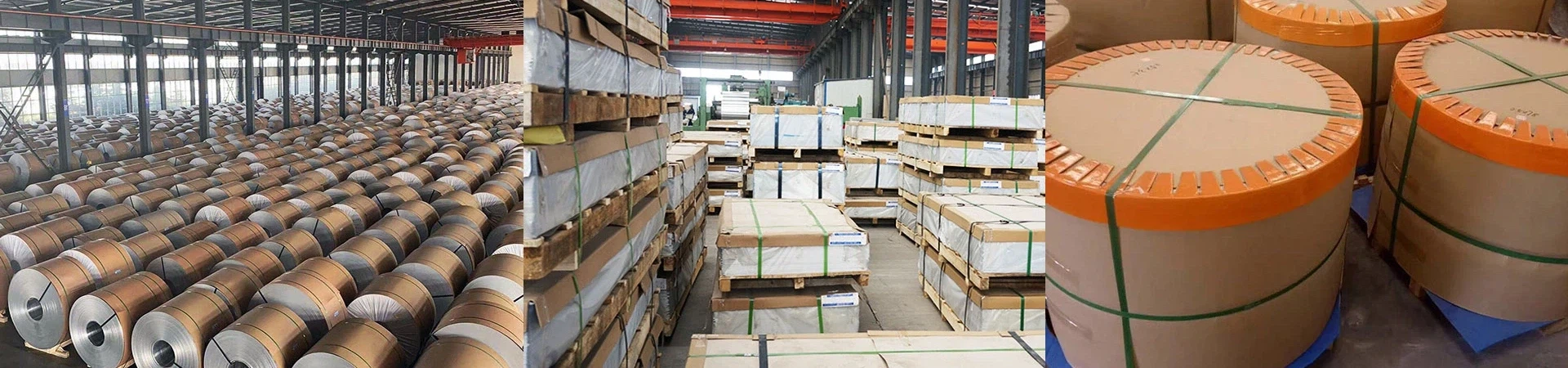
- Sea-Worthy Export Packaging: A pristine plate is useless if it arrives corroded. We pack our plates on IPPC-fumigated wooden pallets. We use interleaving paper to protect the tread pattern, wrap the bundles in moisture-barrier plastic, and insert heavy-duty silica desiccants to prevent "white rust" during ocean transit.


