

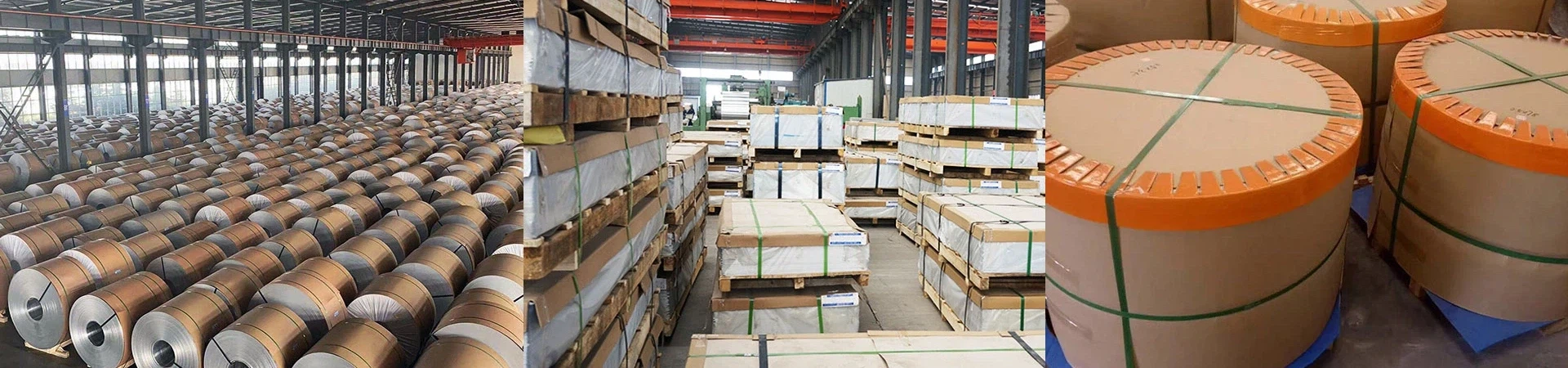
The fundamental difference is that 6061-T651 has internal tensions eased, making it more dimensionally stable and suitable for high-precision machining than 6061-T6. While they share the same basic strength, hardness, and corrosion resistance, the stress-relief technique for T651 enables machining without the risk of warping induced by internal stresses in the T6 temper.
Comparison of 6061 Aluminum Tempers: T6, T651, and T6511
6061 aluminum is a highly workable alloy commonly used in aerospace, automotive, and construction industries. It is available in three key tempers-T6, T651, and T6511-each offering unique performance advantages that can significantly influence project outcomes. Understanding the differences between these tempers makes selecting the most suitable option much easier.
Manufacturing Process Differences
The manufacturing route of each temper greatly affects its final characteristics.
The T6 temper is produced through solution heat treatment followed by artificial aging. This treatment sequence provides a solid balance of strength and formability by heating the alloy to a specific temperature, quenching it rapidly, and then aging it under controlled conditions.
The T651 temper adds a stretching process after solution heat treatment. This additional step relieves internal stresses, improving the alloy's stability and consistency. T6511 follows a similar path to T651 but includes a light straightening procedure after aging, further improving dimensional accuracy.
The main distinction lies in stress-relief processing. While T6 retains residual stresses, both T651 and T6511 undergo mechanical stretching that significantly reduces internal stress-an important advantage for certain high-precision applications.
Mechanical Properties Differences
When comparing mechanical performance, all three tempers share nearly identical strength values:
T6:
Tensile Strength 310 MPa
Yield Strength 276 MPa
Elongation 12%
T651:
Tensile Strength 310 MPa
Yield Strength 276 MPa
Elongation 10%
T6511:
Tensile Strength 310 MPa
Yield Strength 276 MPa
Elongation 8%
While strength remains consistent, elongation gradually decreases from T6 to T651 to T6511. This reduction in ductility results from the stress-relief steps and influences how the alloy reacts under load.
T6, with higher elongation, is more accommodating where slight deformation is acceptable.
T6511, having the lowest elongation, is better suited for applications requiring minimal distortion.
Microstructure Differences
Microstructural characteristics also vary among the tempers and contribute to differences in performance.
T6 features a uniform precipitate distribution but contains noticeable residual stresses caused by quenching. These stresses may influence how the material responds to loading.
T651 shows a more controlled precipitate arrangement and reduced residual stresses due to the stretching process. This produces more predictable material behavior.
T6511 offers the most refined microstructure with the least residual stress. Straightening after aging helps achieve the most consistent properties of all three tempers.
The additional stress-relief measures in T651 and T6511 contribute to greater uniformity, enhancing performance in demanding applications.
Stress Relief Characteristics
Stress relief is one of the most important differentiators.
T6 does not receive mechanical stress relief and retains stresses introduced during quenching. These stresses can affect machining results or dimensional changes.
T651 undergoes stretching that significantly reduces these stresses, improving dimensional stability-especially valuable during machining.
T6511 adds a final straightening step that removes any remaining stress and provides the best dimensional consistency. This makes T6511 the top choice for applications requiring very tight tolerances.
Dimensional Stability Differences
Dimensional stability is essential for precision-engineered components.
T6 offers good stability overall but may experience distortion, particularly when uneven machining removes material.
T651 provides better dimensional consistency because of its stress-relieved structure. Warping is less likely, enabling more accurate machining.
T6511 delivers the highest stability of all three tempers. The final straightening enhances uniformity, making this temper ideal when exact tolerances and minimal variation are required.

Machinability and Fabrication Differences
How easily each temper can be machined is also a major consideration.
T6 machines well but requires careful handling to prevent distortion, especially in thick or complex components.
T651 offers improved machinability compared with T6, with less risk of deformation during cutting or shaping.
T6511 provides the best machinability. Its superior stress relief ensures minimal distortion and cleaner finishes-ideal for complex precision parts.
Corrosion Resistance Differences
All three tempers offer similar general corrosion resistance but differ in stress corrosion cracking resistance:
T6 performs well in most environments but may be more prone to stress corrosion cracking because of retained stresses.
T651, with reduced residual stresses, offers improved resistance under corrosive and high-stress conditions.
T6511 provides the highest resistance to stress corrosion cracking, making it suitable for demanding environments such as high-pressure systems or applications exposed to severe corrosive conditions.
Cost and Availability Differences
Availability and cost also influence temper selection.
T6 is the most common and cost-effective option and is readily supplied by most producers.
T651 is slightly more expensive due to its additional processing steps and is less widely stocked.
T6511 is the least common and typically costs more because of its extended processing and more specialized use. Nonetheless, for projects that demand superior performance, the added value can outweigh the additional expense.

Application-Specific Performance
Different industries require specific performance characteristics, and each temper offers unique benefits.
In aerospace, T6 is used for general structural elements, T651 for components requiring enhanced stress corrosion resistance, and T6511 for precision parts with tight tolerance requirements.
In automotive applications, T6 is commonly used for structural pieces, T651 is preferred for suspension assemblies, and T6511 is applied to finely machined engine components.
In construction, T6 is used for standard architectural and structural needs, T651 is selected for load-bearing structures, and T6511 is chosen when exact dimensional accuracy is required.
In marine environments, T6 suits general marine components, T651 is chosen for structural elements exposed to saltwater, and T6511 is used for high-precision parts in marine engines.
In electronics, T6 is applied to housings and frames, T651 is used when enhanced dimensional stability is needed, and T6511 is preferred for high-precision mounts and thermal management components such as heat sinks.
Selecting the correct temper ultimately depends on the specific requirements of your project. Performance expectations, machining needs, dimensional accuracy, corrosion exposure, and cost considerations all play a key role. Working with dependable suppliers like GNEE, who provide reliable and traceable material, ensures that each chosen temper performs according to expectations.


