

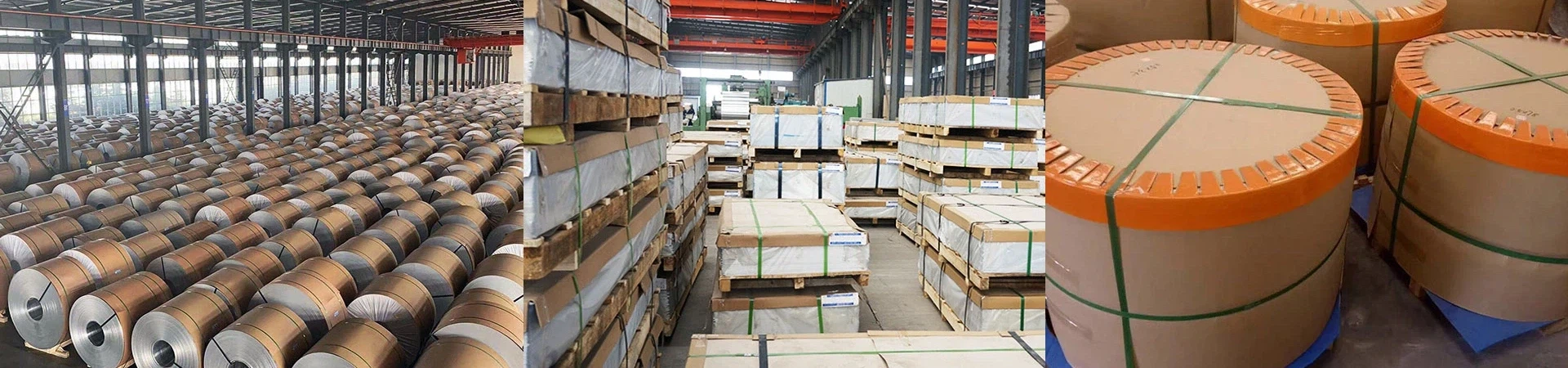
What Is 6061 T6 Aluminum
6061 T6 aluminum is a heat-treated alloy widely recognized for its high strength and excellent mechanical performance. Along with its alloying elements, the tempering process significantly enhances its properties. Aluminum in the T6 temper offers outstanding corrosion resistance and good weldability.
Machined parts made from 6061 T6 are commonly used in the aerospace and automotive sectors, where high strength and corrosion resistance are essential.
Aluminum T6 Temper
Aluminum alloys have several temper designations. The letter "T" indicates thermal treatment, while the number following it refers to the specific heat-treating method. The T6 temper involves solution heat treatment followed by artificial aging.
6061 T6 Aluminum Heat Treatment Process
The alloy is first heated at 525°C for one hour to create a uniform solid solution. It is then water-quenched to prevent the formation of precipitates, keeping all alloying elements dissolved at room temperature. Although rapid quenching is not performed solely for strengthening, it does significantly increase strength. When reheated between 162°C and 205°C, alloying elements begin to precipitate into ordered structures known as GP zones. These zones provide notable strengthening. Heating durations can vary-one hour at 205°C or eight hours at 162°C-yet both conditions yield similar results.
A referenced video can further illustrate industrial heat-treatment processes.
Aluminum 6061 T6 Mechanical Properties
After T6 tempering, yield strength increases to almost four times that of the annealed O-temper. For example, 6061-O has a yield strength of 55 MPa and a tensile strength of 125 MPa, whereas 6061-T6 provides a minimum yield strength of 240 MPa and a tensile strength of at least 290 MPa. Its high strength-to-weight ratio, combined with good weldability and corrosion resistance, makes it one of the most widely used aluminum grades.
T6 aluminum is used in many applications, including watercraft due to its corrosion resistance, military and commercial aircraft, bicycle frames, automotive components, firefighting ladders, and fishing reels.
Pros and Cons of 6061 T6 Aluminum
The T6 temper delivers high strength while maintaining aluminum's characteristic lightweight nature. It provides good weldability, excellent corrosion resistance, and better formability and machinability than many other high-strength alloys.
However, achieving these benefits requires careful heat-treatment control, including temperature, time, and heating rate. This increases cost compared with tempers such as T5. Additionally, T6 reduces ductility, and the uneven cooling in thick sections may prevent effective heat treatment without modification.
GNEE offers engineering support for selecting the appropriate aluminum temper for different manufacturing needs.

Definition of 6061 T651 Aluminum
The T651 temper is a variant of the T6 condition and provides better processability. When machining tasks such as grinding, cutting, and polishing are required, T651 becomes the preferred option due to its enhanced dimensional stability.
Aluminum T651 Temper
T651 tempering begins with solution heat treatment, followed by mechanical stretching for stress relief, and then artificial aging to reach final properties.
T651 Heat Treatment Process
The T651 process is similar to T6, but it includes a crucial intermediate step: controlled stretching after water quenching. Solution heat treatment can trap internal stresses. Mechanical stretching-typically between 1% and 3% elongation-relieves these stresses, improving dimensional stability and preventing shape distortion during machining. Artificial aging then follows to achieve the desired mechanical performance.
Aluminum T651 Mechanical Properties
6061-T651 retains the same tensile strength, hardness, and modulus as the T6 temper. Its high strength-to-weight ratio remains unchanged. The removal of internal stresses improves machining accuracy by preventing dimensional changes caused by the recovery effect after external forces are released.
T651 is widely used in aerospace components, electrical devices, precision machining, die-forging, thick plates, molds, and automotive parts.
Pros and Cons of 6061 T651 Aluminum
The T651 temper preserves all the advantages of T6-lightweight structure, high strength, weldability, and corrosion resistance-while offering improved dimensional stability during machining.
Its drawbacks include increased processing time and higher costs due to the additional stretching process.
Physical Differences Between 6061 T6 and T651
T651 provides better machinability and reduced distortion, making it preferable for complex shapes and accuracy-critical components. However, this enhanced performance comes at a higher cost. Mechanical properties such as tensile strength, yield strength, density, hardness, elastic modulus, thermal expansion, and thermal conductivity remain essentially identical between the two tempers.
Aluminum 6061 Temper Chart
GNEE provides a clear overview of various 6061 tempers:
6061-O: Fully annealed, offering excellent formability and weldability.
6061-T4: Solution-treated and naturally aged, suitable for aerospace and automotive components requiring good workability.
6061-T6: Solution-treated and artificially aged, used in structural, aerospace, and marine applications due to its high strength and corrosion resistance.
6061-T651: Stress-relieved after stretching, ideal for precision machining where dimensional stability is critical.
6061-T6511: Similar to T651 but specifically for extruded shapes that require additional straightening.
Mechanical Properties: 6061 T6 vs 6061 T651
Heat-treating processes alter mechanical behavior without changing alloy composition. Both T6 and T651 offer comparable tensile strength-about 310 MPa-and share the same density. The key difference comes from stretching in T651, which eliminates internal stresses and improves dimensional accuracy during machining.
Dimensional Stability Comparison
6061-T651 displays superior dimensional stability. Eliminating residual stresses allows machining without causing distortion. T6 retains residual stress, which may lead to warping during material removal.
Applications of 6061 T6, T651, and T6511
6081 T6 is chosen for aircraft, marine structures, bicycle frames, pipelines, automotive components, and sports equipment.
T651 is preferred in robotics, automation, precision machining, molds, and applications requiring tight tolerance control.
T6511 is used when high straightness and strength are required in extruded forms, particularly in tools, fixtures, drones, and precision components.
7075 T6 vs T651 Aluminum
Both tempers belong to the same alloy but undergo different heat-treatment methods. As a result, 7075-T651 typically offers slightly higher tensile and yield strengths but lower elongation compared with 7075-T6. Differences arise from additional stress-relief steps in T651.
Machinability and Fabrication
The main advantage of T651 lies in its ease of machining and fabrication. With stresses removed, forging, cutting, and milling can be performed without distortion, allowing components to retain their shape.
Differences Between 6061 T6, T651, and T6511
T6 involves solution heat treatment followed by artificial aging.
T651 includes cold working to remove internal stresses.
T6511 extends T651 by adding slight straightening to improve linearity.

Choosing Between 6061 T6, T651, and T6511
6061 T6 is selected when a high strength-to-weight ratio is required, when machining demands are minimal, and when budget constraints favor a lower-cost option.
6061 T651 is chosen for enhanced machinability, high dimensional stability after cutting, and improved weldability due to stress relief.
6061 T6511 is ideal for applications demanding maximum straightness, strength, and stability, especially in extruded forms.


