What is Aluminium 5083 (UNS A95083)?
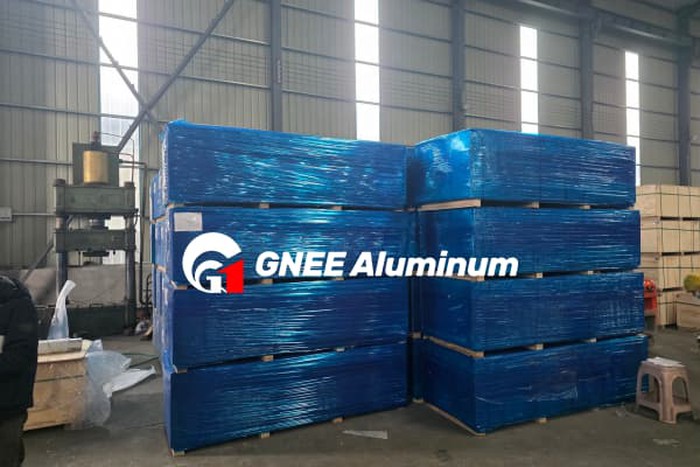
Aluminium 5083 (UNS A95083) is a high-strength, non-heat-treatable aluminum-magnesium alloy widely used in marine and heavy structural applications. It offers exceptional corrosion resistance in severe seawater environments and retains good formability due to its high ductility. The alloy is commonly supplied in tempers such as O, H116, H321, and H112 to meet different engineering requirements for shipbuilding, pressure vessels, and transportation.
Overview of 5083 Aluminum Alloy Plate
Belonging to the 5xxx series, alloy 5083 relies on Magnesium (Mg) as its primary alloying element. Because it is a non-heat-treatable alloy, its strength is achieved entirely through cold working (strain hardening) at the mill.
When compared to other common alloys, 5083 offers significantly higher tensile strength than 5052 aluminum, and it provides vastly superior saltwater corrosion resistance compared to the 6061 alloy.
Chemical Composition of 5083 Aluminium
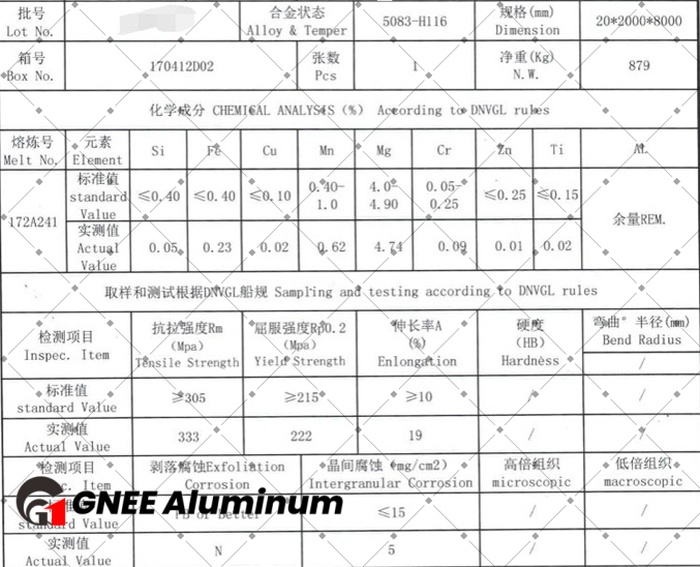
To meet international standards such as ASTM B209, EN 573-3, and AS/NZS 1734, the chemical makeup of 5083 aluminum must be strictly controlled. Magnesium provides the core strength, while Chromium helps stabilize the grain structure.
| Element | Content (Wt%) | Function in the Alloy |
| Magnesium (Mg) | 4.0 – 4.9 | Primary strengthening element that ensures marine corrosion resistance. |
| Manganese (Mn) | 0.40 – 1.0 | Increases material toughness. |
| Chromium (Cr) | 0.05 – 0.25 | Stabilizes grain structure; prevents stress cracking. |
| Silicon (Si) | ≤ 0.40 | Controlled impurity. |
| Iron (Fe) | ≤ 0.40 | Controlled impurity. |
| Copper (Cu) | ≤ 0.10 | Minimized to prevent galvanic corrosion. |
| Zinc (Zn) | ≤ 0.25 | Controlled impurity. |
| Aluminum (Al) | Balance | Base metal. |
Mechanical Properties of 5083 Aluminum by Temper
The mechanical limits of 5083 depend entirely on how it is tempered. Below are the standard minimum values required for industrial and marine applications.
| Temper | Yield Strength (MPa) | Tensile Strength (MPa) | Elongation (%) |
| O (Annealed) | 125 – 200 | 275 – 350 | ≥ 14 |
| H112 | ≥ 125 | ≥ 275 | ≥ 10 |
| H116 | ≥ 215 | ≥ 305 | ≥ 10 |
| H321 | 215 – 295 | 305 – 385 | ≥ 10 |
Understanding 5083 Tempers: 5083-O, 5083 H116, and H321 Aluminum Plates
Choosing the correct temper is critical to avoid metal fracturing during fabrication.
- O Temper (Fully Annealed): This is the softest condition. It provides the highest ductility. You must buy 5083-O aluminum sheet if your project requires deep drawing or heavy cold bending (e.g., forming cylindrical pressure vessels).
- H116 Temper (Marine Optimized): Strain-hardened with highly controlled rolling temperatures. The 5083 H116 aluminum plate is guaranteed to resist exfoliation corrosion in saltwater. It is the primary choice for ship hulls.
- H321 Temper (Stabilized): Strain-hardened and thermally stabilized. It offers the exact same strength and marine corrosion resistance as H116 but utilizes a different mill processing route.
- H112 Temper (As Fabricated): Formed at elevated temperatures with basic mechanical properties. Suitable for general structural use.
Summary: For heavy marine applications involving direct seawater contact, H116 and H321 are the mandatory, fully interchangeable choices.
Physical Properties of Aluminium 5083
| Property | Value | Notes |
|---|---|---|
| Density | 2.66 g/cm³ | At 20°C |
| Thermal Conductivity | 120 W/m·°C | At 25°C |
| Elastic Modulus (Tension) | 70.3 GPa | At 20°C |
| Melting Range | 574 – 638 °C | Approximate range |
Corrosion Resistance of 5083 Marine-Grade Aluminum
Aluminium 5083 is highly regarded for its exceptional resistance to general and pitting corrosion. It forms a dense, self-healing oxide film that performs excellently in aqueous solutions with a pH range of 4 to 9.
- Marine Resistance: The H116 and H321 tempers pass the rigorous ASTM G66 (ASSET) test, proving they are immune to exfoliation corrosion (flaking) in seawater.
- Critical Temperature Warning: Due to the high magnesium content, 5083 aluminum should not be used in continuous service environments where temperatures exceed 65°C (150°F). Prolonged exposure to high heat causes sensitization, making the alloy highly susceptible to rapid stress corrosion cracking.

Fabrication and Welding of 5083 Aluminum Sheet
- Forming: The alloy is highly ductile, especially in the O temper. Forming loads and tool wear are significantly lower than when working with carbon steel.
- Welding: 5083 has outstanding weldability using standard TIG (GTAW) and MIG (GMAW) processes.
- Filler Metals: You must use high-magnesium filler wires such as 5183, 5356, or 5556 to match the base metal chemistry. Note: Welding the H116/H321 temper will reduce the strength in the Heat-Affected Zone (HAZ) back to the O-temper level.
- Heat Treatment: 5083 cannot be strengthened by heat treatment. Stress relief, if required after heavy machining, can be carried out at approximately 220°C.
Core Applications of 5083 Aluminium
GNEE supplies this heavy-duty alloy to multiple high-demand industries:
- Marine & Shipbuilding: Underwater boat hulls, decks, keels, and bulkheads.
- Offshore Engineering: Walkways, helicopter decks, and structural supports on oil drilling platforms.
- Pressure Vessels: Unfired welded pressure vessels, chemical storage tanks, and cryogenic LNG tanks (they do not become brittle at sub-zero temperatures).
- Transportation: Armor plates for military vehicles, railway tank cars, and dump truck beds.
Equivalent Standards and Specifications for Aluminium 5083
| Region / Standard Body | Designation / Specification | Notes |
|---|---|---|
| USA (ASTM) | AA 5083 | Aluminum Association designation |
| Europe (EN) | EN AW-5083 | European standard for wrought aluminum alloys |
| Germany (DIN) | DIN AlMg4.5Mn | German standard for Al-Mg alloys |
| Japan (JIS) | JIS A5083P | Japanese Industrial Standard |
| ISO | AlMg₄.₅Mn₀.₇ | International Standard Organization designation |
Alloy Comparison: 5083 vs 5052 vs 5086 vs 6061
Purchasing managers often compare these alloys to balance project costs and performance.
| Alloy | Strength Level | Corrosion Resistance | Primary Best Use |
| 5083 | Very High | Excellent | Heavy marine hulls, LNG tanks. |
| 5052 | Medium | Good | Small freshwater boats and general sheet metal. |
| 5086 | High | Excellent | Patrol boats, decks (Slightly softer than 5083). |
| 6061 (T6) | Medium-High | Moderate | Structural frames (require paint in seawater). |
Get 5083 Aluminum Plates from GNEE
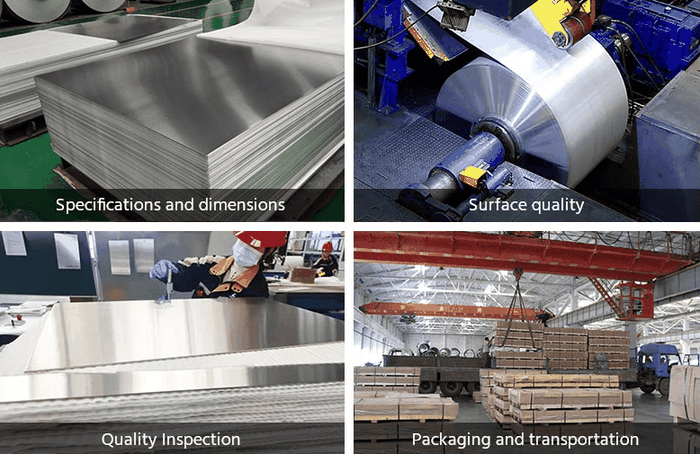
Using uncertified materials in heavy engineering leads to rejected inspections and structural failures. As a direct 5083 aluminum plate supplier, GNEE manufactures and exports fully traceable plates to global shipyards and fabricators.
Available Sizes: Thicknesses from 3mm to 200mm. Standard wide plates (e.g., 2000mm x 6000mm) are available in stock.
Marine Approvals: We supply plates certified by DNV, ABS, LR, CCS, KR and BV.
Verified Quality: Every shipment includes an EN 10204 3.1 or 3.2 Mill Test Certificate (MTC).
Request Your Quote and Free Technical Data
Are you looking for an exact price for your Bill of Materials?
Contact GNEE today. Send us your required thickness, temper, dimensions, and total tonnage. Our technical sales team will provide an accurate quote within 24 hours.