What Is 5052-H32 Aluminum Sheet
5052 is a non-heat-treatable aluminum-magnesium alloy of the 5xxx series. Magnesium is the principal alloying element, and a small chromium addition refines the grain structure and improves resistance to stress corrosion. Because the alloy cannot be strengthened by solution heat treatment, its strength is developed by strain hardening, which is described by the H temper designation. In the H32 temper the metal is strain hardened to roughly a quarter-hard condition and then stabilized by a low-temperature thermal treatment, so the mechanical properties remain stable during long storage and in service. Sheet and plate in this grade are supplied to ASTM B209, while the chemical composition is also listed in EN 573-3 and GB/T 3190.
| Element | Typical content (mass %) |
|---|---|
| Magnesium (Mg) | 2.2 – 2.8 |
| Chromium (Cr) | 0.15 – 0.35 |
| Iron (Fe) | 0.40 max |
| Silicon (Si) | 0.25 max |
| Copper (Cu) | 0.10 max |
| Manganese (Mn) | 0.10 max |
| Zinc (Zn) | 0.10 max |
| Aluminum (Al) | Balance |
Mechanical and Physical Properties of 5052-H32
H32 is the most frequently specified temper for automotive stamping because it combines useful strength with the ductility required for blanking, piercing, flanging and shallow drawing. The figures below are typical values for sheet and plate supplied to ASTM B209 and should be confirmed by the mill test certificate of each lot.
| Property | Typical value (5052-H32) |
|---|---|
| Tensile strength | 228 – 271 MPa |
| Yield strength (0.2 % offset) | 193 MPa minimum |
| Elongation in 50 mm gauge | 12 % minimum |
| Density | 2.68 g/cm³ |
| Elastic modulus | 70 GPa |
| Thermal conductivity at 25 °C | 138 W/(m·K) |
| Melting range | 607 – 650 °C |
| Electrical conductivity | about 35 % IACS |
| Hardness | about 60 HB |
| Common stamping thickness | 0.5 – 6.0 mm |
Why 5052-H32 Is Chosen for Automotive Stamping Parts
Corrosion resistance: the alloy forms a dense, self-renewing oxide film and performs well in road splash, de-icing salt and mildly acidic or alkaline environments, which is important for underbody and exterior parts.
High fatigue strength: repeated vibration and cyclic loading from the chassis and powertrain are tolerated better than by most other non-heat-treatable alloys of similar strength.
Light weight: with a density of 2.68 g/cm³ the alloy weighs about one third of an equivalent volume of carbon steel, which supports vehicle mass reduction targets.
Joining flexibility: gas, arc, resistance, spot and seam welding are all practical, and the alloy also accepts riveting, clinching and structural adhesive bonding.
Surface quality: uniform, fine-grained surfaces take pretreatment, primer and topcoat evenly, and are equally suitable for laminating and bonding.
Thermal conductivity: 138 W/(m·K) helps parts that act as heat shields, covers or housings to spread and dissipate heat.
Recyclability: the 5xxx family is routinely remelted into new rolling slabs, keeping secondary material in circulation.
Stamping, Forming and Joining Behaviour
Process planning for 5052-H32 follows well-established rules that keep tooling cost low and scrap predictable:
Hot plasticity: the alloy deforms readily when warm, so warm forming is an option for shapes that exceed the room-temperature forming limit.
Cold stamping performance: formability is best in the fully annealed O temper, followed by H32 and then H34; the harder the temper, the smaller the available strain before cracking.
Bend radius: a 90° bend is normally made with an inside radius of about one material thickness (1t) in H32, increasing towards 1.5t – 2t for heavier gauges or flanges formed across the rolling direction.
Springback: H32 shows moderate springback; it is controlled by overbending, draw beads, stake beads or a final sizing operation.
Deep drawing: shallow and medium draws are practical in one operation; deep or multi-stage draws are usually sequenced with intermediate annealing to restore ductility.
Cutting: shearing, blanking, fine blanking, laser cutting and waterjet cutting are all used; edges are deburred to avoid stress raisers in fatigue-loaded parts.
Welding: gas welding, arc welding, resistance welding, spot welding and seam welding all give sound joints with good strength and plasticity. Argon arc welding has a tendency to crystallisation cracking, which is controlled by filler wire selection and dilution; 5356 filler is the usual choice. Brazing performance is good, while soft soldering is poor.
Surface preparation: degreasing followed by a chromate-free conversion coating gives the adhesion needed for powder coating, liquid paint and adhesive bonding.
Typical Automotive Applications and Supply Specifications
| Stamped or formed part | Typical thickness | Reason for selection |
|---|---|---|
| Engine outer panels and covers | 1.0 – 2.0 mm | Light weight with heat dissipation |
| Fuel tank shells and baffles | 1.5 – 2.5 mm | Corrosion resistance and weldability |
| Bus and trailer skin panels | 1.5 – 3.0 mm | Flatness, paint finish, weather resistance |
| Anti-skid decorative floor panels | 2.0 – 3.0 mm | Wear and corrosion resistance |
| Mudguards and wheel arch liners | 1.5 – 2.5 mm | Formability and stone-chip resistance |
| Brackets, clips and small sheet metal parts | 0.8 – 2.0 mm | Strength-to-weight ratio and fatigue life |
| Battery enclosure covers and trays | 1.2 – 2.5 mm | Light weight with thermal management |
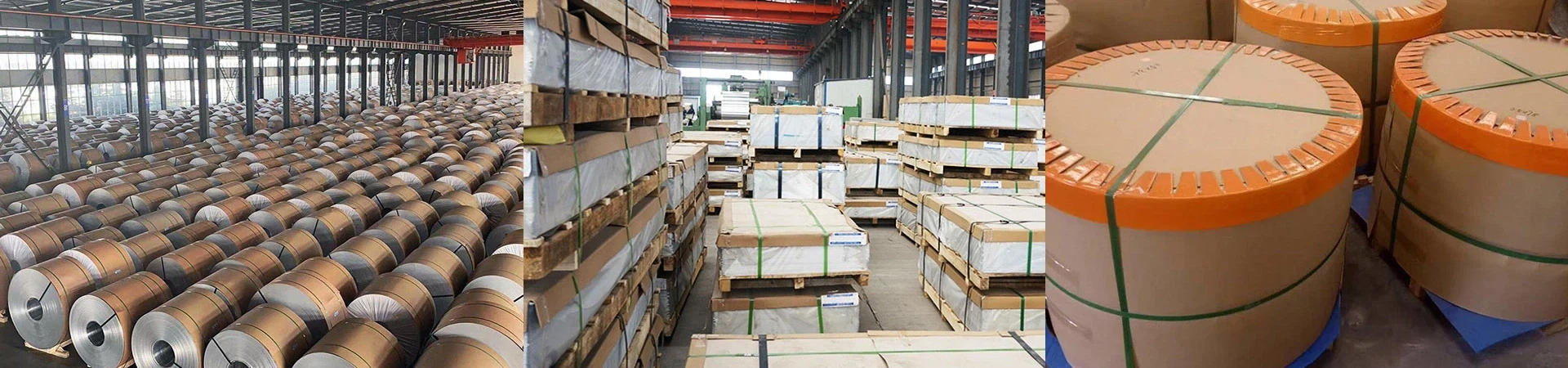
Automotive buyers normally specify 5052-H32 sheet by temper, thickness, width and length tolerances, flatness, edge condition and surface finish. Dimensional limits and mechanical property minima follow ASTM B209, EN 485-2 or GB/T 3880.2 depending on the delivery market, and each lot is accompanied by a mill test certificate covering tensile strength, yield strength, elongation and dimensional inspection. Material is supplied as coil, cut-to-length sheet or blanked blanks, with protective film or interleaving for surface-sensitive parts. Consistent flatness and gauge control are the two properties that most strongly influence blank nesting efficiency and die set-up time, so they are worth stating explicitly in the purchase specification.
Frequently Asked Questions
Q: What does the H32 temper mean for 5052 aluminum?
H32 shows that the metal has been strain hardened to about a quarter-hard condition and then stabilized with a low-temperature treatment, giving a stable balance of strength and formability.
Q: Can 5052-H32 be welded for automotive assemblies?
Yes. Gas, arc, resistance, spot and seam welding are all suitable, and the welded seam retains good strength and plasticity. Argon arc welding is normally run with 5356 filler to limit crystallisation cracking.
Q: How does 5052-H32 compare with 5052-H34 for stamping?
H32 is softer and more formable, while H34 is stronger and stiffer, which reduces springback but narrows the forming window. H32 suits most general stamping, with H34 reserved for stiffer flat parts.
Q: Is 3003 aluminum a substitute for 5052-H32 in stamped parts?
3003 is cheaper and highly formable but has lower strength, so it is used where stiffness and fatigue demands are modest. Load-bearing or corrosion-critical parts stay with 5052-H32.
Q: What is the standard thickness tolerance for 5052-H32 sheet?
The tolerance depends on the ordered range and is defined in ASTM B209, EN 485-3 or GB/T 3880.3. Tighter than standard gauge is available on request with a mill agreement.
Q: Which finishes can be applied to 5052-H32 stampings?
Degreasing plus a chromate-free conversion coating prepares the surface for powder coating, liquid paint, anodising or structural adhesives, and the sheet is also supplied with protective film for forming.